Rachmaninoff in exile
Russian scores and American recordings
Rachmaninoff left Russia with his family in December 1917; by the following November he was in New York, earning his living at the piano. His records took the music of Moscow and Ivanovka into American studios, from the three notes of the C♯ minor Prelude to the short phrases of Lilacs.
Begin plays the stations in order; Pause stops playback at the current station.The C♯ minor Prelude, 1892
Sergei Rachmaninoff · Prelude in C♯ minor, Op. 3 No. 2
The Prelude opens with three heavy notes, A–G♯–C♯, answered quietly in chords. Rachmaninoff wrote it in 1892, the year he finished his composition studies at the Moscow Conservatory, after years of training with Zverev, Siloti, Taneyev and Arensky. The following March he presented Tchaikovsky with the five piano pieces of Op. 3; the older composer especially liked the Prelude. Rachmaninoff recorded the piece for Edison in 1919. In the quiet answers the upper notes are joined into a melody above the changing chords.
Sources & recording
Sergei Rachmaninoff
Excerpt 0:00–1:46 · Full recording & listening notes
- Tchaikovsky Research: Sergei Rachmaninoff — studies and the 1893 presentation of Op. 3 ↗
- Commons: Rachmaninoff’s 1919 Edison recording, issued in December 1920 ↗
- Prelude in C♯ minor — score ↗
- Recording guide: Edison Prelude — sections and timed listening notes ↗
- A–G♯–C♯ is played loudly; the answering chords are quiet.
- The upper notes of the chords carry a continuous melody.
- Moscow · studied · documented
1889–1892
Lived with the Satins; studied with Siloti, Taneyev and Arensky.
- Ivanovka · lived · documented
1890–1917
Returned to the Satin family estate to compose, later owning and managing it.
- Moscow · premiere · documented
1892-09
Introduced his C-sharp minor Prelude at the Moscow Electrical Exhibition.
Dated places on a present-day coastline.
This year on the MapThe Prelude’s early circulation
Sergei Rachmaninoff · Prelude in C♯ minor, Op. 3 No. 2
Siloti took the Prelude on his 1898 tour of Europe, England and America, and its fame travelled ahead of Rachmaninoff, who was still living in Russia. The slow opening chords are followed by an Agitato in triplets, after which the three-note motif returns across the keyboard. At that point the score is written on four staves instead of two for the pianist’s two hands. A quiet coda follows, in which the chords move apart, and the piece ends softly.
Sources & recording
Sergei Rachmaninoff
Excerpt 1:46–3:47 · Full recording & listening notes
- Boston Symphony Orchestra: Marc Mandel on the Second Concerto and the Prelude’s early international success ↗
- Prelude in C♯ minor — Agitato, four-stave return and coda ↗
- Recording guide: Edison Prelude — sections and timed listening notes ↗
- Triplets carry the melody through the Agitato.
- The three-note call returns in broad chords; the printed score now stretches over four staves.
- In the coda the chords are spread apart and the piano part fades to silence.
- Moscow · studied · documented
1889–1892
Lived with the Satins; studied with Siloti, Taneyev and Arensky.
- Ivanovka · lived · documented
1890–1917
Returned to the Satin family estate to compose, later owning and managing it.
- Moscow · premiere · documented
1892-09
Introduced his C-sharp minor Prelude at the Moscow Electrical Exhibition.
Dated places on a present-day coastline.
This year on the MapLilacs at Ivanovka
Sergei Rachmaninoff · Lilacs, Op. 21 No. 5 (composer’s piano transcription)
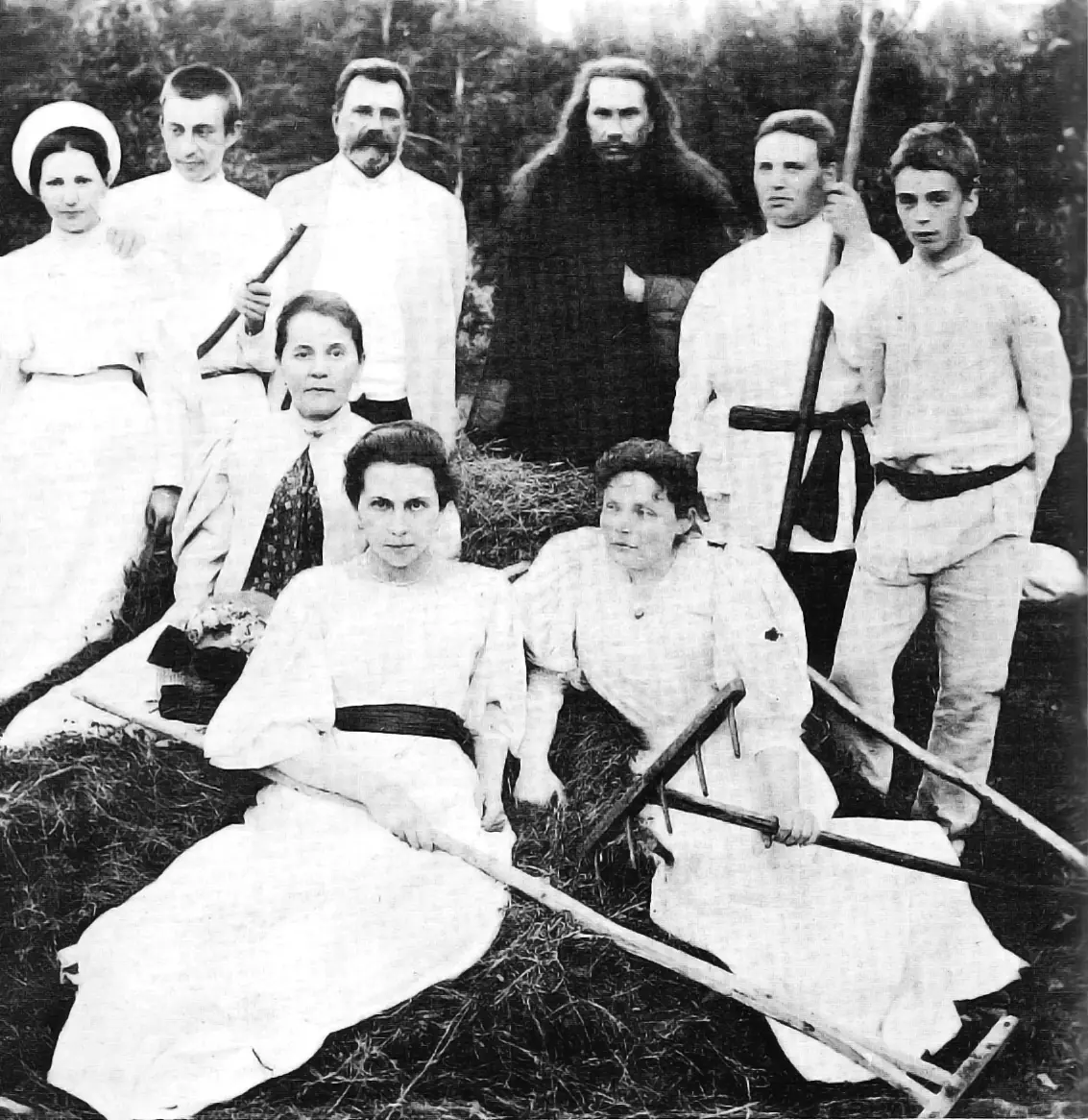
Rachmaninoff wrote Lilacs in 1902 at Ivanovka, the Satin family’s estate near Tambov. In Ekaterina Beketova’s poem the speaker goes among the flowers in search of happiness. He later arranged the song as a piano piece, setting its melody among broken chords and triplets and adding short cadenzas. On 27 December 1923 he recorded that version for Victor in Camden, New Jersey. The piano part becomes quicker and fuller, pauses on a trill, then returns to the quiet melody. The final flourish adds a few more notes around the tune.
Sources & recording
Sergei Rachmaninoff, piano
Excerpt 0:00–2:33 · Full recording & listening notes
- Yevgeny Sudbin: Rachmaninov liner notes — Ivanovka, the song and its piano transcription ↗
- Sergei Rachmaninoff — the Satin family and Ivanovka ↗
- DAHR: Victor matrix B-24123, Lilacs — take 9, 27 December 1923 ↗
- Commons: Rachmaninoff at Ivanovka — photograph identification ↗
- Recording guide: Lilacs — score-based listening notes ↗
- The melody is played inside the piano’s broken chords and triplets.
- The piano plays faster and louder, up to a trill held under a pause.
- A short flourish leads to a soft closing chord.
Places on record · 1902
- Ivanovka · lived · documented
1890–1917
Returned to the Satin family estate to compose, later owning and managing it.
- Moscow · lived · documented
1900–1904
Underwent treatment with Nikolai Dahl and returned to composing.
Dated places on a present-day coastline.
This year on the MapTwenty-four keys
Sergei Rachmaninoff · Prelude in B minor, Op. 32 No. 10
Lento
By 1910 twenty-three more preludes had followed the C♯ minor Prelude. The ten preludes of Op. 23 and the thirteen of Op. 32 completed Rachmaninoff’s set in all the major and minor keys. This is the B minor, played here by La Pianista in 2010. Marked Lento, it begins with small moving figures against held chords. The two hands move together in a rocking figure, then pause. The phrases gradually take on heavier chords, and the marking becomes pesante.
Sources & recording
La Pianista
Excerpt 0:00–2:48 · Full recording & listening notes
- IMSLP: 13 Preludes, Op. 32 — date, keys and score ↗
- Commons: Prelude in B minor — La Pianista’s recording of 12 May 2010 ↗
- Recording guide: B minor Prelude — sections and score-based listening notes ↗
- Small figures rock against held chords in B minor.
- The chords become heavier as the pesante passage approaches.
- The broad chords begin to subside; quieter notes follow.
- Ivanovka · lived · documented
1890–1917
Returned to the Satin family estate to compose, later owning and managing it.
- Moscow · lived · documented
1909–1917
Returned to Russia; led the Moscow Philharmonic Society from 1911 to 1913.
- Carnegie Hall New York · worked · documented
1910-01
Performed his Third Concerto with Mahler conducting.
Dated places on a present-day coastline.
This year on the MapDecember 1917: departure from Russia
Sergei Rachmaninoff · Prelude in B minor, Op. 32 No. 10
Lento
In December 1917 Rachmaninoff left Russia with his wife and two daughters. They travelled through Finland to Sweden, then settled in Copenhagen before sailing for New York in November 1918. He never saw Russia again. The B minor Prelude was already seven years old when they left. After its climax it continues with long notes surrounded by quick decoration. The opening phrases return quietly after the middle section. Near the end the bass descends and the spaces between the piano’s last sounds grow wider.
Sources & recording
La Pianista
Excerpt 2:48–5:21 · Full recording & listening notes
- Tchaikovsky Research: Rachmaninoff’s emigration in December 1917 ↗
- Sergei Rachmaninoff — Finland, Stockholm, Copenhagen and arrival in New York ↗
- Yevgeny Sudbin: the permanent departure from Russia ↗
- Recording guide: B minor Prelude — return and closing span ↗
- Quick ornamental figures surround the longer held notes.
- The small rocking phrases of the opening return.
- The low notes and the last quiet chord die away.
- Ivanovka · lived · documented
1890–1917
Returned to the Satin family estate to compose, later owning and managing it.
- Moscow · lived · documented
1909–1917
Returned to Russia; led the Moscow Philharmonic Society from 1911 to 1913.
- Yalta · travelled · documented
1917-09-05
Gave his last concert in Russia before emigration.
- Helsinki · exile · documented
1917-12
Crossed from revolutionary Russia with his wife and daughters.
- Stockholm · exile · documented
1917-12–1918-01
Arrived after leaving Russia and prepared Scandinavian engagements.
Dated places on a present-day coastline.
This year on the MapAmerica: Edison and Victor recordings
Sergei Rachmaninoff · Prelude in C♯ minor, Op. 3 No. 2
In America, Rachmaninoff worked full-time as a concert pianist. Recording became another part of that work. He recorded for Edison in 1919, signed a contract with Victor in 1920, and returned to the studio repeatedly with pieces he knew intimately. On 4 April 1928, in New York, he recorded the C♯ minor Prelude again, this time electrically. Victor issued take 23. The opening chords state the same three-note figure heard earlier, and the triplets accelerate towards the return of the opening material. The coda is quiet.
Sources & recording
Sergei Rachmaninoff, piano
Excerpt 0:00–3:30 · Full recording & listening notes
- Library of Congress: David B. Cannata on Rachmaninoff’s American performing life and records ↗
- Sergei Rachmaninoff — the 1920 Victor contract ↗
- DAHR: Victor matrix BVE-25650 — take 23, 4 April 1928, New York ↗
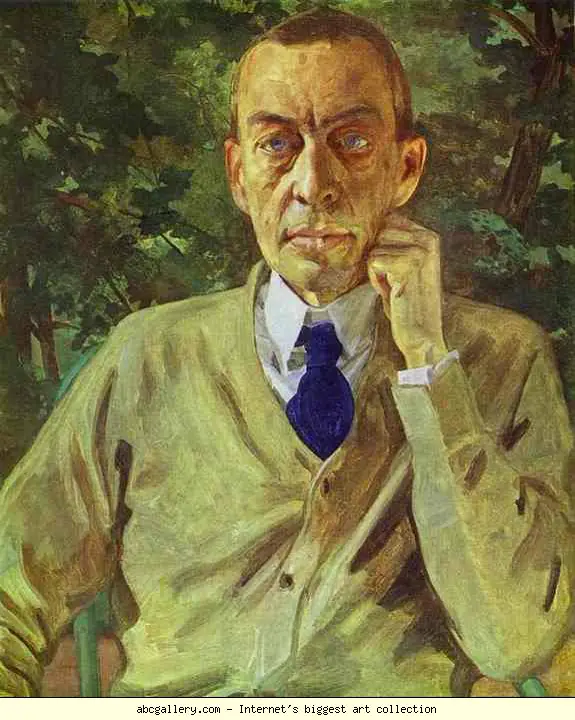
- Commons: Somov’s 1925 portrait ↗
- Recording guide: 1928 Victor Prelude — sections and timed observations ↗
- Rachmaninoff recorded his Prelude again in New York on 4 April 1928, take 23.
- The triplets of the middle section begin.
- The opening call is played in broad chords across the keyboard.
- The chords become quieter and are spaced apart as the coda begins.
Places on record · 1918
- Stockholm · exile · documented
1917-12–1918-01
Arrived after leaving Russia and prepared Scandinavian engagements.
- Copenhagen · exile · documented
1918-01–1918-10
Gave concerts while deciding where to settle.
- Oslo · travelled · documented
1918-11-01
Departed Kristiania by ship for America.
- New York City · exile · documented
1918-11-12–1942
Established his American base; bought 33 Riverside Drive in 1921.
- Providence Rhode Island · travelled · documented
1918-12-08
Began the concert season that established his American performing career.
Dated places on a present-day coastline.
This year on the MapPhiladelphia: the Concerto recording on shellac
Sergei Rachmaninoff · Piano Concerto No. 2, Op. 18
I. Moderato — opening 78-rpm side only
During Rachmaninoff’s treatment in Moscow in 1900, Nikolai Dahl repeated to him the promise “You will begin to write your concerto”. The Second Concerto, completed the following year, was dedicated to Dahl. In this recording, made at the Academy of Music on 10 April 1929, Rachmaninoff plays it with Stokowski and the Philadelphia Orchestra. The piano opens with bell-like chords that grow louder; the strings then take the melody while the piano plays running notes beneath them. The excerpt fills the first side of the original disc. The melody is still continuing when the side ends, at the point where a gramophone owner would have had to change the record.
Sources & recording
Sergei Rachmaninoff, piano; Philadelphia Orchestra; Leopold Stokowski, conductor
Excerpt 0:00–3:09 · Full recording & listening notes
- Boston Symphony Orchestra: Marc Mandel — Dahl’s words during the 1900 treatment, dedication and 1901 première ↗
- DAHR: Victor CVE-48963 — first movement, first part; take 3, 10 April 1929 ↗
- Internet Archive: the HMV pressing carrying the opening Moderato side ↗
- Indianapolis Symphony Orchestra: Marianne Williams Tobias — the piano chords, string melody and slow-movement scoring ↗
- Recording guide: composer-led 1929 Moderato side — scope and timing ↗
- The piano begins alone with repeated chords.
- The strings have the melody; the piano plays beneath them.
- The piano plays a quieter phrase.
- The first disc side is nearly over; the movement continues on the next record.
Summer home on Lake Lucerne
Sergei Rachmaninoff · Piano Concerto No. 2, Op. 18
II. Adagio sostenuto — opening 78-rpm side only
In the Second Concerto’s Adagio, muted strings introduce a melody for flute and clarinet above the piano’s moving notes. Rachmaninoff and Stokowski recorded this opening side in Philadelphia in 1929. Five years later, beside Lake Lucerne, Rachmaninoff was writing the Rhapsody on a Theme of Paganini for piano and orchestra. Villa Senar was his summer home from 1933 to 1939. There he wrote twenty-four variations on Paganini’s last Caprice and brought in another old tune, the Dies irae. In Variation VII the piano plays that chant against fragments of Paganini’s melody.
Sources & recording
Sergei Rachmaninoff, piano; Philadelphia Orchestra; Leopold Stokowski, conductor
Excerpt 0:00–3:04 · Full recording & listening notes
- Serge Rachmaninoff Foundation: Villa Senar — summer home, 1933–1939 ↗
- Houston Symphony: Calvin Dotsey on the 1934 Rhapsody, Paganini and Dies irae ↗
- DAHR: Victor CVE-48966 — Adagio sostenuto, first part; take 1, 10 April 1929 ↗
- Internet Archive: the original opening Adagio side ↗
- Indianapolis Symphony Orchestra: the Adagio’s muted strings, flute and clarinet ↗
- Recording guide: composer-led 1929 Adagio side — scope and timing ↗
- Muted strings open the Second Concerto’s Adagio.
- Flute, then clarinet, play over the piano’s circling notes.
- Piano and orchestra continue the Adagio’s long melody.
- The first Adagio side ends; the movement continues on another disc.
- New York City · exile · documented
1918-11-12–1942
Established his American base; bought 33 Riverside Drive in 1921.
- Villa Senar · lived · documented
1933–1939
Composed and rested at his Hertenstein home on Lake Lucerne.
- Lyric Baltimore · premiere · documented
1934-11-07
Played the Paganini Rhapsody with Stokowski and the Philadelphia Orchestra.
Dated places on a present-day coastline.
This year on the MapInfluence
Lilacs, revisited
Sergei Rachmaninoff · Lilacs, Op. 21 No. 5 (composer’s piano transcription)
Rachmaninoff died at home in Beverly Hills in March 1943. Twenty years earlier, in Camden, he had recorded Lilacs. Victor’s books list twelve takes between 1920 and 1923; this is the ninth, recorded on 27 December 1923. The song’s melody passes through the moving notes, gathers into a trill and returns to a quiet close. A last short flourish leads to the closing chord.
Sources & recording
Sergei Rachmaninoff, piano
Excerpt 0:00–2:33 · Full recording & listening notes
- Sergei Rachmaninoff — final years and death in Beverly Hills ↗
- DAHR: Lilacs — twelve logged takes, with the present recording identified as take 9 ↗
- Yevgeny Sudbin: Lilacs, the 1902 song and its piano transcription ↗
- Commons: the Ivanovka photograph, mid-1890s ↗
- Recording guide: Lilacs — return and closing flourish ↗
- The 1923 Lilacs returns, its melody set among the moving notes.
- After the trill and the quicker passage, the piano plays quietly again.
- The final run ends on a quiet chord.
Places on record · 1943
- Beverly Hills California · lived · documented
1942–1943
Bought 610 North Elm Drive, his final home.
- Kensico Cemetery · buried · documented
- Chicago · travelled · documented
1943-02
Gave his final concerto performances.
- Knoxville Tennessee · travelled · documented
1943-02-17
Gave his final recital at the University of Tennessee.
- Beverly Hills California · died · documented
Dated places on a present-day coastline.
This year on the MapPress Begin to start playback.
← → stations · Space pauses · swipe to change station