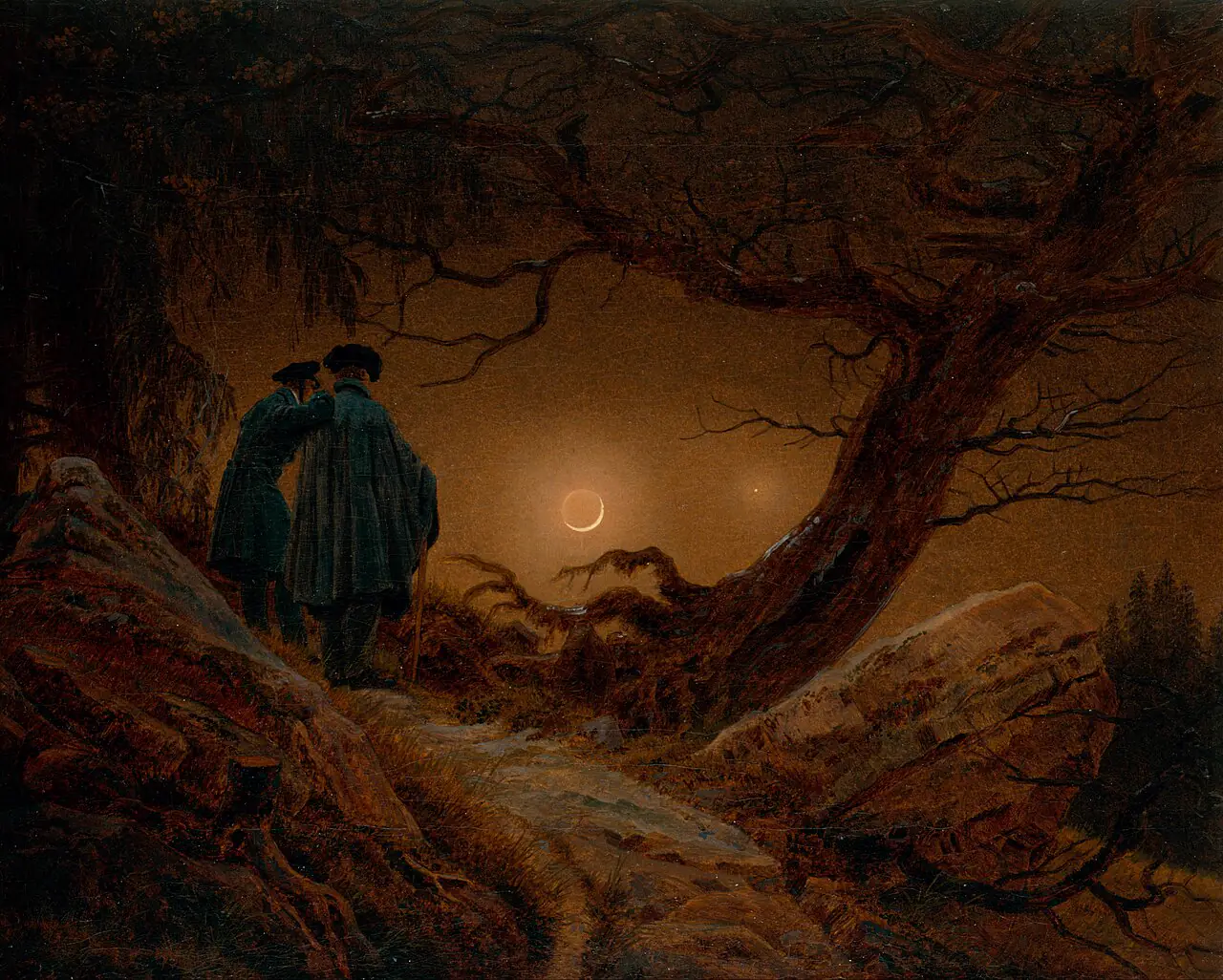
Caspar David FriedrichTwo Men Contemplating the Moon, 1819–20 Galerie Neue Meister, Dresden
Overview
The piano begins before the voice enters, with repeated triplets fast enough to tire the pianist’s arm. Then a voice asks who is riding through the night. In Schubert’s Erlkönig, written in 1815, a single singer takes the parts of the narrator, the father with a child in his arms, the frightened boy and the creature calling him away. The father explains that the shapes are mist and the noises are wind.
A singer and pianist can perform this kind of theatre in a room. The voice changes register when the speaker changes, and the accompaniment supplies what the words leave unsaid. In Schubert’s Winterreise of 1827, twenty-four poems by Wilhelm Müller follow a solitary traveller through winter. Near the end of the first song, Gute Nacht, D minor changes to D major as the traveller thinks of the woman he is leaving. The major key lasts only a short time.
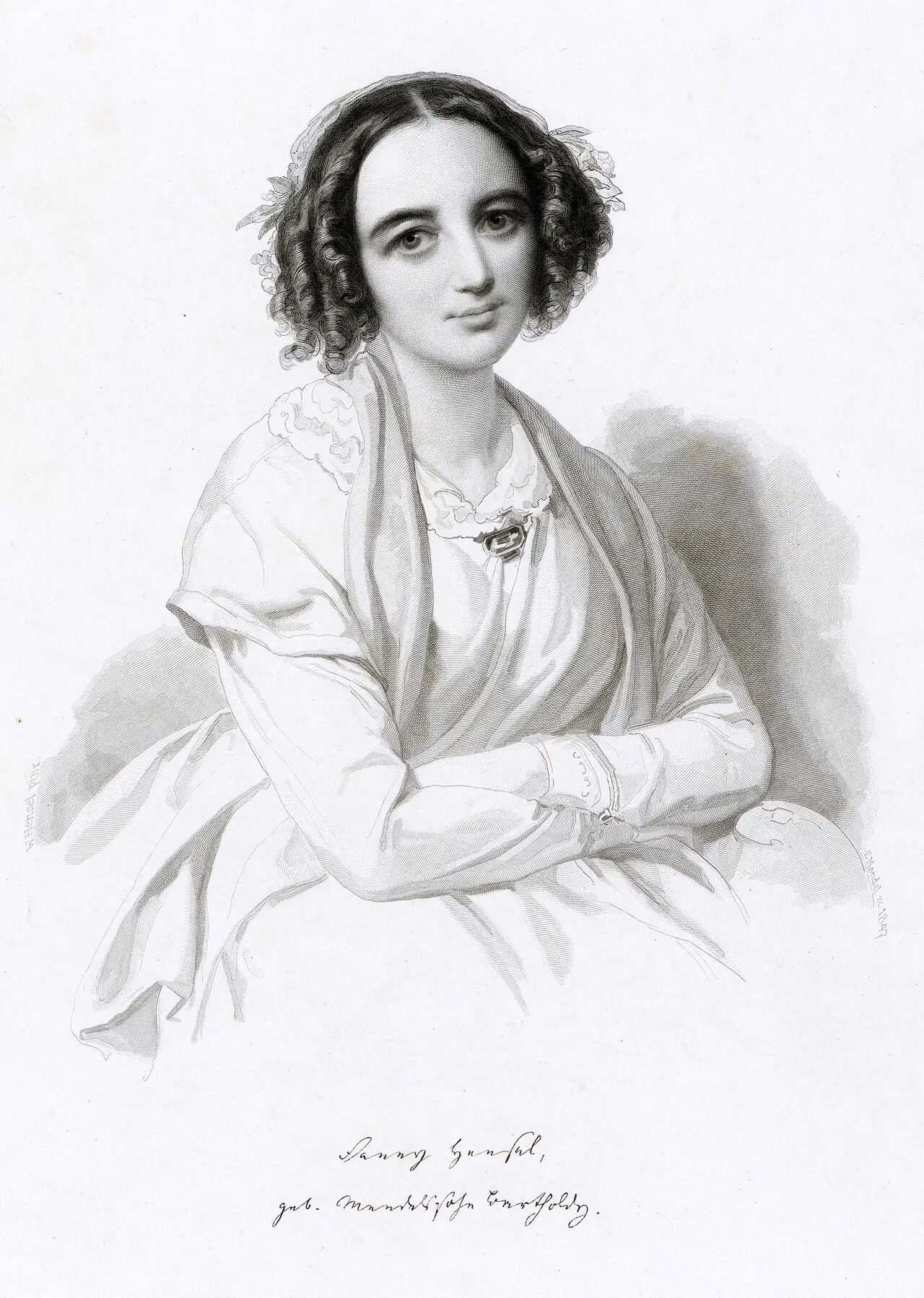
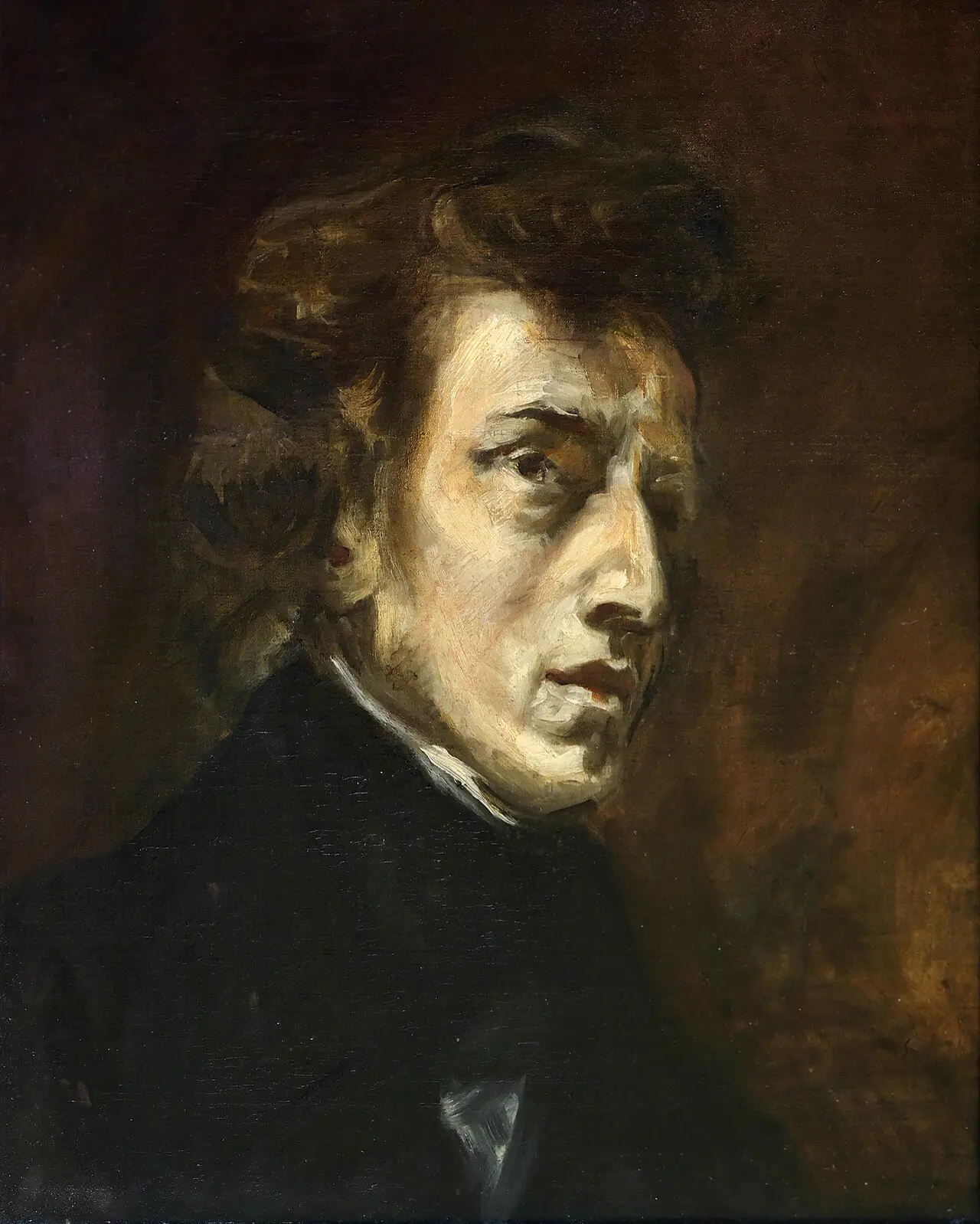
Schumann gathered small piano pieces into cycles in which one character interrupts another. Chopin’s mazurkas brought the uneven accent of a dance into the drawing room, with the weight often falling late in the bar so that the three beats are unequal. Hensel’s Das Jahr, composed in 1841, gives each of the twelve months a separate piece and adds a postlude.
The instrument tradeThe piano, Liszt and Berlioz
The piano changed during these years. Érard’s repetition action of 1821 let a hammer strike again before the key had risen all the way back. In Boston in 1825, Alpheus Babcock patented a cast-iron frame for a square piano. Iron could bear greater string tension than a wooden frame alone. As makers enlarged the instrument and strengthened its structure, the bass rang longer and the loudest chords gained weight.
The sustaining pedal lifts the dampers, so the strings go on vibrating after the fingers have left the keys. A pianist can strike a low bass note, leap to the middle of the keyboard and play an accompaniment beneath a high melody while the bass is still sounding. If the foot does not clear the pedal, the old harmony goes on sounding when the new one arrives. A singing line on the piano therefore depends on exact pedalling.
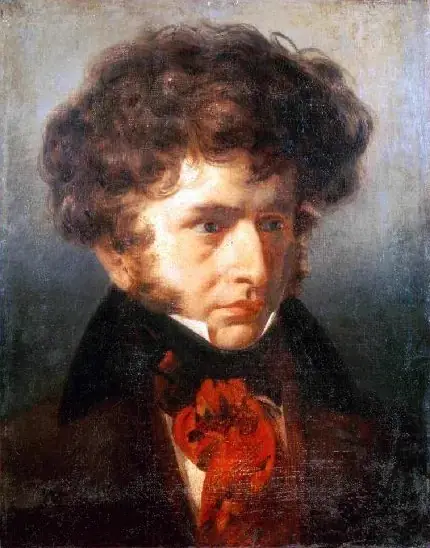
Liszt used the piano to bring music from the concert hall to other players. He made a transcription of Berlioz’s Symphonie fantastique after hearing its first performance in Paris in 1830. In it a single pianist had to represent the different voices of the orchestra. A melody could stand out in the middle of the keyboard while chords sounded above it and a bass moved below.
Berlioz himself wrote for the orchestra in unusually graphic terms. In the final movement of the Symphonie fantastique, the beloved’s recurring tune returns in a witches’ gathering. Later in the movement the strings play with the wood of their bows, producing a dry clatter. His orchestration treatise grew from this close attention to instruments and from what orchestral players taught him.
HarmonyChromatic harmony and delayed resolution
A change of harmony can be made with very small movements of the fingers. In the example below, C major becomes E major: E is kept, G moves up a semitone to G♯ and C moves down a semitone to B. Only two notes move, although the new chord belongs to a different scale. E major then leads to A minor. Chromatic notes allow a move to a distant key with only small steps in the individual parts.
At the opening of Wagner’s Tristan und Isolde, the cellos begin a phrase and the winds enter with the chord that has become inseparable from the opera’s name. Its notes move, but the next chord does not resolve it. The music stops and the phrase is repeated. Later in the opera, recurring ideas return between scenes: a leitmotif can come back on a different instrument or with changed harmony, recalling an earlier moment.
Berlioz also brought back a returning tune, and cut it short. In the March to the Scaffold, the fourth movement of the Symphonie fantastique, the clarinet plays the beloved’s theme just before the execution. The orchestra cuts the tune off when it has scarcely begun. The theme is familiar from the preceding movements.
The publicConcert, salon, opera house
In 1844 Hensel told her sister Rebecka about a Sunday concert at the family home in Berlin. There had been “twenty-two carriages in the courtyard, and Liszt and eight princesses in the hall”. She had revived these concerts in 1831, conducting and playing the piano herself. The garden room at Leipziger Straße 3 gave her an audience and musicians for her own work, even while her family discouraged a public career.
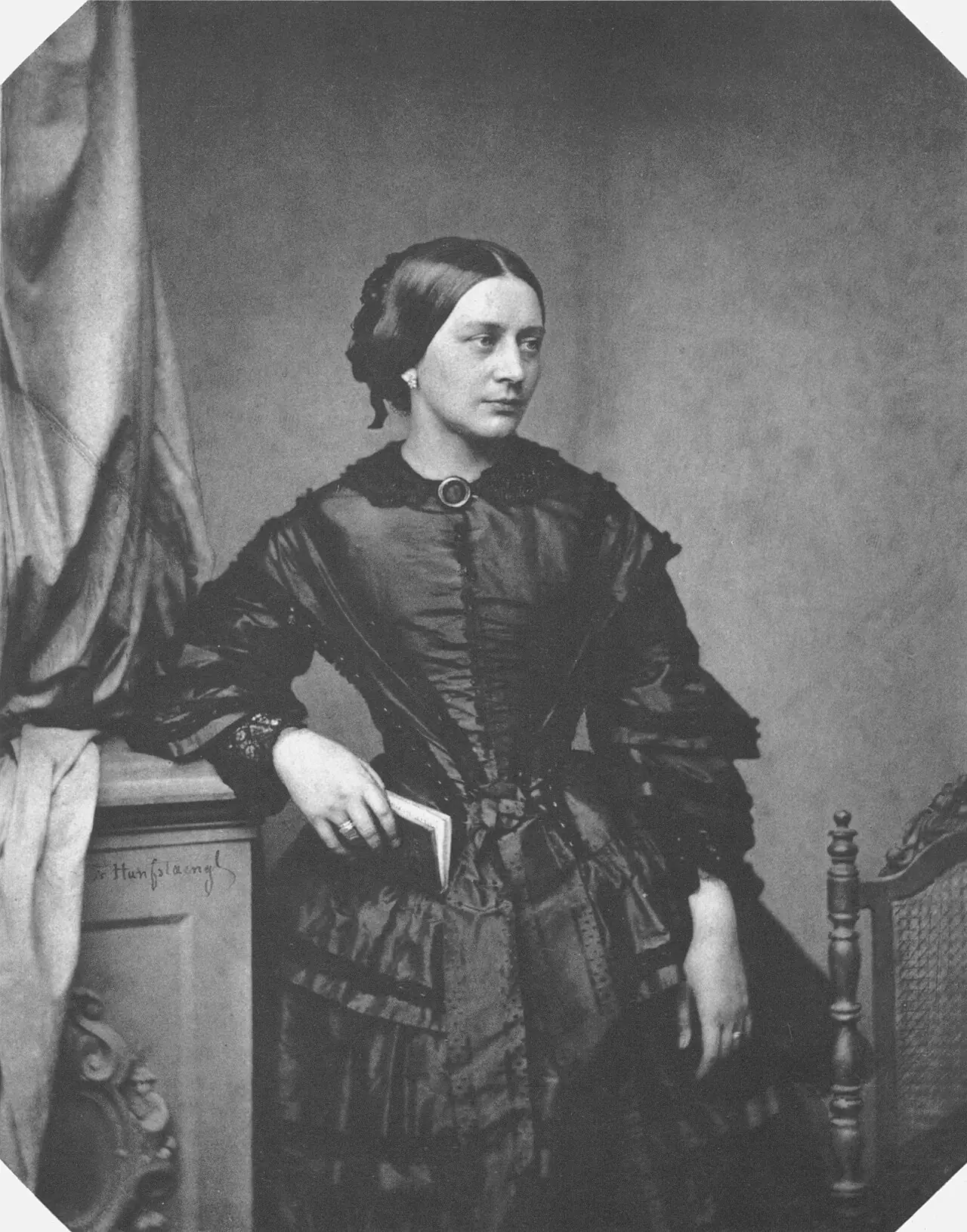
Clara Schumann took her piano playing across Europe. She also had to arrange much of the business behind it, with help from her daughters and friends. From the 1840s, trains made journeys faster and concerts more frequent; appearances could follow only a day or two apart. Her programmes increasingly placed Bach and Beethoven beside Schumann and Chopin. On her last visit to London in 1888, she bade farewell with Schumann’s Carnaval.
Publishers wanted music for people who played at home. Fritz Simrock commissioned Dvořák’s first set of Slavonic Dances in 1878 for piano duet. Dvořák then orchestrated the dances. Two people at one keyboard could play the same pieces that a concert orchestra performed, though the orchestral version added trumpets and cymbals.
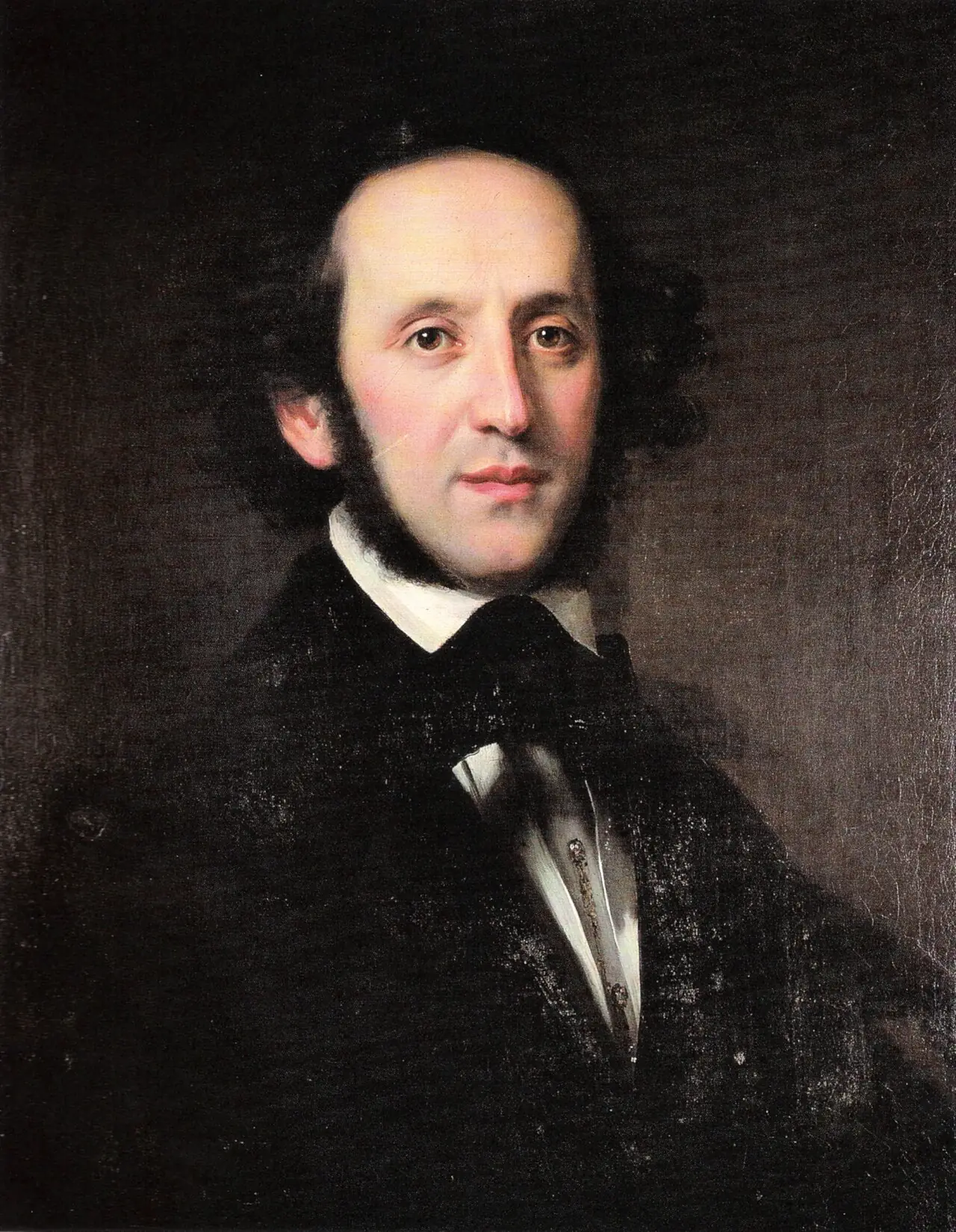
Older music was acquiring a new public too. Bach had written his St Matthew Passion for church in Leipzig. In 1829 Mendelssohn conducted it for a concert audience in Berlin.
At the end of Winterreise, the traveller meets an old hurdy-gurdy player standing barefoot on the ice. The piano repeats open fifths in imitation of the instrument’s drone. The singer asks whether the old man will accompany his songs. The song ends without an answer.
Terms of art
Chromatic mediant
A relationship between two major chords or two minor chords whose roots are a third apart and which share one note. C major and E major are one example: they share E, while the second chord introduces G♯.
Character piece
A short instrumental piece, often for piano, built around a particular mood, scene or dance. A descriptive title may identify its subject.
Song cycle
A group of songs intended to form one larger work. They may tell a continuing story, set related poems or share musical ideas.
Thematic transformation
Changing a recognisable theme so that it takes on a new character. A slow melody might become a quick march, or a lyrical tune might return with harsher harmony.
Leitmotif
A recurring musical idea associated with a person, object, feeling or event in a drama. Its return can recall an earlier scene, and changes to it can reflect what has happened since.
Cyclic form
A way of linking a work’s separate movements by bringing back a theme or motif from one movement in another. The returning music may be changed or quoted exactly.
Programme music
Instrumental music written in connection with a stated story, scene or other subject outside music. A title or written programme identifies that subject.
Rubato
Expressive flexibility in musical timing. A performer may stretch and shorten parts of a phrase, or let the melody move a little ahead of or behind a steadier accompaniment.
In the score
Chromatic connection · schematicTwo major triads sharing the note E
An invented progression. C major becomes E major with E held in place: G rises to G♯ and C falls to B. E major then leads to A minor. The final F major chord keeps A and C from the preceding chord.
Metric tension · schematicTwo groups of three as three of two
An invented hemiola on a single viola note. Each bar lasts six quavers, and the accents alternate between two groups of three and three groups of two, so the same A is played in groups of different lengths.
Sister arts
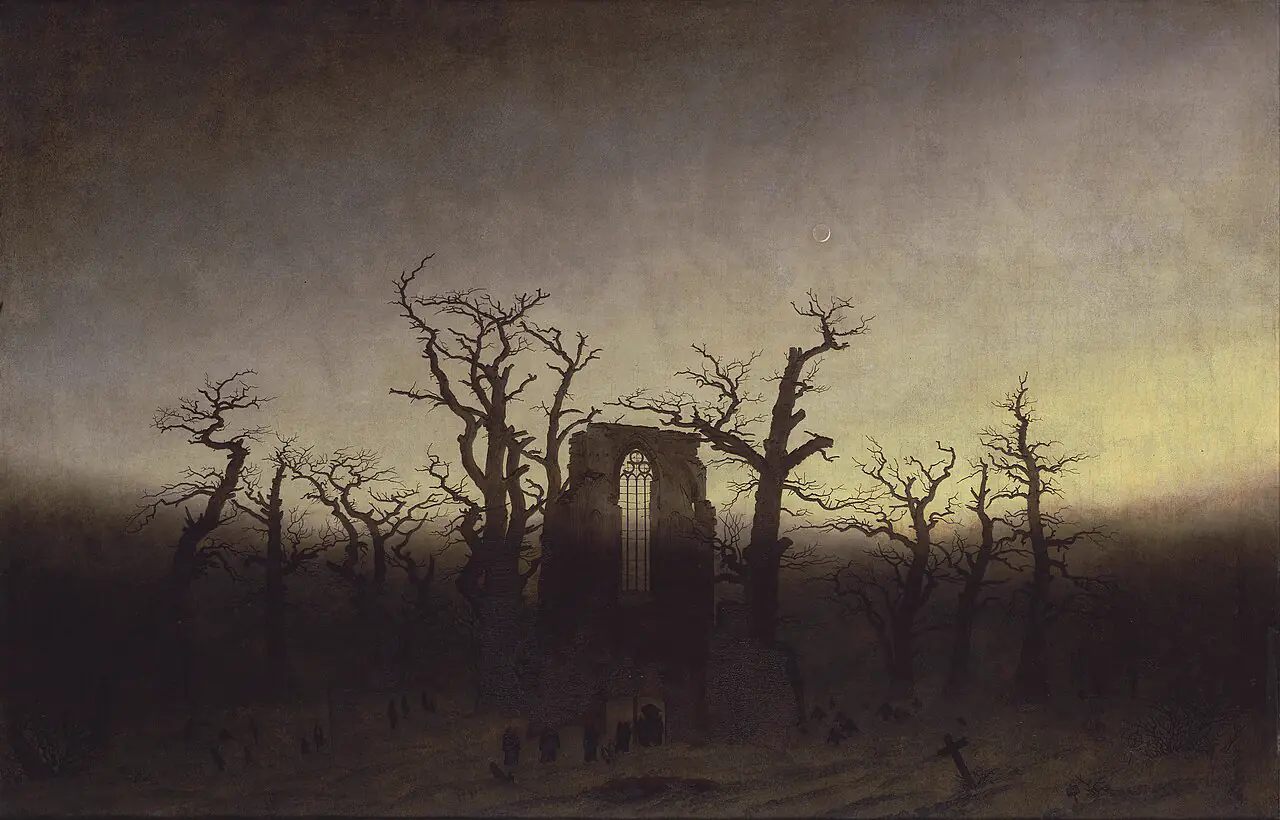
Caspar David FriedrichThe Abbey in the Oakwood, 1809–10Oil on canvas · Alte Nationalgalerie, Berlin
Monks carry a coffin towards the ruined church. Their procession is small beneath the bare oaks and the surviving Gothic window, and a pale moon is in the sky. Friedrich showed the painting in Berlin in 1810 beside Monk by the Sea. It is a winter landscape, placed here beside Schubert’s solitary traveller.
Johann Wolfgang von Goethe
Erlkönig — opening stanzas
1782
GermanWer reitet so spät durch Nacht und Wind?
Es ist der Vater mit seinem Kind;
Er hat den Knaben wohl in dem Arm,
Er faßt ihn sicher, er hält ihn warm.
“Mein Sohn, was birgst du so bang dein Gesicht?”
“Siehst, Vater, du den Erlkönig nicht?
Den Erlenkönig mit Kron’ und Schweif?”
“Mein Sohn, es ist ein Nebelstreif.”
Our translationWho rides so late through night and wind?
It is the father with his child;
He has the boy held fast in his arm,
He grips him firmly, he keeps him warm.
“My son, why hide your face so fearfully?”
“Father, can you not see the Erlking?
The Erlking with crown and trailing train?”
“My son, it is a streak of mist.”
One singer takes both the child’s terrified lines and the father’s reassuring answers. In Schubert’s 1815 setting, D. 328, the piano plays repeated triplets beneath them. When the ride stops, the narrator states that the child in the father’s arms is dead.