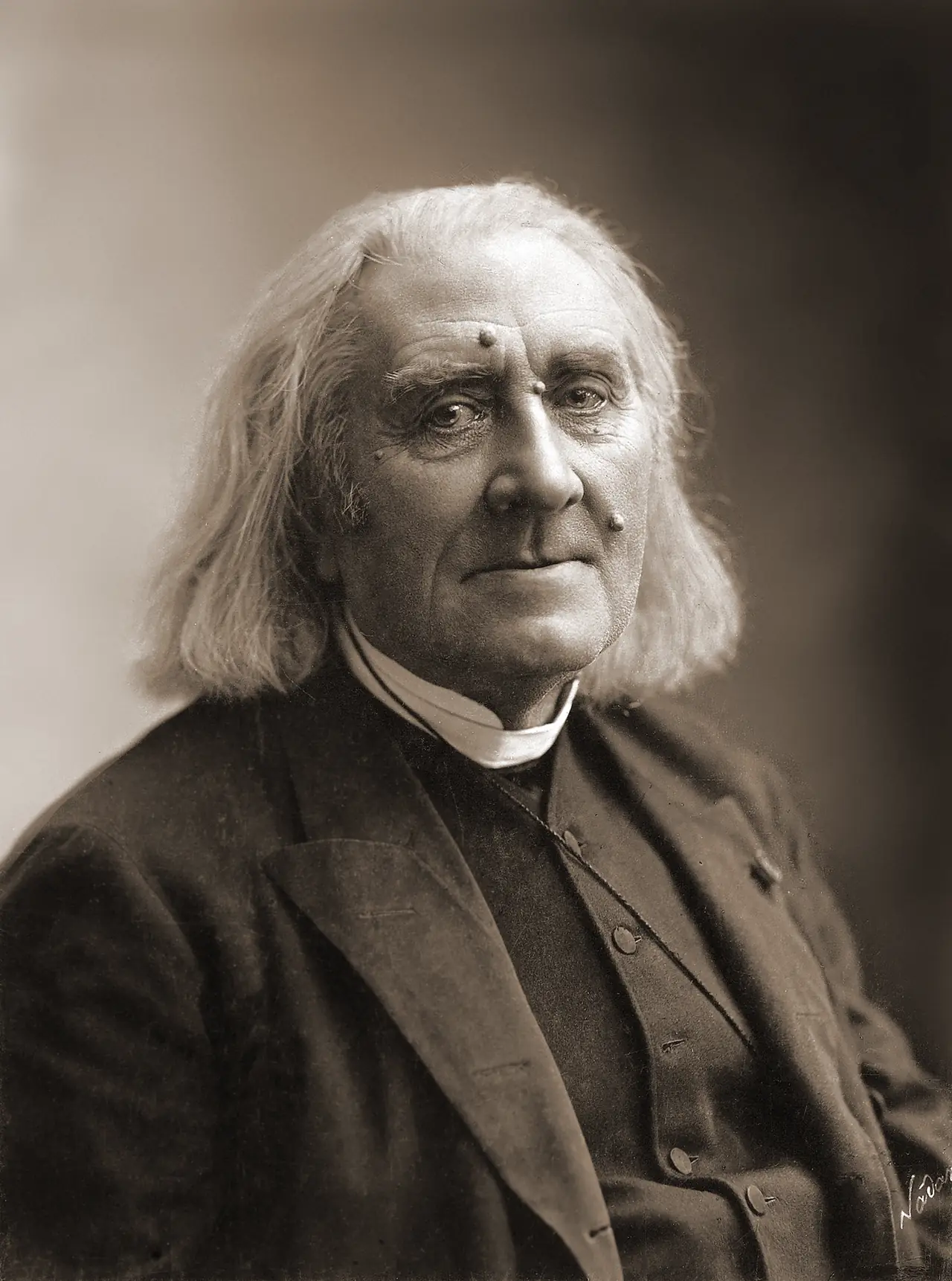
Carl Czerny and Antonio Salieri in Vienna; Anton Reicha in Paris
Homes
Paris · Weimar · Rome · Budapest
Teaching
Free masterclasses; founding president of the Budapest music academy, 1875
Output
Piano works and transcriptions; thirteen symphonic poems; symphonies, concertos and sacred music
Life
Writing from Albano in June 1839, Liszt told Princess Cristina Belgiojoso about the concerts he had been giving alone in Rome. No singer came on between his pieces, and no other soloist shared the bill. He played his transcription of the William Tell Overture, fantasies on opera tunes, studies and improvisations. Between numbers he talked to the audience. “The concert is me,” he joked.
1811–32The pupil
His father Adam had begun the piano lessons in Doborján, a German-speaking village in the Kingdom of Hungary, where he worked on an Esterházy estate. Liszt always counted Hungary as his homeland, though the languages he used most easily were German and French. The family went to Vienna in 1822. Carl Czerny, a former pupil of Beethoven, taught him piano, and Antonio Salieri taught him composition. In 1823 the family moved to Paris, where the Conservatoire refused to admit a foreigner. He continued his education with private lessons, including work with Anton Reicha.
Adam died in 1827, and the fifteen-year-old had to earn a living by teaching in Paris. His mother joined him there. As he grew older, books and conversation took up more of his time beside the keyboard. Victor Hugo and the priest and social thinker Félicité de Lamennais belonged to his circle, as did Chopin and Berlioz. He read widely. In 1832 he heard Paganini, and he returned to the piano with a new conception of what a performer might do.
On 2 May that year he wrote to the pianist Pierre Wolff: “For a fortnight my mind and fingers have been working like two damned souls.” He practised thirds, sixths, octaves, tremolos and repeated notes for four or five hours a day, with Bach and Beethoven among the scores on his desk. His transcription of the Symphonie fantastique, published in 1834, was an attempt to reduce Berlioz’s orchestra to two staves while keeping its inner voices.
Switzerland and ItalyMarie d’Agoult and Années de pèlerinage
In 1835 he left Paris with the married Countess Marie d’Agoult. They lived in Switzerland and Italy, and had three children: Blandine, Cosima and Daniel. Landscapes, reading and visits to works of art from these years went into what became Années de pèlerinage. The pieces of the Swiss book take as their subjects a chapel, lakes and a spring. Its longest piece, Vallée d’Obermann, takes its name from Senancour’s novel and is built on a descending phrase that returns many times.
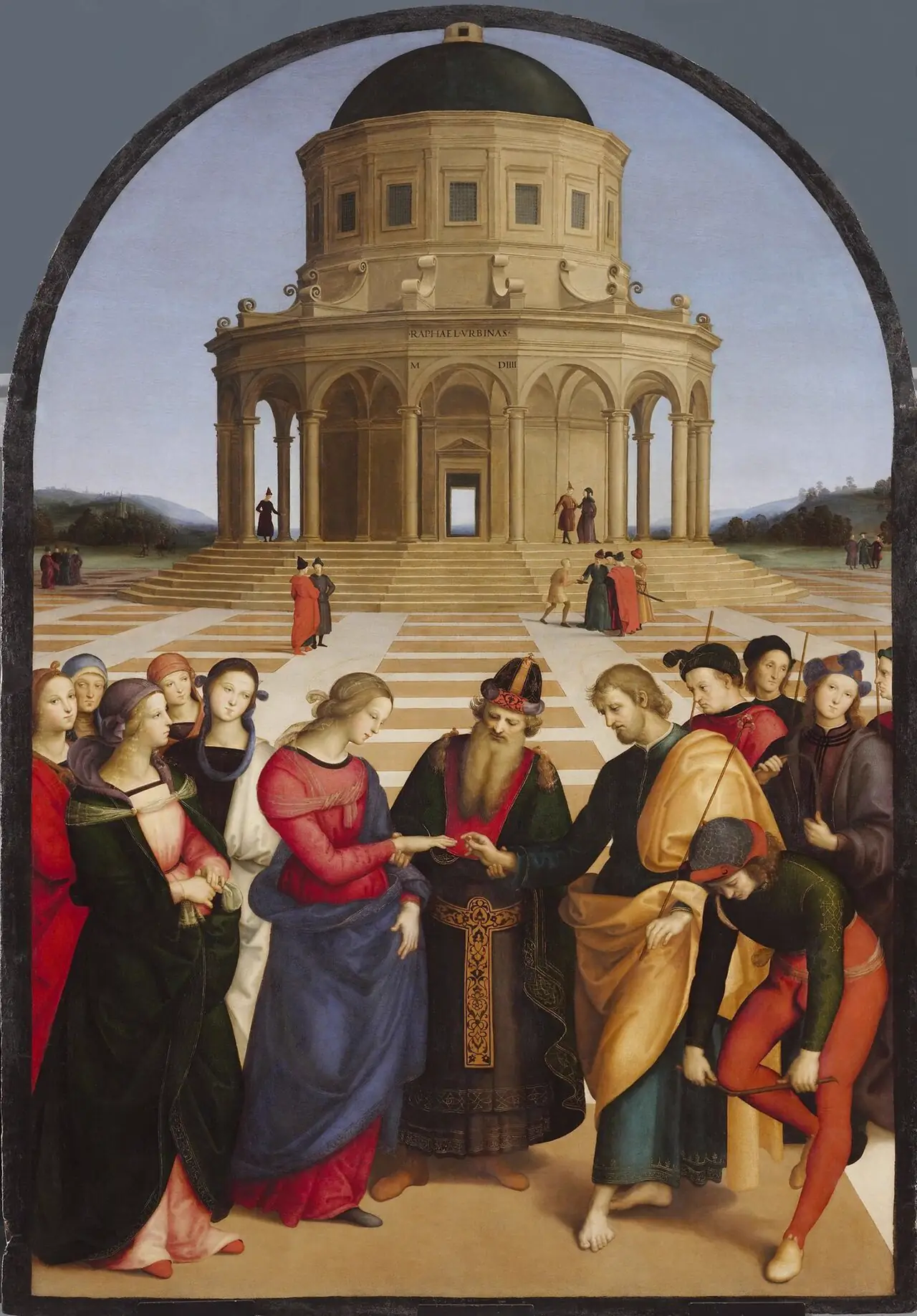
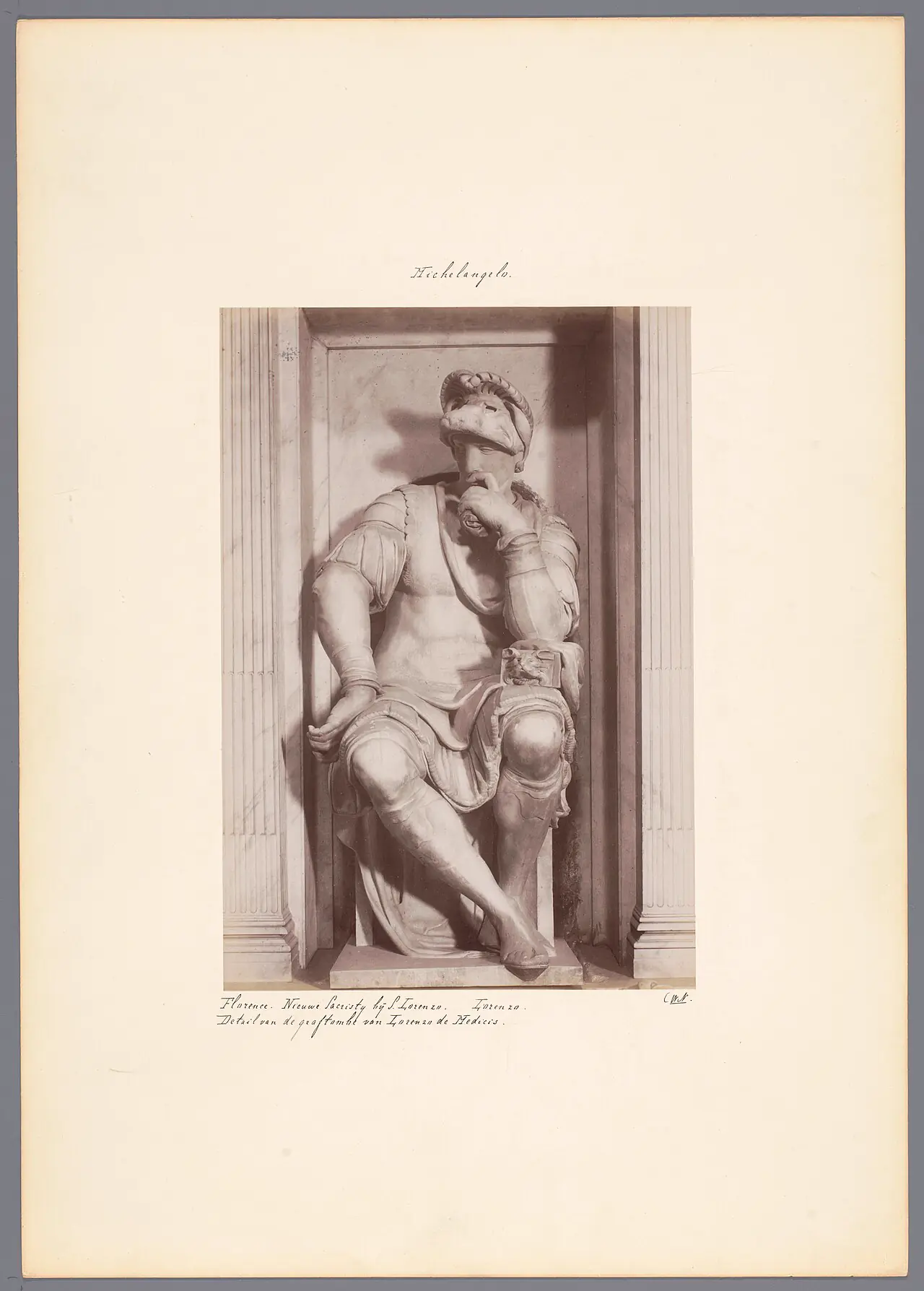
The Italian book begins with Raphael’s Marriage of the Virgin, then turns to Michelangelo’s statue of Lorenzo de’ Medici. Three Petrarch sonnets follow, then the long Dante fantasy. Sposalizio grows from a short phrase into a wedding procession. Il penseroso stays low on the keyboard, in slow, heavy dotted notes. These pieces were revised over several years before the volume appeared in 1858.
1839–47Liszt’s concert tours
During the great touring years Liszt’s face became as familiar as his music. He played from memory and helped establish the solo recital. Opera supplied material that an audience could recognise before he began transforming it. The Réminiscences de Don Juan uses the Commendatore’s music; the seduction duet receives elaborate variations, and the Champagne Aria drives the finish. The parts of Mozart’s singers, together with the basses and orchestral flourishes, are given to one pianist.
The Hungarian Rhapsodies make the same theatrical changes. A melody can pause while the player plays flourishes around it and then return. Liszt also used his celebrity on behalf of other people. He gave concerts for charitable causes and helped finance the Beethoven monument unveiled in Bonn in 1845. His transcriptions brought all nine Beethoven symphonies, Schubert songs and Wagner scenes into houses with a piano.
WeimarSymphonic poems and the Sonata
He stopped regular paid touring in 1847 and settled in Weimar in 1848 with Princess Carolyne zu Sayn-Wittgenstein. As conductor of the court orchestra he could try out new works and revise his own. In 1850 he conducted the première of Wagner’s Lohengrin; Wagner, in exile, could not attend. The symphonic poems, the Faust and Dante symphonies, and the B minor Sonata belong to these years. Assistants helped him prepare orchestral scores, which he continued to alter in rehearsal.
A symphonic poem could take its starting point from a picture, a poem or a historical figure. Les Préludes began as an overture connected with Joseph Autran’s poems; the link to Lamartine came later. Its opening idea becomes a broad melody or a march as Liszt changes the rhythm and accompaniment. In the Faust Symphony, Mephistopheles distorts Faust’s own themes into caricatures.
The B minor Sonata, completed in 1853 and dedicated to Schumann, performs its transformations without a stated literary programme. The repeated notes hammered out near the beginning, at bar 13, become a melody marked cantando espressivo at bar 153. A slow movement and a fugato fit inside the continuous span, and the early themes return in new forms. Hans von Bülow gave the first public performance in Berlin in 1857. Liszt had replaced his original loud ending with a quiet B major close.
Young musicians also came to Weimar to learn from him. His masterclasses in later life were free, and his generosity extended to composers whose works he conducted, arranged or recommended to publishers. His advocacy of programme music put him at the centre of the “New German School”. Arguments with the circle around Brahms could make the musical press resemble a quarrel between political parties.
Rome, Weimar, BudapestThe abbé
He moved to Rome in 1861 intending to marry Carolyne. Difficulties over the annulment of her previous marriage stopped the wedding. Four years later he entered minor orders. Religious music had occupied him long before he took orders. In the oratorio Christus, plainchant is developed into large choral and orchestral movements. He eventually divided his year between Rome, teaching in Weimar and work in Budapest. In 1875 he became the first president of the new Hungarian music academy.
Liszt’s later piano pieces are spare. In Nuages gris, written in 1881, a short melody repeats over low tremolos, and the piece ends on augmented chords without resolving. La lugubre gondola grew out of his stay in Venice before Wagner’s death; it takes the rocking motion of the boat and turns it towards a funeral. In the Bagatelle sans tonalité the quick dance figures never settle in a secure home key.
Liszt continued teaching and travelling as his eyesight and health failed. In July 1886 he went to Bayreuth, where Cosima, now Wagner’s widow, was running the festival. He attended Parsifal and Tristan und Isolde. On 31 July he died, aged seventy-four.
Places
Every recorded place, joined in date order. Liszt on the MapAll 20 places, with sources
Doborján (Raiding) · 22 October 1811 – 1820 · born
Born to Adam and Anna Liszt in Sopron County, then part of Hungary; the village is now Raiding in Austria.
In the B minor Sonata, the repeated notes at bar 13 return as the cantabile melody at bar 153. The idea is the same, and Liszt changes its tempo, accentuation and accompaniment. The later fugato passes familiar material from voice to voice.
𝄞Orchestral writing for piano
In Liszt’s Beethoven transcriptions two hands carry several instrumental parts at once. Octaves give a line weight, and tremolos prolong a chord. A melody may have to be played between the bass and figuration in the upper register. The pianist has to choose which voice to bring out at each point.
♯Unsettled harmony
An augmented triad divides the octave into equal major thirds. Any of its three notes can be heard as the root, depending on the harmonic context. Liszt used these chords at the opening of the Faust Symphony. In the late Nuages gris the texture is sparse, with single notes over low tremolos, and the piece ends on chords that do not settle in a key.
𝄾Declamation
The Petrarch sonnets began as songs, and the piano versions keep the phrasing of vocal writing. A phrase stresses a dissonant note, stops at a rest, then continues into a cadenza. In Sonnet 104 the poet’s contradictory feelings are set with abrupt changes of tempo.
𝄢Borrowed melodies
The plainchant Dies irae provides the material for Totentanz, and a chorale from Meyerbeer’s Le Prophète supplies the material for the organ Fantasy and FugueAd nos. In both works the borrowed melody is put through large changes of weight and speed. In the opera paraphrases the tunes come from operas the audience already knew, and they remain recognisable through Liszt’s alterations.
𝆏Water
In Les jeux d’eaux à la Villa d’Este, Liszt wrote repeated notes and broken chords in the upper register of the keyboard. He also wrote a verse from John’s Gospel into the score. Ravel’s Jeux d’eau later took up this piano writing for splashing water.
A few themes provide the material for one continuous movement, which includes a slow section and a fugato. The manuscript preserves the loud ending that Liszt replaced with a quiet close.
First performed in Weimar in 1854. Its connection with Lamartine followed earlier work on an overture to poems by Joseph Autran.
1855
Piano Concerto No. 1 in E♭ majorS. 124Piano and orchestra
Liszt played the première with Berlioz conducting. The triangle has a prominent part in the scherzo.
1855
Années de pèlerinage: Première année, SuisseS. 160Piano
Liszt revised pieces from his Swiss travels. Vallée d’Obermann takes its subject from Senancour’s novel; in Au lac de Wallenstadt a melody is played above a rippling accompaniment.
1857
A Faust SymphonyS. 108Orchestra; tenor and male chorus in the revised ending
Three portraits of Faust, Gretchen and Mephistopheles; the third distorts Faust’s themes. Liszt added the choral ending in 1857.
1858
Années de pèlerinage: Deuxième année, ItalieS. 161Piano
Raphael and Michelangelo open the book, with Petrarch at its centre. The Dante fantasy closes it and is on a much larger scale.
1877
Les jeux d’eaux à la Villa d’EsteS. 163/4Piano
Published in the third book of Années de pèlerinage in 1883. Liszt inscribed John 4:14 in Latin, the verse that promises water leading to eternal life.
1881
Nuages gris (Grey Clouds)S. 199Piano
Low tremolos and augmented chords surround a bare melodic fragment. The final chords do not settle on the tonic.
A schematic of thematic transformation. The same rising and falling line moves from D minor into D major, with F becoming F♯. The second version is in a slower triple metre, with longer accented notes.
Symmetrical harmony — schematicThe augmented triad: three possible roots
A schematic of an augmented triad in two spellings. C–E–G♯ becomes E–G♯–B♯, with the same pitch classes; C is moved up an octave and renamed B♯. Each step spans four semitones, so the chord divides the octave into equal thirds.
Sister arts
RaphaelThe Marriage of the Virgin (Lo Sposalizio), 1504Oil on panel · Pinacoteca di Brera, Milan
Liszt and Marie d’Agoult encountered Italian art during their years of travel. Raphael’s wedding painting was the source of Sposalizio, the opening piece of the Italian Années. In the painting a crowd stands before a measured pavement and temple; Liszt expands a short opening phrase until it carries the full procession.
Michelangelo; photograph by an unidentified photographerLorenzo de’ Medici, called Il Pensieroso, Monument, 1524–34; photograph, c. 1875–1900Albumen print of a marble sculpture · Sculpture: Medici Chapels, San Lorenzo, Florence; photograph: Rijksmuseum, Amsterdam
Michelangelo’s seated Lorenzo de’ Medici was the source of Liszt’s Il penseroso. The figure’s hand supports his chin; the music stays low on the keyboard and moves in dotted steps. Liszt also printed Michelangelo’s verse about Night, a sculpture on the nearby tomb of Giuliano, in which the stone figure asks to be left asleep.
Francesco Petrarca
Pace non trovo — opening quatrain
Fourteenth century; Liszt’s Sonetto 104
ItalianPace non trovo, et non ò da far guerra;
e temo, et spero; et ardo, et son un ghiaccio;
e volo sopra ’l cielo, et giaccio in terra;
et nulla stringo, et tutto ’l mondo abbraccio.
Our translationI find no peace, and have no war to wage;
I fear and hope; I burn and am ice;
I fly above the sky and lie upon the earth;
I grasp nothing, and embrace the whole world.
In Petrarch’s sonnet the lover burns and freezes, flies and lies on the ground. Liszt first set the poem for voice, then arranged it for piano, which takes over the long phrases and the bursts of agitation. His Sonnet 104 is Sonnet 134 in modern editions.
Recommended recordings
Piano Sonata in B minorMartha ArgerichDeutsche GrammophonArgerich’s playing changes suddenly between quiet and forceful passages, in the fugato and across the single movement.
Années de pèlerinage, Books I and IIAlfred BrendelPhilipsChosen for hearing how the travel pieces are built. Brendel plays Vallée d’Obermann and the Italian book.
Hungarian RhapsodiesGyörgy CziffraEMIWild tempo changes and formidable octaves. Cziffra treats the rhapsodies as a virtuoso’s working repertory and takes liberties with the tune before playing it at full speed.
Liszt transcribed Beethoven’s symphonies and Schubert’s songs for the piano, and drew ideas from Paganini’s violin playing. His symphonic poems gave Strauss a starting point; Busoni continued his work as a transcriber, and Ravel took up the subject of fountains after him. Bartók admired his harmonic experiments but disputed his account of Hungarian musical sources.
Further reading
Alan Walker, Franz Liszt, vol. 1, The Virtuoso Years, 1811–1847, revised edition (Ithaca, NY: Cornell University Press, 1987). biography
First volume of Walker’s biography, covering training and the virtuoso career.
Dolores Pesce, Maria Eckhardt and Rena Charnin Mueller, ‘Liszt, Franz’, Grove Music Online (Oxford University Press, 2001). reference
Biographical reference, work-list and bibliography; subscription required.
Humphrey Searle, The Music of Liszt (London: Williams & Norgate, 1954). catalogue
Historical musical survey with a catalogue of works on pages 155–195.
Franz Liszt, Letters of Franz Liszt, vol. 1, From Paris to Rome: Years of Travel as a Virtuoso, collected by La Mara, translated by Constance Bache (Project Gutenberg, 2003 electronic edition). letters
Freely readable historical translation of correspondence.
Cite this page
Contrapunctus. “Franz Liszt.” Accessed 20 October 2026. https://mottopanikeiku.github.io/contrapunctus/composers/liszt.html.