Rhapsody in Blue
2 recordings · 27 min
In the Hall
- 1924 abridged recording — both original sidesGeorge Gershwin, piano; Paul Whiteman Concert Orchestra; Paul Whiteman, conductor · 10 June 1924, New York9:06
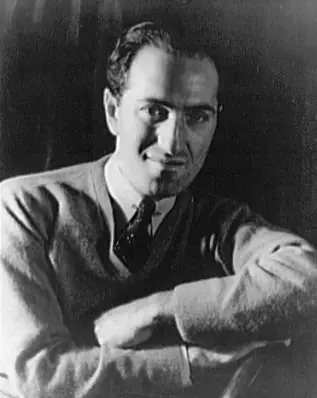
Gershwin played the piano in the first recording of his Rhapsody in Blue, made in 1924 with Paul Whiteman’s band and with Ross Gorman’s sliding clarinet. Both sides of the record are heard here; this nine-minute version cuts about a third of the score.
Listening notes
- Clarinet glissando, Ross Gorman
Ross Gorman’s clarinet rises from a low trill to a high B♭ in one continuous glissando. Gershwin had written a scale. Gorman turned it into a glissando during rehearsal, and Gershwin kept it.
- First performance, Aeolian Hall, 1924
On 12 February 1924 Gershwin played the piano in New York’s Aeolian Hall while Whiteman’s band gave the première of his new Rhapsody. The concert was called “An Experiment in Modern Music”. They made this record four months later, on 10 June 1924.
- Scherzo, “Train” and “Stride” themes
The faster section combines repeated train-like rhythms with stride piano, in which the left hand jumps between bass notes and chords. To fit the music onto two sides, the record omits the “Shuffle” tune and the third cadenza. After the piano’s stride solo it moves almost directly to the slow melody.
- Grofé’s orchestration for Whiteman’s band
Ferde Grofé turned Gershwin’s two-piano draft into parts for Whiteman’s players, taking pages as Gershwin finished them. He knew their instruments and their individual strengths. The clarinet and trumpet solos were written for a band whose players also made dance records.
- Slow section, melody in E major
The slow section opens with a long melody in E major, which the band sustains across whole phrases. The piano later takes the melody over before the closing return of earlier themes.
- Victor advertisement, Chicago Tribune, 1924
Victor advertised the two-sided Rhapsody for $1.50 in the Chicago Tribune on 5 September 1924. The record lasts about nine minutes. Roughly a third of the score was cut to fit the two sides.
- 1924 jazz-band orchestrationBramwell Tovey, piano; United States Marine Band · 10 July 2018, The Music Center at Strathmore, North Bethesda, Maryland18:10
Bramwell Tovey plays Gershwin’s Rhapsody in Blue with the United States Marine Band at the band’s 220th-anniversary gala. The performance uses Grofé’s original 1924 jazz-band scoring for reeds, brass and banjo with piano, and includes the long solo passages cut from Gershwin’s first record.
Listening notes
- Opening clarinet glissando
A low trill on the clarinet grows louder and leads into a long glissando up to concert B♭. The tune that follows mixes major and minor thirds. Piano cadenzas interrupt the band, extend the phrases and move them in new directions.
- Ross Gorman’s opening glissando
In Gershwin’s own writing the opening was a rising scale. At a rehearsal Whiteman’s clarinettist, Ross Gorman, played it as the glissando that now opens the piece, to Gershwin’s delight.
- Tribune announcement, January 1924
On 4 January 1924 a short item in the New York Tribune announced that George Gershwin was writing a “jazz concerto” for Paul Whiteman’s concert on 12 February. Whiteman had asked him months before, and Gershwin had forgotten. According to legend, his brother Ira showed him the item over a game of pool.
- 220th anniversary concert, Strathmore, 2018
On 10 July 2018 the Marine Band marked its 220th anniversary with a concert at the Music Center at Strathmore. Bramwell Tovey was the evening’s guest conductor, composer and piano soloist, and he played the piano part in the Rhapsody.
- Train theme, rehearsal 9
The faster music begins at rehearsal 9 with the train theme, a short, repeated figure. Stride piano enters at rehearsal 12, with the left hand moving between bass notes and chords. The band and the solo piano then alternate in playing these themes.
- Lawrence Gilman’s review, 1924
The morning after the première, Lawrence Gilman wrote in the Tribune of “how trite, feeble and conventional the tunes are”. He also praised “the rich inventiveness of the rhythms, the saliency and vividness of the orchestral color”.
- Grofé’s 1924 jazz-band orchestration
This performance uses Grofé’s 1924 jazz-band version. He chose its reeds, brass, banjo and violins for Whiteman’s particular players. The familiar symphonic orchestration, for a larger orchestra, followed in 1942.
- Two-piano score and orchestration
Gershwin wrote the Rhapsody as a two-piano score, with one piano for the soloist and the other standing for the band. Ferde Grofé took the pages away as they were finished and wrote out parts for each of Whiteman’s players.
- Piano cadenzas
Gershwin wrote several cadenzas into the Rhapsody, passages in which the solo piano sets the tempo and the length of the pauses between phrases. Between them the themes return, in new keys or played by the band.
- Leonard Bernstein on the Rhapsody
Thirty-one years after the première, Leonard Bernstein wrote that “the themes are terrific, inspired, God-given”. He also called the Rhapsody “a string of separate paragraphs stuck together” and said parts of it could be cut without affecting the whole.
- Slow melody in E major
After the piano’s solo passage, the band plays the broad melody in E major in long phrases. Later the piano takes the tune alone in a more decorated version. Earlier themes return in the final section.
- Bramwell Tovey, early training and career
Bramwell Tovey began in Salvation Army bands and studied at the Royal Academy of Music. He played jazz and classical piano and the tuba. He led the Vancouver Symphony for eighteen years from 2000, became principal conductor of the BBC Concert Orchestra in January 2018, and died in 2022.
- Gershwin’s 1924 recording
Gershwin’s own 1924 record lasts about nine minutes. Roughly a third of the score was cut to fit one two-sided disc, including the “Shuffle” tune, the third cadenza and most of the grand cadenza.
- Electrical recording, Victor, 1927
In 1927, three years after the first record, Victor brought Gershwin and Whiteman together again to record the work electrically, using Grofé’s slightly larger scoring. Gershwin was unhappy with some of Whiteman’s conducting, and Nathaniel Shilkret conducted. Side one needed nine takes, side two six.
- Return of the opening theme
The opening theme returns in the closing pages, at rehearsal 40, and the work ends in B♭ major. Piano and band exchange shorter phrases in the final flourish.