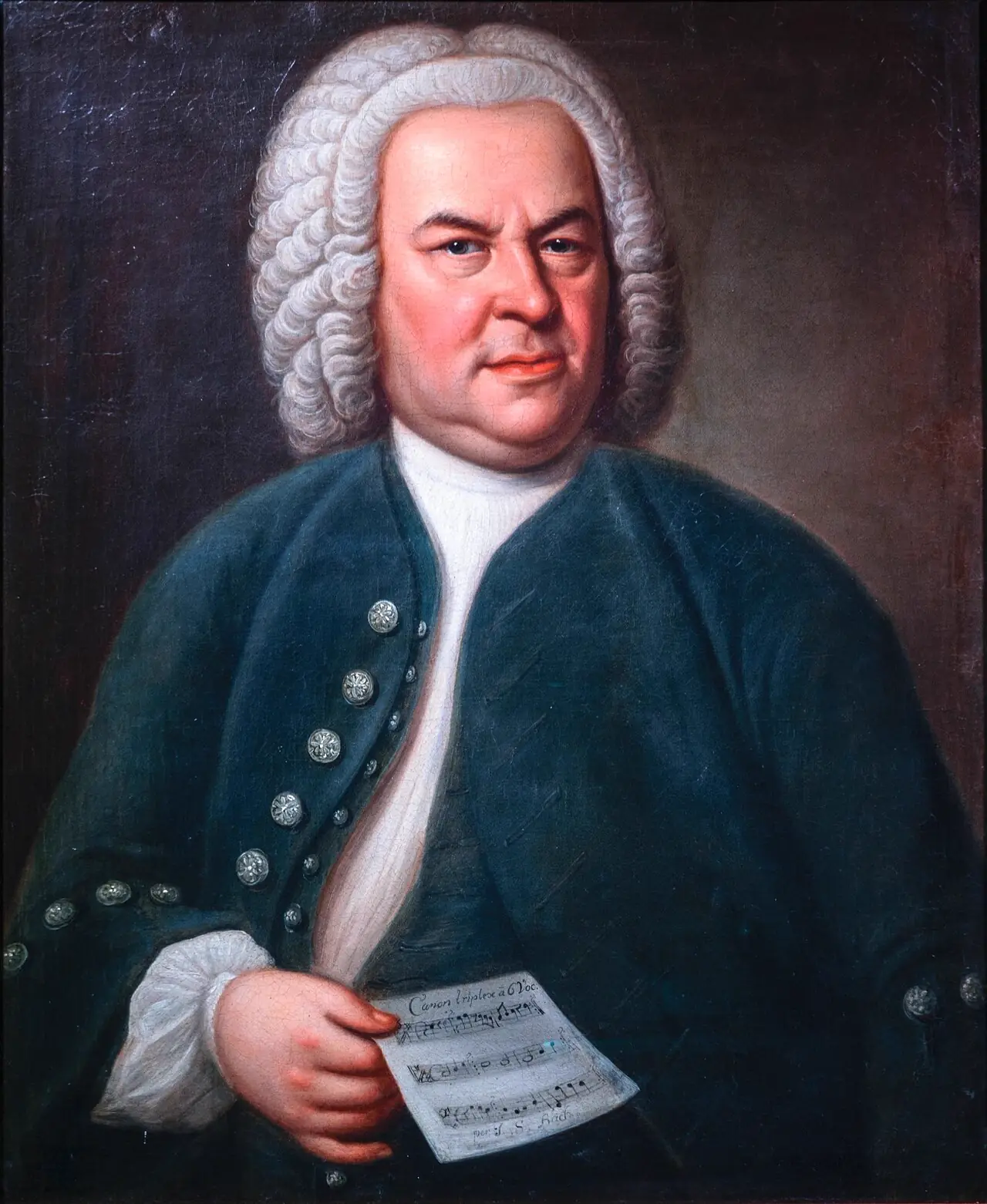
Goldberg Variations, BWV 988
5 min
Recording
- AriaShelley Katz, piano4:52
Shelley Katz plays the Aria that opens the Goldberg Variations, BWV 988, a richly ornamented melody over a slow-moving bass. The same bass line supports thirty variations before the Aria returns.
Listening notes · joins
- Aria, descending bass
The right hand plays the melody with trills and appoggiaturas. Below it, the bass descends G–F♯–E–D, one step per bar. Bach built the thirty variations that follow on this bass and its harmonies, and the ornamented melody belongs to the Aria alone.
- Forkel’s anecdote, 1802
In the story Forkel told in his 1802 biography, Count Keyserlingk could not sleep. Goldberg stayed in an adjoining room to play for him, and Bach supplied the variations. The count rewarded Bach with a golden cup filled with a hundred louis d’or.
- Repeat of the first half
After a cadence in D major, the first half starts again on G. The slow descending bass returns beneath the decorated melody, and the sixteen bars are played a second time.
- Bach’s own copy of the print
Balthasar Schmid printed the Aria and its variations in Nuremberg in 1741; the title page called for a harpsichord with two manuals. Bach’s own copy of the print, found in Strasbourg in 1974, adds fourteen canons on the Aria’s bass.
- Second half, move to E minor
The second half begins over D and moves towards E minor. The melody keeps its ornaments, and the bass moves more. The cadence in E minor falls in bar 24, and the Aria closes in G major in bar 32.
- Anna Magdalena’s copy, c. 1740
Anna Magdalena copied the Aria onto two blank pages of her music notebook. The book was begun in 1725, and the handwriting dates this entry to around 1740.
- Repeat of the second half
After the G major cadence the second half, bars 17–32, is repeated. Its E minor passage returns, followed by the longer runs. The final G is held under a fermata in bar 32, with the melody turning around it in an ornament.
Joins
- From D major back to G
The first half closes on a D major chord, with D in the bass. The repeat goes straight back to the opening G. The bass descends again G–F♯–E–D, and above it the right hand repeats its ornamented melody from the start.
- The bass moves on from D
The D major cadence ends the first half for the second time. The next bar keeps D in the bass, then moves down to C, and the following bars turn towards E minor. The three-beat pulse continues unchanged, and the right hand keeps its elaborate ornaments.
- G major, then the second half
The second half closes in G major, with a fermata over the final bar. At the repeat the pianist goes back to bar 17 and the bass D, and the passage through E minor and the return to G major are played a second time.