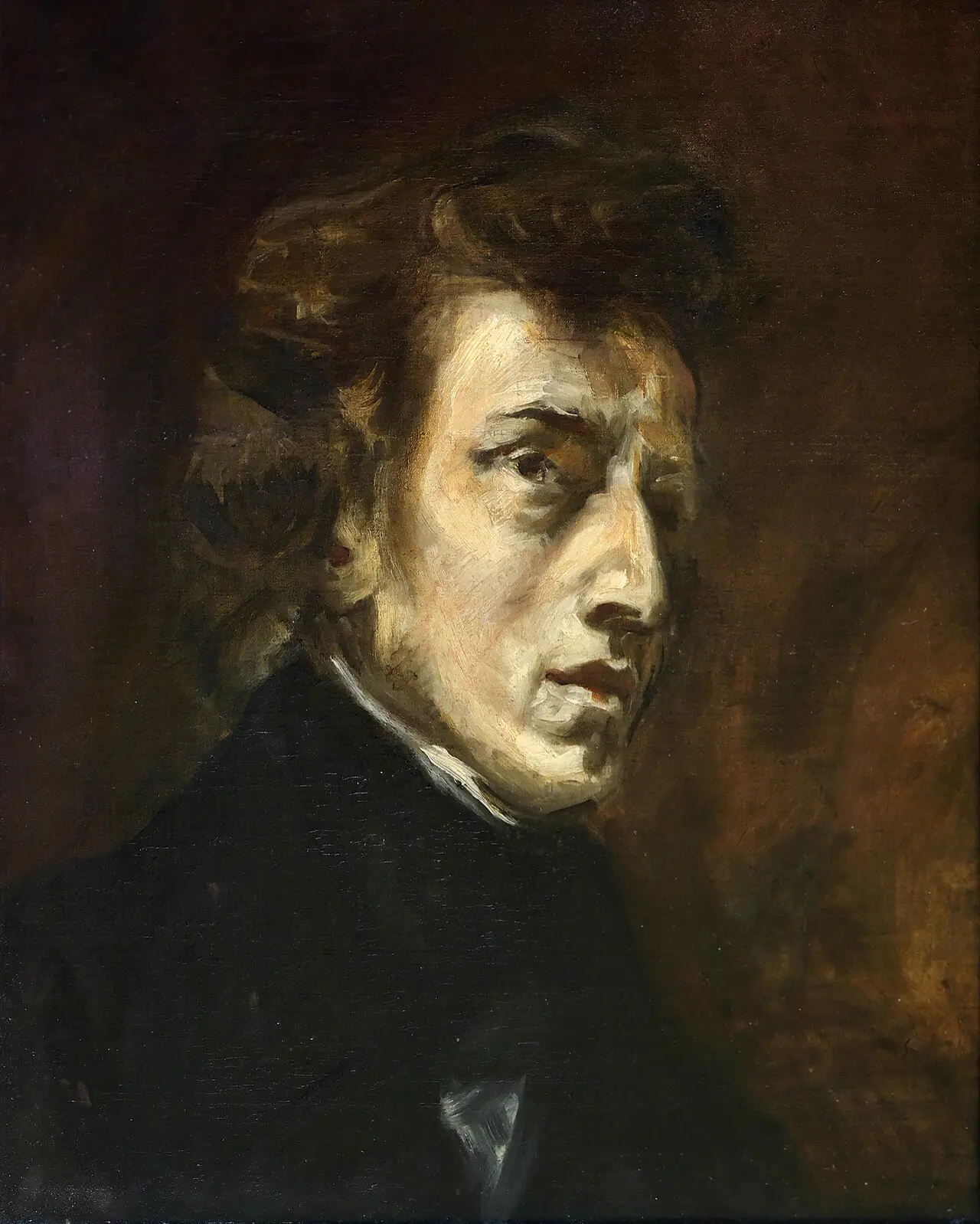
Étude, Op. 25 No. 6 (“Thirds”)
Recordings
Historical and comparison recordings, outside the concert’s running order.
- Étude in G♯ minor, Op. 25 No. 6 (“Thirds”)Ignacy Jan Paderewski, piano · 4 May 19232:10
Ignacy Jan Paderewski made this recording of Chopin’s Étude in G♯ minor, Op. 25 No. 6 (Thirds), in 1923, four years after he served as Poland’s prime minister. The étude is marked sotto voce and calls for fast paired notes in the right hand.
Listening notes
- Right-hand thirds, sotto voce
Chopin marks the étude sotto voce. The right hand plays trills and runs in thirds throughout, two notes sounding together at each step. The left hand has a slower melodic line beneath them.
- Paderewski in Warsaw and Paris, 1919
Crowds cheered Paderewski in Warsaw on New Year’s Day 1919. Two weeks later he became Poland’s prime minister, and that spring he represented the country at the Paris Peace Conference. By February 1920 he had returned to his musical career, and he made this Victor recording in 1923.
- Étude in G♯ minor, Op. 25 No. 6 (“Thirds”)Edward Neeman, piano · c. 20142:10
Edward Neeman plays Chopin’s Étude in G♯ minor, Op. 25 No. 6 (“Thirds”), which Chopin marked sotto voce — in an undertone. A right-hand trill leads into scales of paired notes, and the left hand plays a slower melody.
Listening notes
- Opening trill in thirds
The right hand opens with a trill in thirds, each movement shifting two notes together. The pairs then run up and down in chromatic scales. Beneath them the left hand plays a slower melody, which Chopin marked sotto voce.
- Neeman’s sostenuto mechanism
Neeman developed a change to the sostenuto mechanism that allows a pianist to combine it with the damper pedal in new ways. He presented the results to teachers and performers.