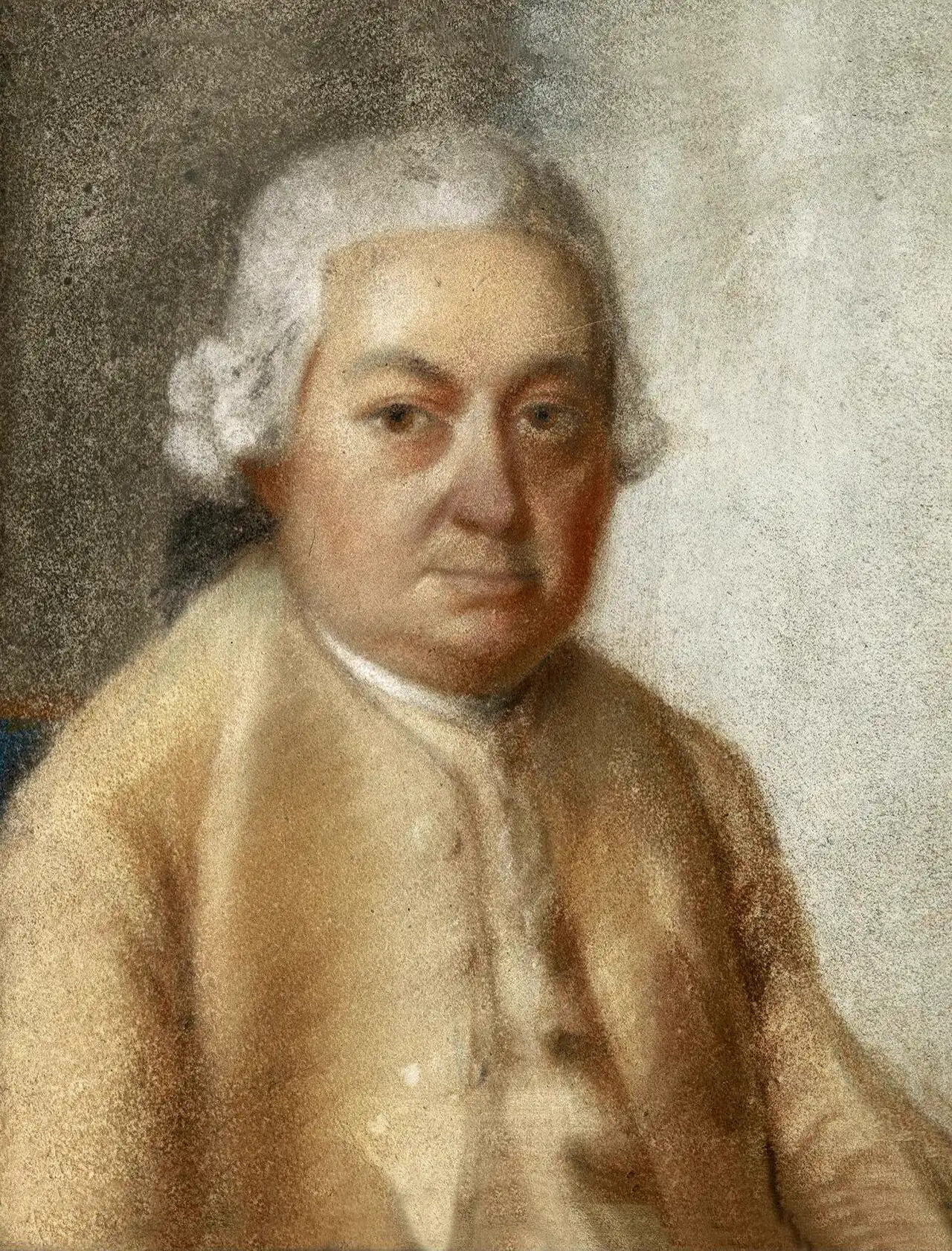
Fantasia, Wq 67
13 min
Recording
- Fantasia in F♯ minor, Wq 67Joan Benson12:33
Joan Benson plays Bach’s late Fantasia in F♯ minor, Wq 67, on the clavichord, an instrument with a soft tone that can move suddenly from very soft to loud. Long runs extend beyond the bar lines, and short chords cut them off.
Listening notes
- Opening bars, Adagio
Pairs of chords sound above a steady bass, separated by rests. After two measured bars a run rises through the keyboard and the bar lines stop. Sudden piano and forte markings alternate within a single phrase.
- Benson’s first clavichord lessons
Benson came to Fritz Neumeyer’s clavichord lessons as an accomplished pianist. At first he would not let her play pieces, and for months she worked only on producing a tone. Recalling those lessons in 1999, she said, “I had to become a beginner again”.
- Keyboard treatise, 1753
“A musician cannot move others unless he too is moved.” Bach wrote this in his 1753 keyboard treatise. He named improvisations and fantasias as the places where the player could most directly command an audience’s feelings.
- Charles Burney’s visit, Hamburg, 1772
After dinner in Hamburg in 1772, Bach played the clavichord for Charles Burney until nearly eleven. Burney described his fixed eyes, his fallen lower lip and the sweat that gathered as he played.
- Preparation for KQED broadcast, 1961
Preparing this fantasia for a 1961 radio appearance on KQED, Benson considered shortening it but found that each section led into the next. In her 1999 interview with Richard Troeger, she recalled tracing the connection through the bass line and letting the piece change with every performance.
- First recording sessions, 1962
Benson’s first recording sessions, in 1962, took place in three locations. Cleaners interrupted one and a radio station intruded on another, and the sessions were finally completed in a house in Marin County. Between takes she went outside to look at the stars or pet the dog.
- Final Largo over repeated F♯s
The last Largo brings back bar lines and a twelve-eight metre. The left hand repeats low F♯s while the right hand plays its final figures. The last phrase is marked pianissimo, and rests follow the closing chord.