Pie Jesu
5 min
Recording
- Pie JesuAlain Fauqueur, boy soprano; J. J. Grunenwald, organ; members of the Orchestre des Concerts Lamoureux; Igor Markevitch, conductor4:46
Alain Fauqueur’s boy soprano sings Boulanger’s Pie Jesu, her last completed work, a setting of the prayer for voice, organ and four solo strings. The harp enters in the closing pages, where the harmony moves to G major.
Listening notes · joins
- Chromatic organ writing, opening
The organ plays paired notes that move up and down by semitones. Above them the strings hold long notes, and the voice sets the Latin prayer in long phrases. The harp rests.
- Dictation of Pie Jesu, 1918
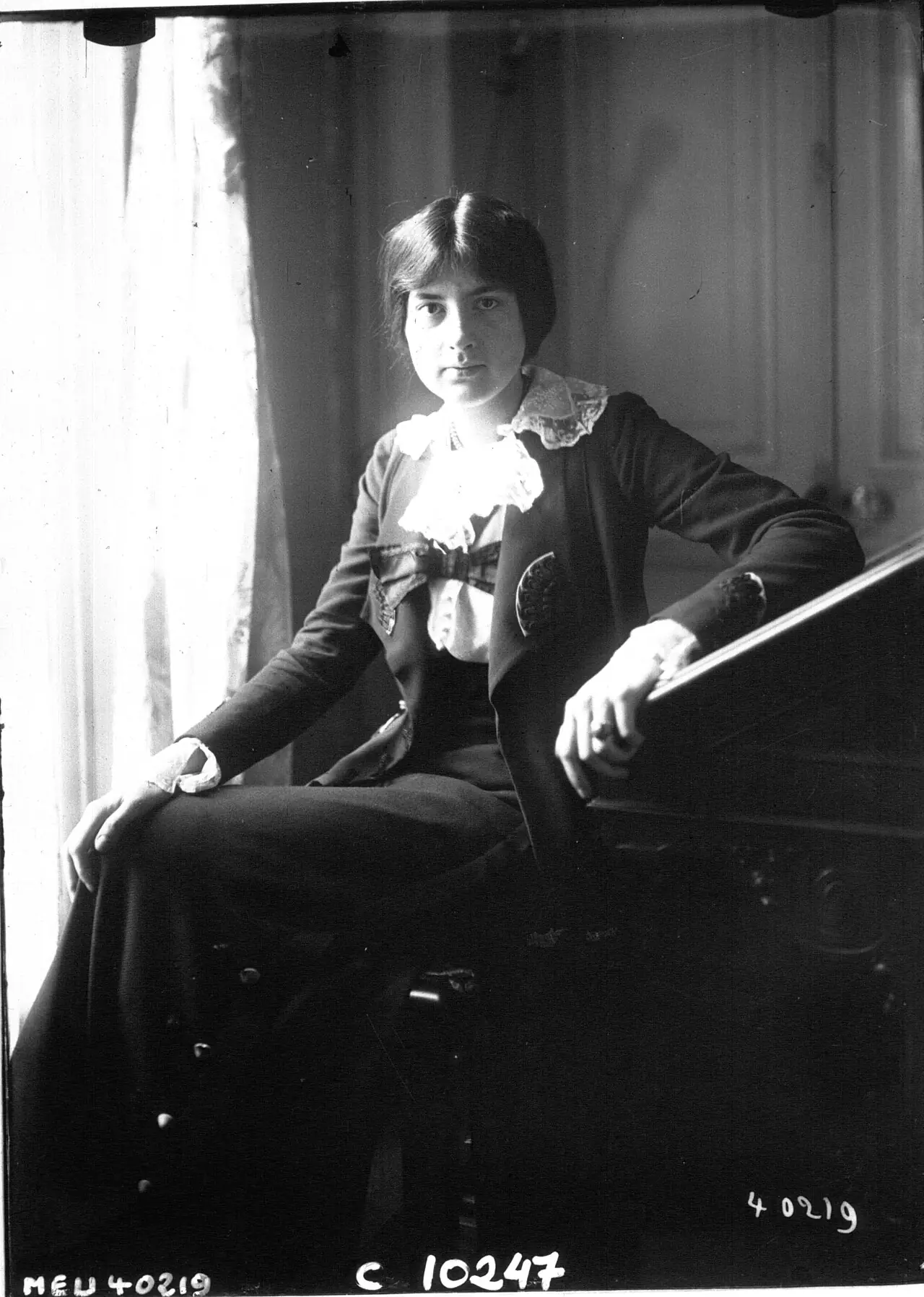
In 1918 Lili was too ill to write the notes herself. From her bed she dictated Pie Jesu to her elder sister, Nadia. It was her last completed work.
- Organ interlude, figure 2
While the voice rests, the organ plays the chromatic figure in both hands. Boulanger directs the player to add stops little by little. The strings rise with it in a crescendo, and the score is marked Sans presser (without hurrying).
- Return of the voice, plaintif
The voice returns pianissimo, marked plaintif. The organ pedal repeats one low note while the chords above it change. Solo strings enter around the singer, first viola, then second violin and cello.
- Boy soloist, Everest recording
A boy sings this prayer. The Everest sleeve named the soloist as Alain Fauqueur of the Petits Chanteurs de Vincennes, and David Noakes’s note on the sleeve heard “ineffable serenity” in the music at the composer’s last hour.
- Harp entry and final Amen
The harp enters. Boulanger marks the strings muted and the tempo Lent. Chromatic notes still pass through the accompaniment, but the final Amen is set over a low G, and the last chord is G major.
- Everest recording, 1960
Lili died at Mézy on 15 March 1918, aged twenty-four. Forty-two years later Everest issued this record. Its sleeve said it had been Nadia’s “lifelong ambition” to have her younger sister’s music recorded.
Joins
- Organ and strings at figure 2
At figure 2 the singer rests. The organ’s chromatic figure spreads into both hands above long pedal notes, and the strings climb through a crescendo. Boulanger gradually adds organ stops and marks the passage Sans presser, so the volume grows while the tempo stays the same. The music remains in G minor.
- Organ link to the voice’s return
The strings stop after their forceful chord. The organ drops to pianissimo, the pedal repeating a low note beneath held, shifting chords. The voice returns with Pie Jesu, marked plaintif, and the viola and the other strings re-enter one at a time.
- G major, with harp
A long ritardando leads to Lent and a new key signature of one sharp. The harp enters, the strings put on mutes and the organ holds a low G. Semitones still pass through the upper parts, and G major is not fully established until the final Amen.