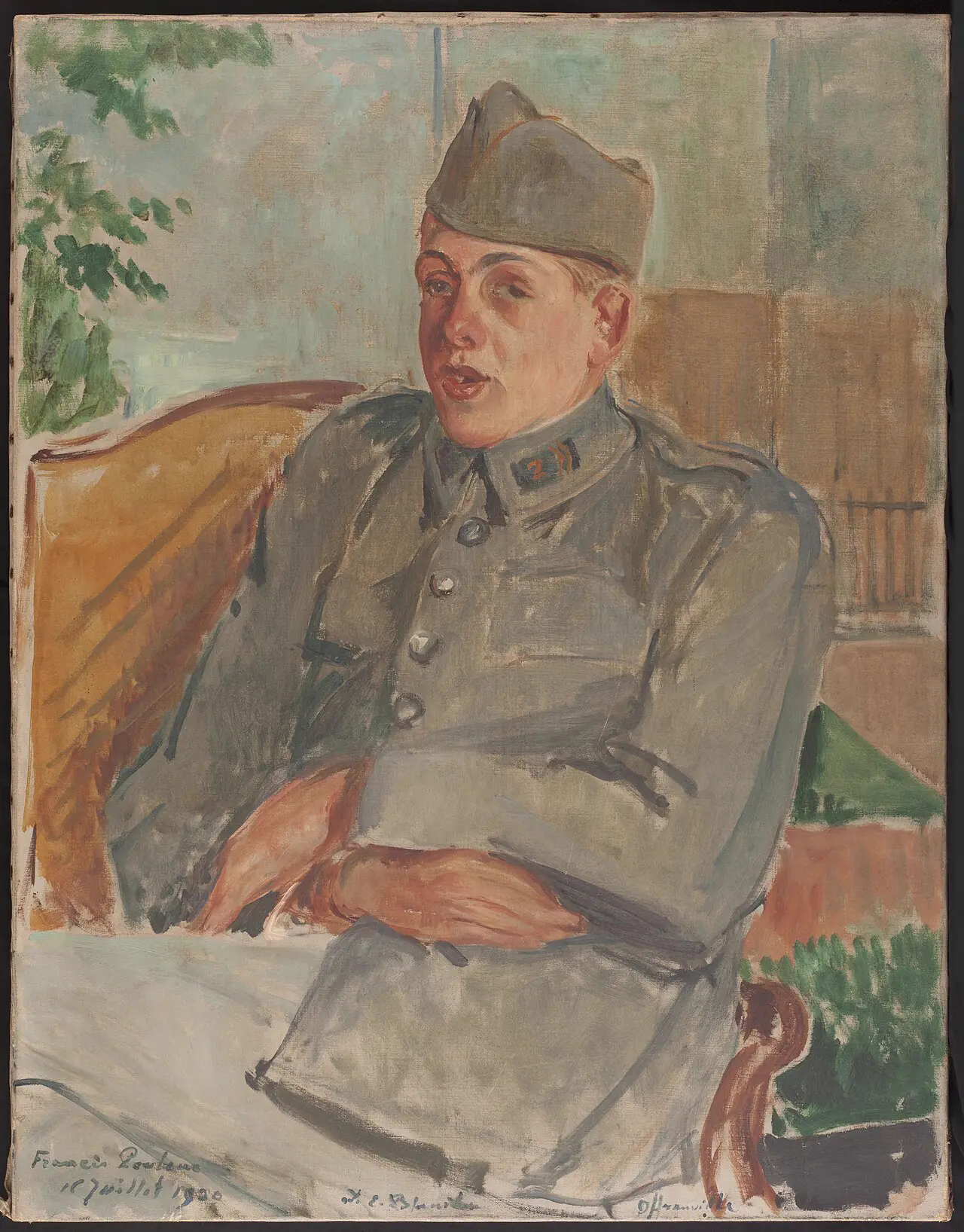
Le Bestiaire ou Cortège d’Orphée, FP 15
5 min
Recording
- Le Bestiaire ou Cortège d’Orphée, FP 15Pierre Bernac, baritone; Francis Poulenc, piano4:44
Pierre Bernac sings the six Apollinaire songs of Poulenc’s Le Bestiaire, with the composer at the piano. The record, HMV DB 6299, was listed for sale as an import by April 1947.
Listening notes
- Le Dromadaire
The first song sets Apollinaire’s five lines about Don Pedro d’Alfaroubeira, who travelled the world with four dromedaries. The poems come from Apollinaire’s Le Bestiaire of 1911, illustrated by Raoul Dufy.
- Twelve poems, then six
Poulenc chose twelve of Apollinaire’s poems while stationed at Pont-sur-Seine, then cut the set to six on Georges Auric’s advice. He dedicated the six to Louis Durey, who was setting the whole collection.
- La Chèvre du Thibet
In the second song the poet says that the hair of the Tibetan goat, even the golden hair Jason took so much trouble over, is worth nothing beside the hair he loves.
- La Sauterelle
In the third song Apollinaire’s grasshopper is “la nourriture de saint Jean”, the food of Saint John, and he hopes his verses will be “le régal des meilleures gens”, a treat for the best people.
- Le Dauphin
The fourth song speaks to dolphins playing in a sea whose waves are always bitter. The poet asks whether his joy sometimes bursts out, and adds that life is still cruel.
- L’Écrevisse
In the fifth song the poet and “incertitude” go away together “à reculons”, backwards, as crayfish do.
- La Carpe
The last song asks the carp in their ponds whether death has forgotten them, and calls them “poissons de la mélancolie”, fish of melancholy.
- The record in April 1947
The Gramophone Shop’s supplement for April 1947 called Bernac’s interpretations “authentic”, recorded with the composer at the piano. It added that Claire Croiza had recorded Le Bestiaire before, on a record no longer obtainable.