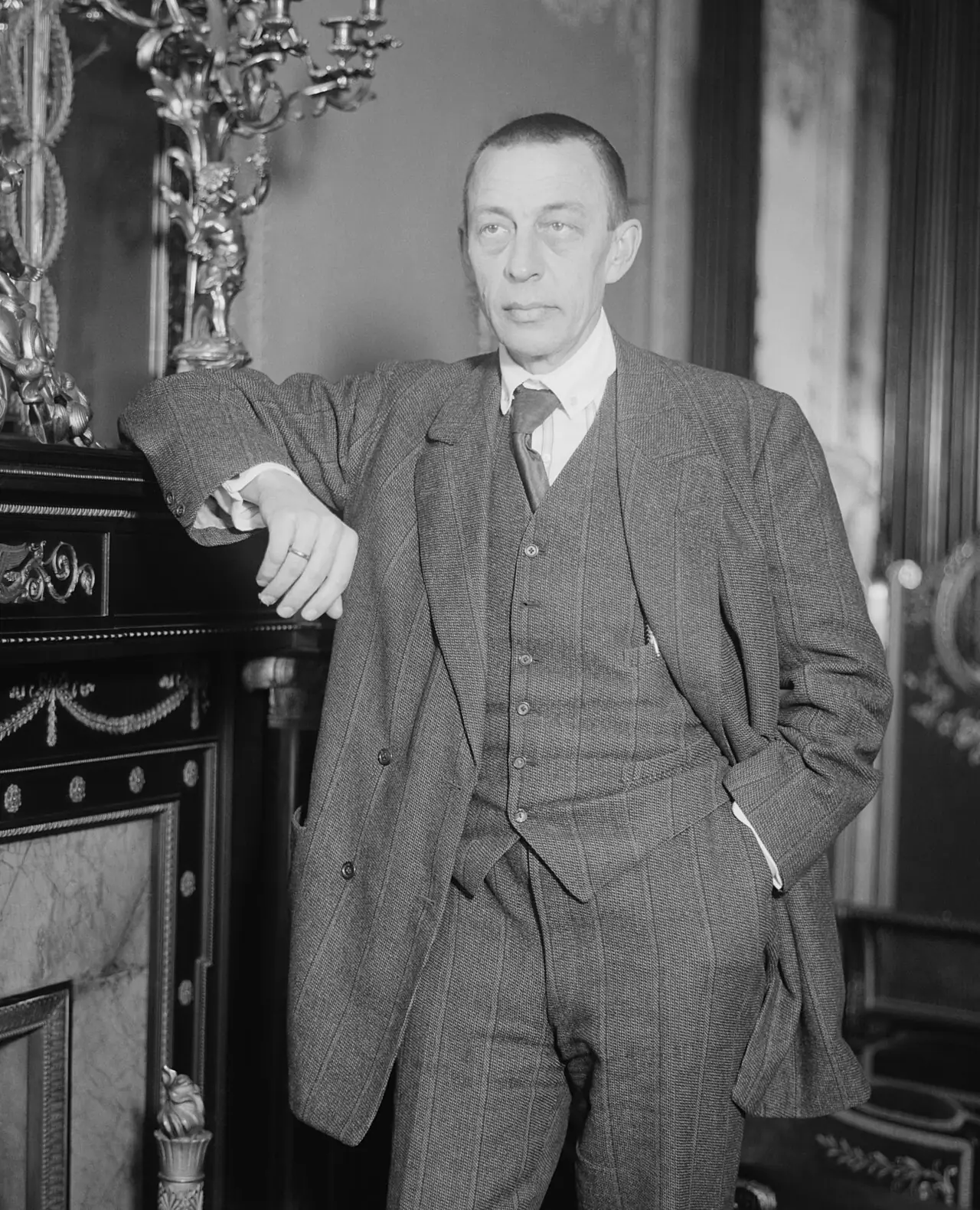
Recording
- Allegro vivaceSergei Rachmaninoff, piano · 6 March 19233:39
Rachmaninoff wrote Polichinelle, Op. 3 No. 4 (Allegro vivace), at nineteen; it alternates loud, heavy notes with soft, rapid flurries and has a song-like middle section. The composer plays it in this 1923 recording.
Listening notes · joins
- Opening, fff and ppp contrasts
Two notes are marked fff, followed by a rapid figure at ppp. The hands jump between these extremes, and grace notes and rests break up the line. Both hands soon play full chords at ff.
- Title suggested by Slonov, 1892
In 1892 the tenor Mikhail Slonov suggested the title Polichinelle to his friend Rachmaninoff, who was assembling pieces around his C♯ minor Prelude for a concert in Kharkov. Gutheil published the five Morceaux de fantaisie the following February, dedicated to Anton Arensky.
- Victor recordings, 1920 and 1923
Rachmaninoff first recorded Polichinelle for Victor on 20 October 1920, at the company’s laboratory in Camden, New Jersey, and that take was destroyed. He recorded it again in New York on 6 March 1923. This second take was issued on Victor 74807, and on 6452 with Chopin’s F♯ major Nocturne.
- Agitato section
At Agitato a long slurred line moves over held bass notes. Accents mark out a melody within the fast figures. Each group of semiquavers and triplets above it is slurred.
- Return of the opening figures
Heavy chords interrupt the running figures. The grace notes of the opening then return at ppp, placed between short, accented notes. The smooth middle section has ended, and the hands jump again.
- Closing chords
The closing chords are short and detached, marked fff, with rests between them. The last fermata is placed over the final rest.
Joins
- Descent into the Agitato
The quick figures descend into the bass, with rests in the left hand. At Agitato, a new phrase begins over a low octave. Slurred right-hand figures carry an accented melody over bass notes held for a whole bar. Above the bass, semiquavers alternate with triplets.
- Heavy chords, then the quiet flurry
The left hand strikes chords marked sfff, each cut short by rests, while the right hand continues its running figures. Further pairs of chords break into the descent. Both hands then drop to ppp, and the grace-note figures of the opening return with the same sudden leaps across the keyboard.