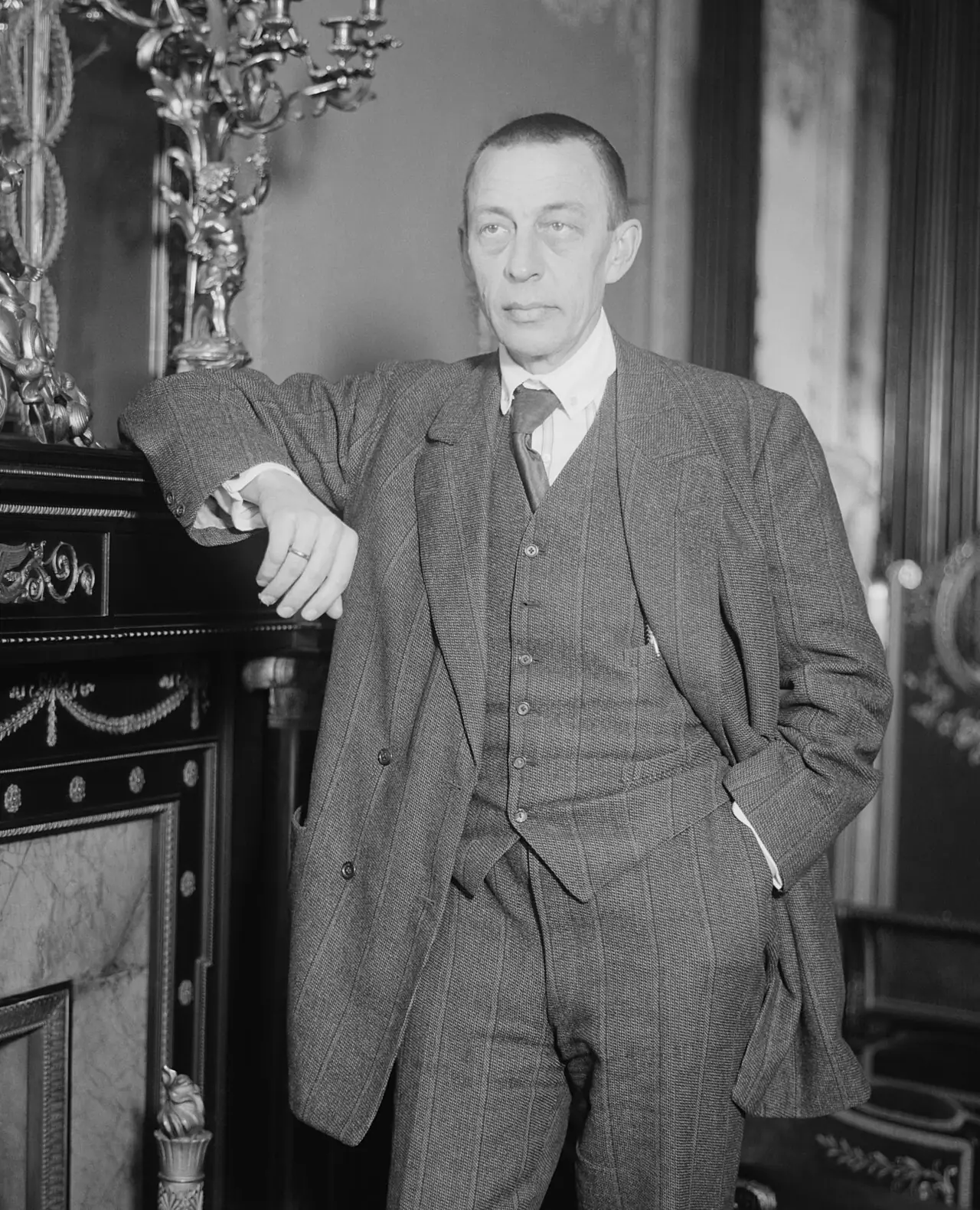
Prelude, Op. 32 No. 12
3 min
Recording
- AllegroSergei Rachmaninoff · 21 January 19212:34
Rachmaninoff plays his Prelude in G♯ minor, Op. 32 No. 12, in which a left-hand melody sounds beneath quick, circling notes. The hands exchange roles in the middle section, and the short figures continue until close to the end.
Listening notes · joins
- Left-hand melody
The right hand opens alone with a circling semiquaver figure. Beneath it, the left hand begins a melody in longer notes, while the right-hand semiquavers continue above.
- Middle passage, melody in right hand
In the middle passage the melody moves up into the right hand, over running semiquavers in the left. The intervals widen, and chords fill out the line as the piano grows louder.
- Return of the semiquaver figure
The upper semiquaver figure returns above the lower melody. As before, Rachmaninoff divides the hands sharply. One hand plays the melody in long notes, and the other repeats a figure on a few pitches. The music rises once more to ff before the close.
- Closing page, meno mosso
The closing page is marked meno mosso, then perdendo. The right hand continues its small figures over held bass notes and climbs briefly into a high register. Both hands then descend to the final G♯.
Joins
- Melody and accompaniment change hands
The piano’s circling semiquaver figure passes into the left hand beneath a sustained right-hand melody. The bass now plays the semiquavers that first sounded above the tune. As the melody climbs, it fills out into chords, with a crescendo.
- Return of the upper semiquaver figure
After the broad chords, the right hand returns to its small semiquaver figure, with the melody below it. As at the opening, the texture is divided between a singing line and quick notes. The dynamic falls, then builds towards another fortissimo.
- Meno mosso, a tempo and perdendo
At meno mosso the bass holds long notes under the piano’s continuing figures in the upper register. On the last page the original tempo returns briefly, marked a tempo in the Gutheil first edition. The figures rise into high octaves, then descend under perdendo. The piece ends on G♯.