Prelude, Op. 32 No. 5
3 min
Recording
- ModeratoSergei Rachmaninoff · 3 May 19203:03
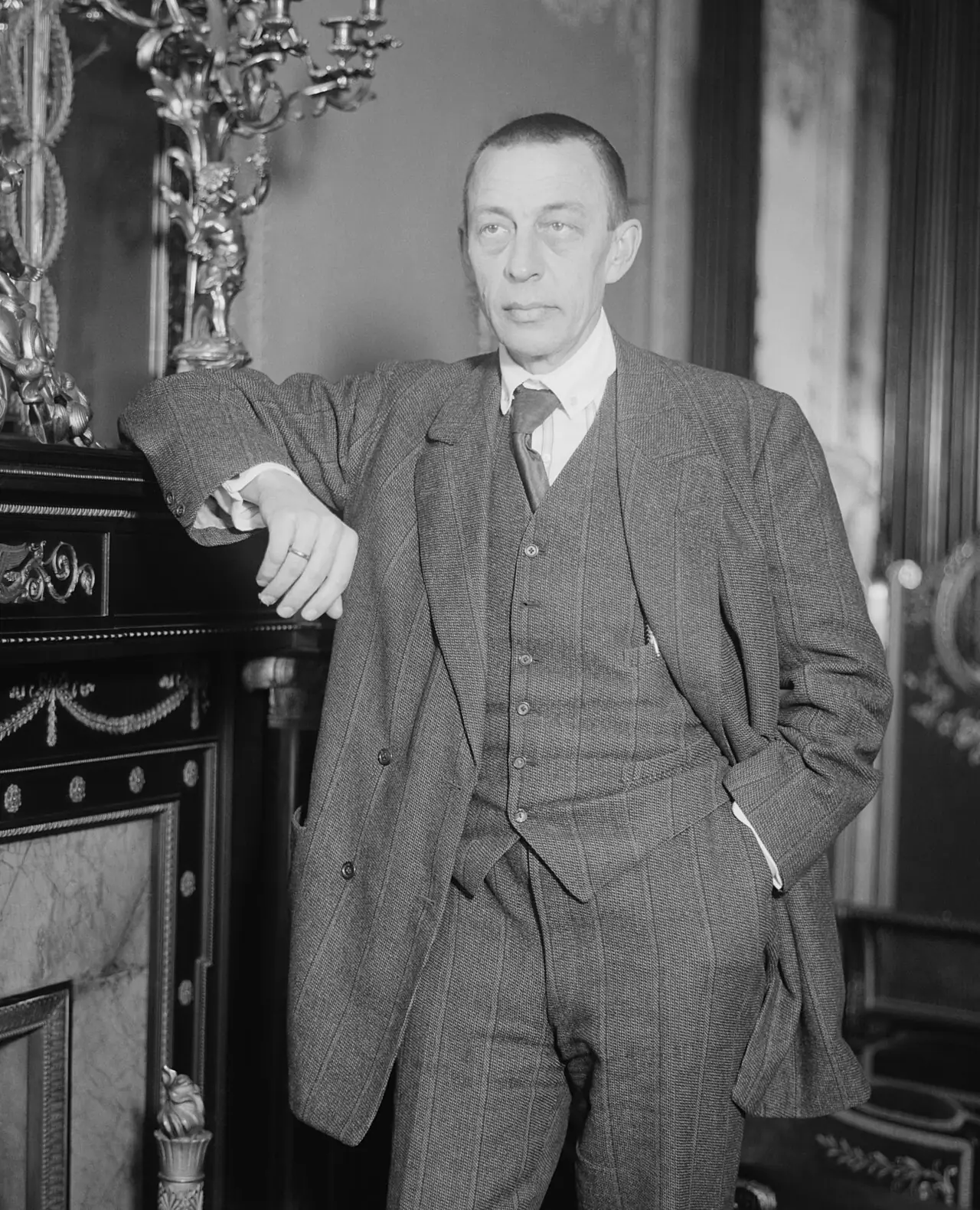
Rachmaninoff plays his Prelude in G major, Op. 32 No. 5, marked Moderato. A long melody sits above five-note groups in the left hand and rises into high figures before the final chord.
Listening notes · joins
- Left-hand quintuplets and melody
The left hand plays five-note groups before the melody enters above it, marked dolce. Long notes in the right hand are held over the accompaniment. Triplets in the melody set three against five.
- Victor recording, Camden, 1920
On 3 May 1920 Rachmaninoff recorded the Prelude at Victor’s Church Building Laboratory in Camden, New Jersey. The company issued take one on a twelve-inch record, Victor 74645.
- Middle section, melody in lower part
In the middle section the melody passes to the lower part, beneath quick turning figures in the right hand. Sharps and flats take the harmony away from G major. A rising chromatic run leads to a pause.
- Return of the opening melody
The first melody returns at a tempo, again above the left hand’s five-note groups. Its long notes are once more decorated with small ornaments.
- Closing bars, trill and final chord
The right hand plays high figuration, marked pp leggiero. A long trill sounds over the last figures in the left hand. The piece ends on a G major chord under perdendo.
Joins
- Melody moves beneath the figuration
The piano’s quick notes keep moving while the melody moves down into the lower part. The right-hand figuration continues above it, and chromatic notes take the harmony away from G major. The melody is now in the bass.
- Return of the opening melody
A dolce phrase leads into a ritardando, and the tempo then returns with a tempo. At this point the right hand takes up the first G major melody again, and the left hand goes back to its five-note groups.
- Return of the tune and closing trill
At pp leggiero, the right hand climbs above the returning tune. Beneath the high figures and the long trill, the left hand continues its five-note groups. Under the marking perdendo, the piano dies away to the closing G major chord.