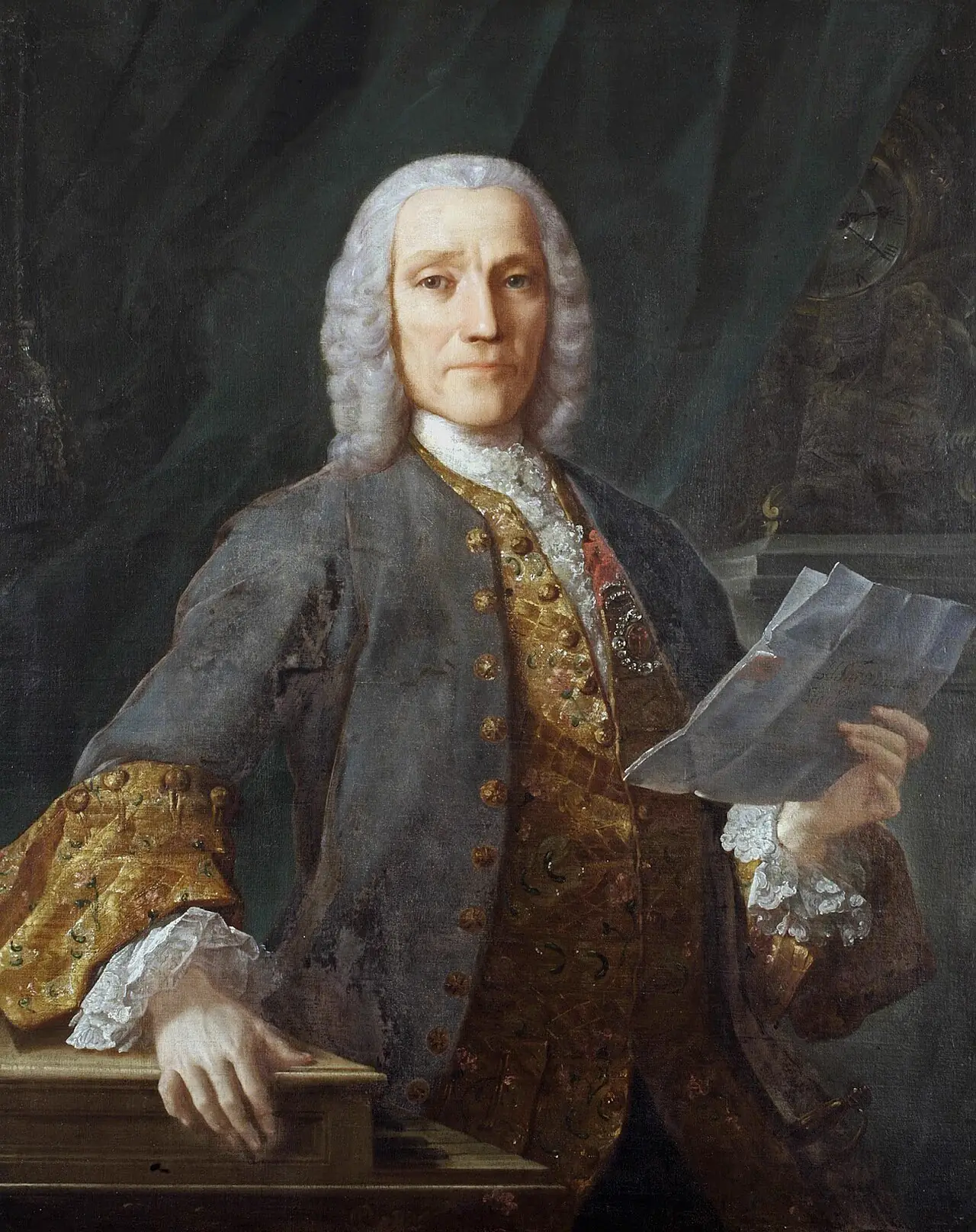
Sonata, K. 119
5 min
Recording
- AllegroMarcelle Meyer, piano · November 19544:43
Scarlatti’s Sonata in D major, K. 119, an Allegro, opens with a few plain notes in D major and then fills the keyboard with dissonant chords. Marcelle Meyer plays the sonata’s leaps, trills and clashing chords on the piano.
Listening notes · joins
- Opening bars
The right hand begins with a few plain quavers above a D major chord and reaches higher up the keyboard with each phrase. The left hand then takes up the running notes as well.
- Dissonant repeated chords
The single lines are followed by thick chords. Scarlatti adds dissonant notes to repeated chords, then returns both hands to running figures. The dissonances belong to the harmony as written.
- Repeat of the first half
The first half closes in A major. Its repeat returns the piano to the opening in D major, and then the leaps and crowded chords begin again. Both halves of the sonata have repeat signs.
- Move to Seville, 1729
In 1729 Maria Bárbara left Portugal for Spain, married to the Spanish heir. Scarlatti followed his royal pupil to Seville and continued as her private music master. In 1733 the court moved back to Madrid.
- Opening of the second half
The second half begins over an A bass, with B♭ in the upper line at bar 97 and further chromatic changes after it. The repeated notes and trills come from the first half.
- Repeat of the second half
The second half closes with a cadence in D major. In the Gouin edition the repeat sign at the end of bar 207 sends the player back to bar 96, to the A in the bass and the flats. The hands play that crowded passage a second time.
Joins
- A major returns to D
The first half ends on A after its closing runs and trills. The repeat goes straight back to the opening D major chord and its three-quaver melody (bars 91–95 leading to bars 1–6 in the Gouin edition, 2013).
- B♭ over the A bass
The first half closes in A major, and the second half begins over an A in the bass. In the next bar the right hand plays B♭. The bass stays on A while the upper notes move chromatically. Trills and repeated figures continue the phrase.
- Final D major cadence to second-half repeat
The cadence reaches D major and pauses. The repeat sign then returns to the opening of the second half, with its A bass and the quick B♭ above it. There is no linking phrase, and the key changes at the restart.
- Into the closing D major runs
Repeated-note figures lead into the final runs in D major. The bass alternates D with its dominant, A, and the hands jump between octaves and exchange the quick notes. A last descending run reaches the held D major chord at the end, marked with a fermata.