The Four Seasons · Winter, RV 297
3 recordings · 9 min
In the Hall
- I. Allegro non moltoJohn Harrison, violin; Wichita State University Chamber Players; Robert Turizziani, conductor · 6 February 20003:29
In the first movement, Allegro non molto, of Winter, RV 297, from The Four Seasons, the strings depict shivering, stamping feet and chattering teeth, and between these passages the solo violin plays runs of demisemiquavers over the orchestra.
Listening notes · joins
- Solo violin, “Orrido Vento”
“Al Severo Spirar d’orrido Vento” — “In the harsh breath of a dreadful wind.” The solo violin plays demisemiquavers in broken chords and descending scales. Short orchestral passages bring back the shivering figure.
- Stamping feet, bars 22–26
“Correr battendo i piedi ogni momento” — “To run, stamping one’s feet at every moment.” Vivaldi set the repeated notes closer together. The semiquavers break into short bursts of demisemiquavers.
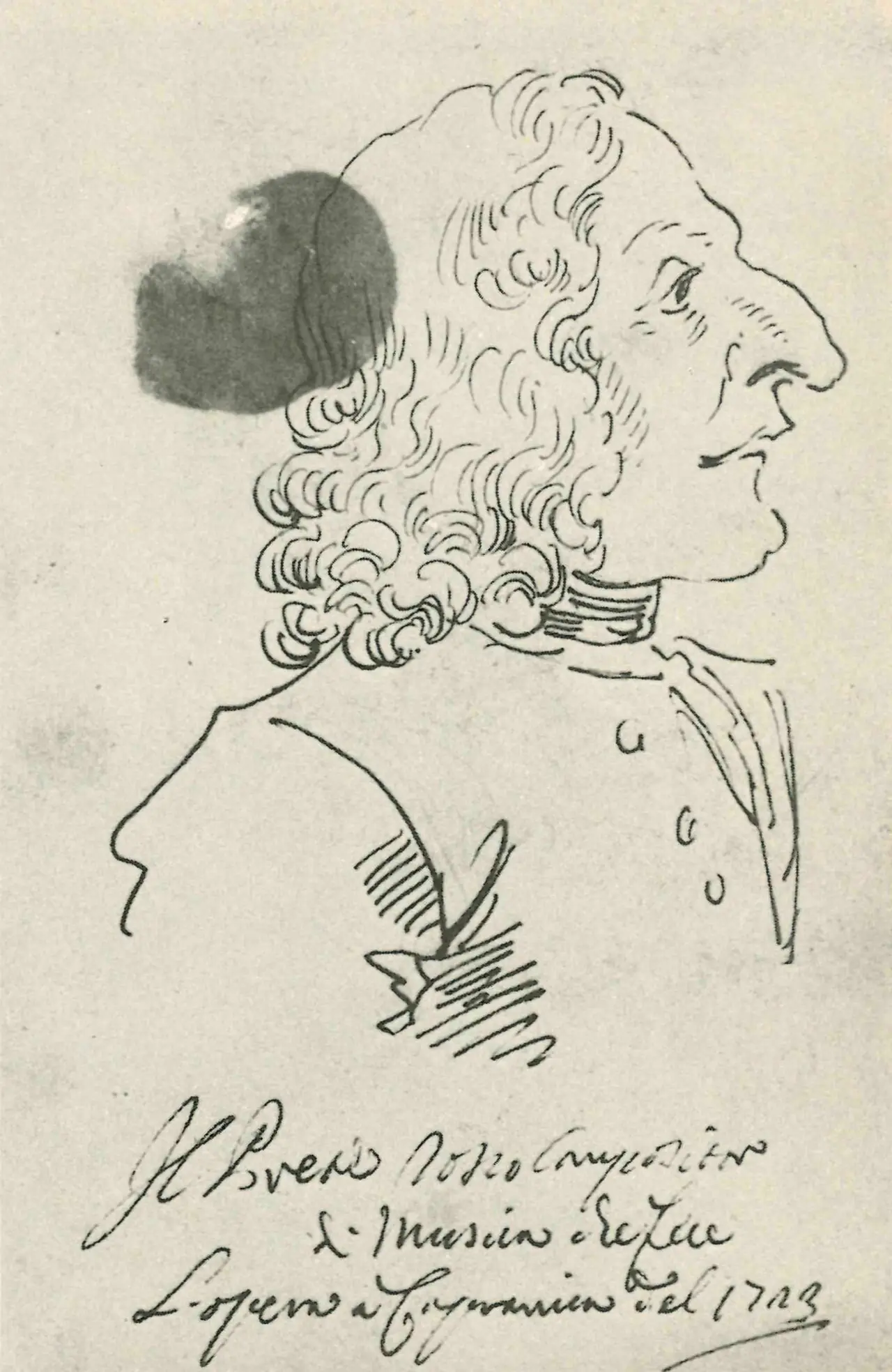
- Charles de Brosses on Vivaldi, 1739
Charles de Brosses wrote from Venice in 1739: “Vivaldi has become one of my intimate friends, to sell me concertos very dear.” The old man, he added, had a prodigious fury for composing, boasting he could write a concerto, with all its parts, faster than a copyist could copy one.
- Solo violin, “Batter li denti”
“E pel Soverchio gel batter i denti” — “And to chatter one’s teeth from the excessive frost.” The solo violin repeats short notes under the words Batter li denti. The repeated notes continue while the harmony passes through A♭ major and C minor towards F minor.
- Final ritornello
The full strings take over in F minor for the final ritornello (bars 56–63). Vivaldi brings back the stamping part of the refrain, with its rapid repeated notes, and carries it to the final cadence.
Joins
- From F minor to C minor
The shivering passage moves from F minor to C minor. The solo violin begins the wind on C, leaping an octave and then running through the notes of a C minor chord. The orchestra interrupts with short returns of the shivering rhythm. The marking stays Allegro non molto.
- Refrain to the stamping-feet episode
The wind returns to F minor and the full strings resume the repeated-note refrain. At bar 20 the violin changes its short quavers to semiquavers on F. Demisemiquaver bursts then interrupt the semiquaver pulse under the inscription about running and stamping feet.
- Solo violin episode, F minor to E♭ major
In bars 26–38 the stamping string chords stop and the solo violin enters in F minor. Its demisemiquavers circle F, E♮ and G, then climb higher. Beneath it the orchestra keeps the shivering figure, then breaks in with bursts marked winds as the episode moves towards E♭ major.
- Refrain returns in E♭ major
The solo episode reaches E♭ major. The full strings bring back the repeated-note refrain in that key, including its semiquaver version. Vivaldi kept the denser stamping figures back for the final return in F minor.
- Solo episode to the final tutti
The soloist leaves the E♭ major refrain for another rapid passage. At bar 47 the repeated semiquavers carry the inscription Batter li denti. The episode moves through A♭ major and C minor and reaches F minor for the last tutti.
- Return to F minor and the stamping music
The solo episode reaches F minor, and the full strings take up the stamping music. Rapid repeated notes alternate with broken chords. The final refrain is built on this denser part of the earlier tutti and continues with it to the F minor cadence.
- II. LargoJohn Harrison, violin; Wichita State University Chamber Players; Robert Turizziani, conductor · 6 February 20002:12
The Largo of “Winter”, RV 297, from Vivaldi’s The Four Seasons, sets the solo violin by the fire while the orchestral violins play the rain against the window. Vivaldi wrote the raindrops pizzicato and forte, with the bass kept quiet beneath them.
Listening notes · joins
- Winter sonnet, letter E
“Passar al foco i dì quieti e contenti” (“To spend the days by the fire, peaceful and content.”) The 1725 sonnet moves the scene indoors. The solo violin plays in E♭ major over plucked violin notes, and the bass is marked always quiet.
- Pizzicato rain, orchestral violins
“Mentre la pioggia fuor bagna ben cento” — “While outside the rain soaks a hundred others.” The orchestral violins play pizzicato throughout. After its first cadence in B♭ major, the solo melody starts again from B♭ and moves back towards E♭.
- Letter to Guido Bentivoglio, 1737
In November 1737 Vivaldi wrote to his patron Guido Bentivoglio that he had not said Mass in twenty-five years. The cause was a chest ailment he had had from birth, his “strettezza di petto”. He was ordained in 1703 and stopped saying Mass after leaving the altar three times before the end of the service.
- Closing bars, solo E♭
The solo violin reaches E♭ and holds it through the last bars. Below, the orchestral violins continue their plucked semiquavers, the rain of the movement. They stop only at the final fermata, where they hold the chord.
Joins
- The melody begins again on B♭
At the end of the first eight bars the solo’s C trill resolves to B♭. The melody then begins again on B♭, a fourth below its original E♭. The plucked violins and the quiet bass continue underneath, and the altered second half leads back to E♭ major.
- Held solo E♭ over pizzicato arpeggios
The solo’s D rises to E♭ and is held. Beneath the held note the orchestral violins continue their pizzicato E♭ major arpeggios until the final fermata.
- III. AllegroJohn Harrison, violin; Wichita State University Chamber Players; Robert Turizziani, conductor · 6 February 20003:13
The third movement, Allegro, of Winter, RV 297, from Vivaldi’s The Four Seasons opens with the solo violin on the ice over a long held F in the bass, and soon all the players are slipping. The concerto ends with the Sirocco and the north wind fighting through the strings.
Listening notes · joins
- Winter sonnet, letters F–G
“Caminar Sopra’l giaccio, e à passo lento / Per timor di cader gersene intenti”, “To walk on ice with slow steps, taking care for fear of falling”, come from the 1725 Winter sonnet. The solo violin changes direction above a long F. The other upper strings rest.
- Falling and running on the ice
“Gir forte Sdruzziolar, cader à terra / Di nuovo ir Sopra ’l giaccio e correr forte” — “Turn sharply, slip, fall to the ground; go back onto the ice and run hard.” The orchestra plays falling scales. Then the solo violin climbs in detached semiquavers.
- Sonnet line L, the ice breaking
“Sin ch’il giaccio Si rompe, e Si disserra” — “Until the ice breaks and splits open.” The strings break off their running figures with short notes and rests. Brief bursts of demisemiquavers fill the gaps, and then the soloist takes over again.
- Sirocco episode, Lento
“Sentir uscir dalle ferrate porte” — “To hear emerging from the iron gates.” The sonnet describes the winds. For the Sirocco, Vivaldi marked the music Lento in E♭ major and left out the bass entirely, so only the upper strings play.
- Closing section, sonnet letter N
“Sirocco, Borea, e tutti i Venti in guerra” — “Sirocco, Boreas, and all the winds at war.” Solo runs alternate with short orchestral passages, and the strings move towards F minor. The sonnet ends: “Quest’è ’l verno, mà tal, che gioja apporte” — “This is winter, yet it brings joy.”
Joins
- The bass pedal moves from F to C
The bass moves from its held F to C, the dominant of F minor. The orchestral strings join the soloist, first in running semiquavers and then in quavers. The C is held underneath through the walking episode and into the falling scales.
- Descending scales to the F minor solo
The strings play descending scales, and the soloist then starts a running passage from F. Its detached semiquavers climb above held notes in the upper strings. The basso rests for a few bars. The solo modulates from F minor towards C minor, and long pedals on C and G support the later part of the passage.
- Tutti in C minor after solo triplets
The solo’s descending triplets lead to a tutti in C minor. The running scales are broken into short notes, rests and brief demisemiquaver flurries. The exchanges are held over G, the dominant, and the solo ends the passage on a low G.
- The basso drops out in E♭
The C minor solo ends on G. At the Lento the upper strings begin in E♭ major, and the basso is silent for nineteen bars. The violin’s opening G–F–E♭ is now played in quavers under the words Il Vento Sirocco.
- Solo demisemiquavers on E♭
The solo violin enters with demisemiquavers on E♭, under the words naming Boreas and all the winds. Tutti passages in repeated notes interrupt its runs, and the bass returns with them. The episode moves from E♭ major to F minor.
- Soloist and strings in the final tutti
The soloist rejoins the full strings in F minor. All play repeated demisemiquavers and downward runs, which continue the wind music through the final tutti (bars 137–153). E♮ sharpens the approach to F before the last held chord.