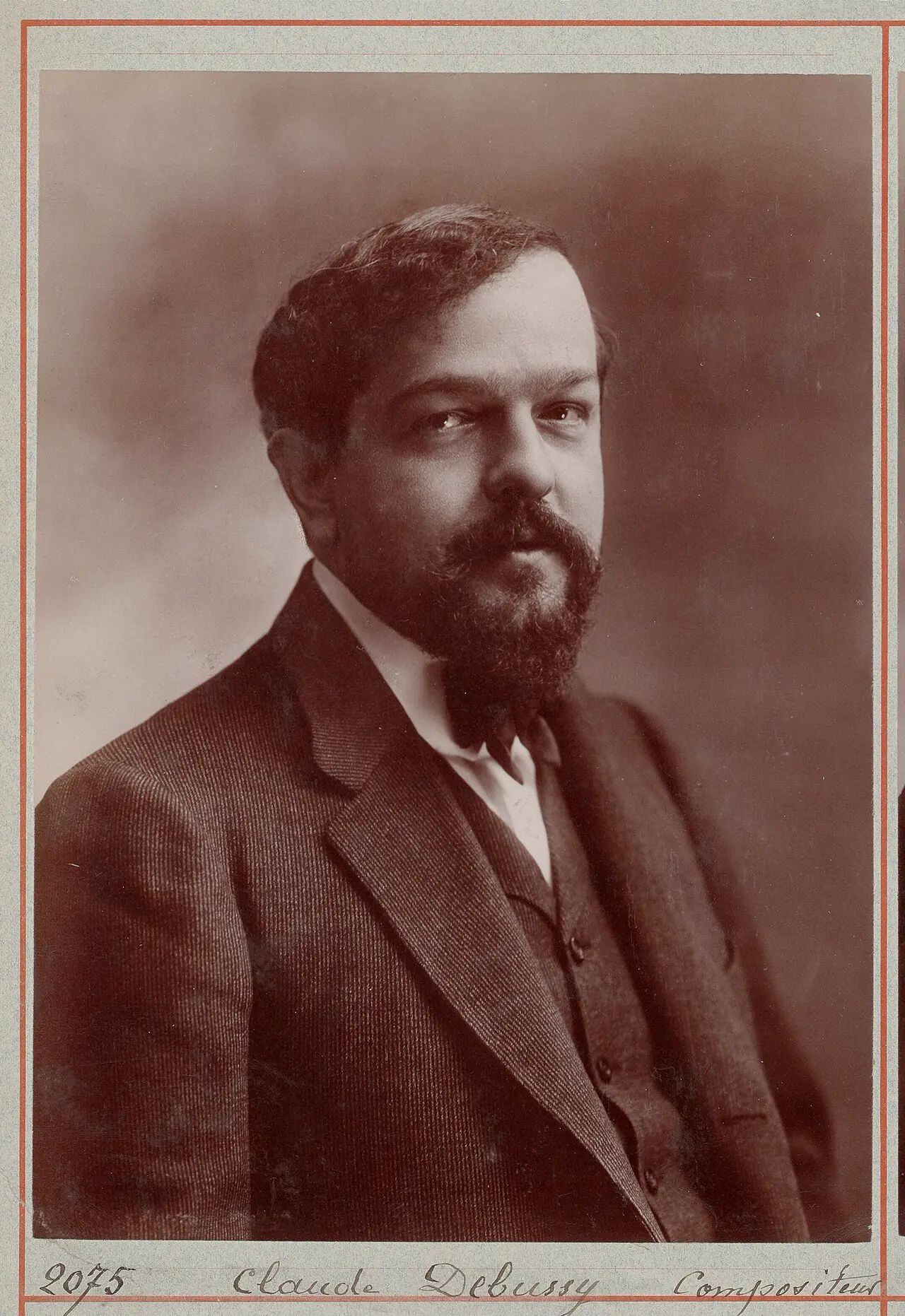
Children’s Corner
6 recordings · 14 min
In the Hall
- I. Doctor Gradus ad ParnassumRobert Casadesus, piano · 11 April 1950, Columbia 30th Street Studio, New York1:57
Robert Casadesus plays “Doctor Gradus ad Parnassum”, the first of the six pieces in Debussy’s Children’s Corner, written for his daughter Chouchou. It begins as a piano exercise in C major and moves onto the black keys before closing at a fast tempo.
Listening notes · joins
- Opening semiquavers over C pedal
The right hand plays semiquaver figures up and down the white keys above a low C. A slower melody soon enters between the semiquavers. Debussy marks the touch égal et sans sécheresse: even and without dryness.
- Dedication to Chouchou, 1908
On the dedication page of Children’s Corner in 1908, Debussy addressed his daughter: “To my dear little Chouchou, with her father’s tender apologies for what follows.” The page has drawings of two small elephants.
- Return of the opening, C major
The opening semiquavers return in C major, very softly. The hands then move farther apart, and Debussy asks for more and more animation. By the final page the marking is Très animé, and the closing chords in C major are fortissimo.
Joins
- Retenu, held chords, then D♭ major
The running notes descend and slow under Retenu. A short phrase in the piano’s middle register ends on held chords. The key signature then changes to five flats, and the music moves to D♭ major, marked Animez un peu. A low D♭ is held beneath a varied version of the exercise.
- From D♭ back to C
The black-key passage slows again, marked Retenu. Debussy cancels the five-flat signature and restores 1° Tempo. C returns in the bass, and the right hand takes up its first semiquaver figure, pianissimo. The figure soon spreads across both hands, and the tempo increases under the marking En animant peu à peu.
- II. Jimbo’s LullabyRobert Casadesus, piano · 11 April 1950, Columbia 30th Street Studio, New York2:58
“Jimbo’s Lullaby”, the second piece of Debussy’s Children’s Corner, is the song of an elephant, and it begins at the bottom of the piano. Robert Casadesus plays it. The small tune later rises to the treble and keeps its rocking rhythm.
Listening notes · joins
- Opening melody, left hand
The left hand begins alone, low on the piano, with a tune marked doux et un peu gauche (soft and a little awkward). It moves in short steps with long pauses, and the title names an elephant. Short, soft phrases follow in the upper register.
- Dedication to Chouchou, 1908
The suite’s dedication reads: “To my dear little Chouchou, with her father’s tender apologies for what follows.” Chouchou was Debussy’s daughter. On the contents leaf this second piece has the French subtitle Berceuse des éléphants, “lullaby of the elephants”.
- Accompaniment and Un peu plus mouvementé
A descending accompaniment fills the gaps between phrases. Longer notes carry the melody above it, and short pairs of notes reply. Later, at Un peu plus mouvementé, the bass moves in quavers.
- Recording session, New York, 1950
Robert Casadesus recorded Children’s Corner on 11 April 1950 in Columbia’s 30th Street Studio in New York. Columbia had converted a disused church into the studio two years earlier, and its musicians nicknamed it “the Church”.
- Return of the first tempo
At 1° Tempo the opening tune returns above softly repeated notes, with the descending accompaniment beneath it. Debussy marks the passage Sempre pp et sans retarder, and the closing notes are marked morendo. The piece ends on a low B♭.
Joins
- The bass begins a descending pattern
The first page ends with isolated low notes and a pause. The left hand then starts a descending pattern, repeated beneath the upper melody. Debussy marks it pianissimo and asks for the tune to be brought out slightly.
- Retenu and fermata before the reprise
The closing phrase of the middle section is marked Retenu. A fermata follows. At 1° Tempo the tune returns, with repeated quavers below it in the right hand. The left hand holds its low notes and then takes up the descending accompaniment again.
- III. Serenade for the DollRobert Casadesus, piano · 11 April 1950, Columbia 30th Street Studio, New York2:13
“Serenade for the Doll” is the third piece of Debussy’s Children’s Corner, a short serenade whose tune passes between the pianist’s hands and is decorated with grace notes. Debussy kept the soft pedal down throughout, including the passages where the doll’s song becomes emphatic.
Listening notes · joins
- Opening, left-hand tune
The piano plays detached chords that imitate plucked strings. The tune begins in the left hand, with grace notes leading up to each longer note, and then passes to the right hand. Debussy marks the passage léger et gracieux (light and graceful).
- Soft pedal throughout
Sharps and flats enter the tune, and sudden accents break into its short phrases. In a footnote Debussy requires the soft pedal to stay down throughout, even in forte passages.
- Return of the melody, E major
The grace-note melody returns in E major over continuous left-hand quavers. Near the end the hands again exchange short notes. The piano rises to a high E, and the final bar is a bar of rests under a fermata.
Joins
- Chromatic bass and change of signature
The piano continues in short, detached notes while the bass moves through chromatic pitches. Debussy cancels the four-sharp signature and marks the passage En animant un peu. The melody moves away from E major. The grace notes continue, and sharply accented chords now interrupt them.
- Quaver bass under the returning tune
Rising runs cross the piano and end on a sforzando. The left hand then begins an even quaver pattern, played softly. Above it the right hand plays the grace-note melody again in E major. Long held notes take the place of the plucked accompaniment heard at the opening.
- IV. The Snow Is DancingRobert Casadesus, piano · 11 April 1950, Columbia 30th Street Studio, New York2:02
“The Snow Is Dancing” is the fourth piece of Debussy’s Children’s Corner, in which small rapid notes pass between the pianist’s hands. Debussy set a slow melody against this figuration, and at the close the figuration rises towards the top of the keyboard.
Listening notes · joins
- Alternating semiquavers and second melody
The two hands alternate in semiquavers, each playing in the gaps left by the other. Debussy marks the piano doux et estompé (soft and blurred), though the notes are short. A slower melody in longer notes enters among them, marked doux et triste (soft and sad).
- Triplets in the treble
Repeated notes in the treble fall into groups of three against the running accompaniment. Debussy marks Cédez un peu, then Au Mouvement. Sharply accented chords interrupt the figuration.
- Return of the opening pattern
The opening alternating pattern returns molto pp. Its notes climb into the highest octaves, where Debussy writes perdendo (dying away). The score also marks Sans retenir.
Joins
- Repeated triplets cross the running notes
The two hands briefly run down and up the piano. At Cédez un peu, the right hand takes up repeated triplets and the left continues in even semiquavers. Under Au Mouvement the treble line descends, and an accented chord marked sforzando falls across the pattern.
- Alternating figure returns over low D
The accented chords stop and a line of semiquavers runs alone, without accompaniment. The pattern then returns over a low D, with the hands alternating again and the original tune above. Debussy marks the return softer still, più pp.
- V. The Little ShepherdRobert Casadesus, piano · 11 April 1950, Columbia 30th Street Studio, New York2:16
“The Little Shepherd” is the fifth piece of Debussy’s Children’s Corner. Across two pages the piano plays three calls, each a single line in the manner of a shepherd’s pipe, and each is followed by a short dance-like reply.
Listening notes · joins
- Unaccompanied opening line
A single line in the right hand moves down and up, with small ornaments, and ends on a pause. The left hand is silent. At Plus mouvementé the tune turns to dotted rhythms and soft left-hand chords enter underneath.
- Return of the unaccompanied melody
The dance stops on a held chord of A major, and the accompaniment stops with it. The shepherd’s melody returns unaccompanied, with changed notes and the same turns. Soft chords answer it, ending in E major on another long-held harmony.
- Final section and closing chord
The third call is a little stronger, and the answer is more animated. The dotted dance then returns pianissimo. Debussy marks it to be held back while keeping its rhythm, and the final A major chord is marked ppp.
Joins
- Held A major chord to second call
The first dance slows under Cédez and ends on a very soft A major chord spread across the piano. After a breath mark, at au Mouvement, the right hand plays alone at the original tempo. This second unaccompanied call moves towards the black keys, and then the left-hand chords return.
- E major chord to the third call
The second answer ends on an E major chord, pianissimo. The right hand then plays the third solo call alone, this time un poco più forte. At Plus mouvementé the dotted rhythms and left-hand chords return beneath it, and the answer becomes the fullest passage in the piece.
- VI. Golliwogg’s Cake-WalkRobert Casadesus, piano · 11 April 1950, Columbia 30th Street Studio, New York2:44
Robert Casadesus plays “Golliwogg’s Cake-Walk”, the sixth piece of Debussy’s Children’s Corner. The cakewalk quotes a phrase from Wagner’s Tristan, marked “with great emotion”.
Listening notes · joins
- Syncopated tune over bass and chords
The tune places its accents across the beat while the left hand plays a regular bass-and-chord accompaniment. Debussy marks it très net et très sec — very clear and very dry. Sudden loud notes stand out among the quieter ones.
- Cakewalk craze, Paris, 1902–03
In Paris in 1902–03, seven African American women, the Florida Creole Girls, helped make the cakewalk a craze. Debussy’s title names a racist caricature, Florence Kate Upton’s blackface doll, introduced in an 1895 picture book.
- Return of the cakewalk
The first tempo returns, with the three-flat signature of E♭ major and the bass-and-chord step of the dance. Near the end the tune breaks into short, quiet fragments. Two detached fortissimo chords close the piece.
Joins
- The middle section in G♭ major
The E♭ major dance thins out to short exchanges between the hands. The key signature changes from three flats to six, and the marking Un peu moins vite slows the tempo. Grace-note chords over repeated bass notes open the G♭ major middle section, and the piano then plays the chromatic phrase from Tristan.
- Return to 1° Tempo in E♭ major
The middle section slows under Retenez and Toujours retenu. A short descending phrase is played unaccompanied, followed by a breath mark. At 1° Tempo the three-flat signature returns with E♭ major, the left hand takes up its bass-and-chord accompaniment again and the right hand resumes the syncopated dance.