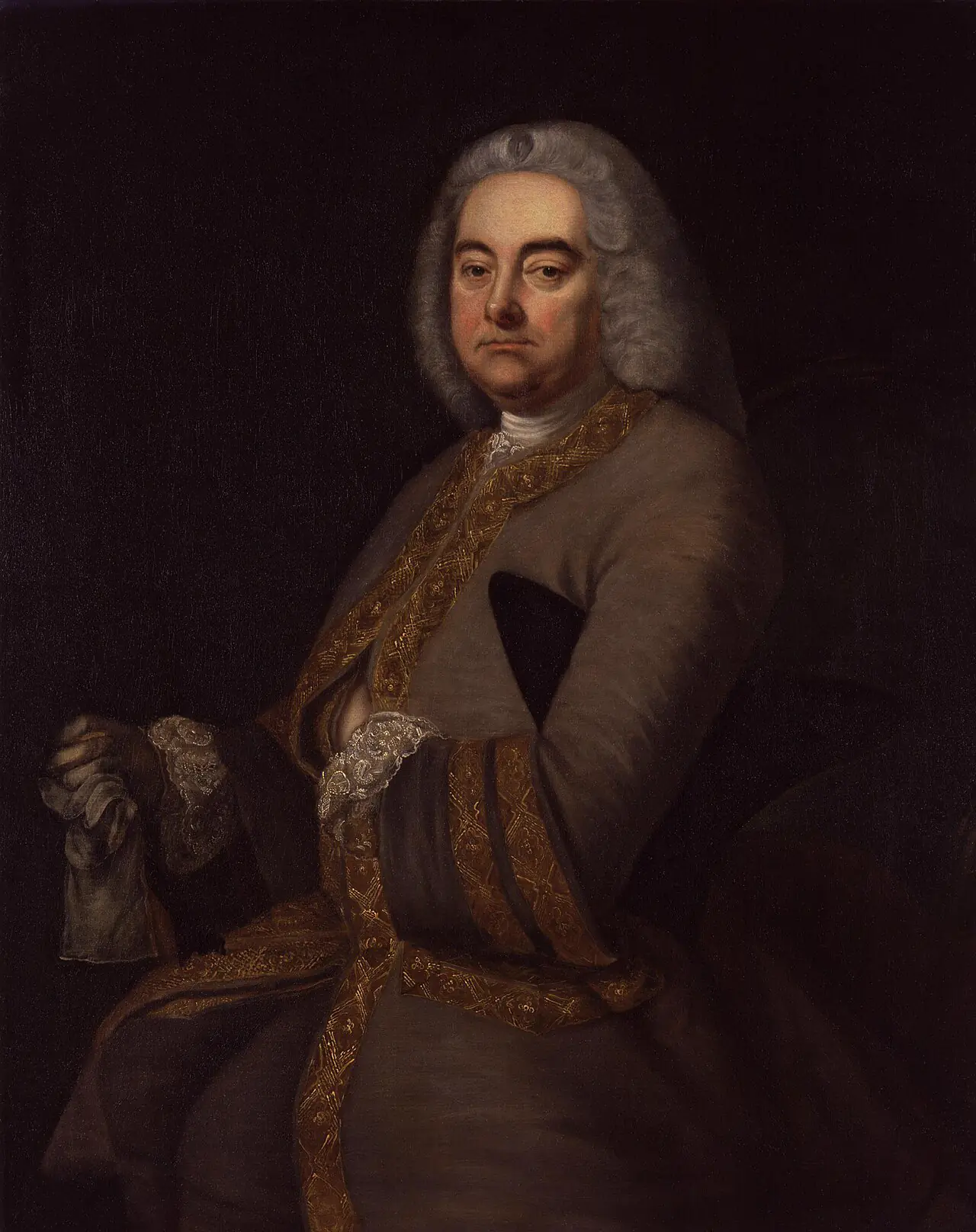
Friedrich Wilhelm Zachow in Halle; Hamburg’s opera orchestra; Italy, 1706–10
Home
London from 1712; 25 Brook Street from 1723 until his death
Public life
British citizen from 1727; composer for the court, theatres and Foundling Hospital
Output
Italian operas, English oratorios, anthems, concertos and chamber cantatas
Life
Handel was eighteen when he left Halle for Hamburg in 1703 and took a place in the opera orchestra. His father had been a barber-surgeon; his teacher Friedrich Wilhelm Zachow had taught him the organ, counterpoint and the habit of copying other people’s scores. He had enrolled at Halle’s university and worked as a church organist. Hamburg had a public theatre, singers to accompany and an audience that had bought tickets. His first opera, Almira, opened there in 1705, with German words and Italian arias.
1706–10An education in Italy
In Italy he found patrons in Florence, Rome, Naples and Venice. Roman cardinals commissioned music from the young Protestant, and Prince Ruspoli provided him with singers and instrumentalists to write for. In the Dixit Dominus of 1707, a setting of a Latin psalm, five choral parts move at speed, then some voices hold dissonant notes while the others move underneath. He wrote chamber cantatas for a single singer. In Corelli’s Rome he learned to write for violin alongside the voice.
Agrippina, staged in Venice at the end of 1709, is a comedy about people manoeuvring for power. Handel reused a great deal of earlier music in it, fitting it to new lies and seductions. He reused music in this way throughout his career.
LondonWater Music and the Royal Academy
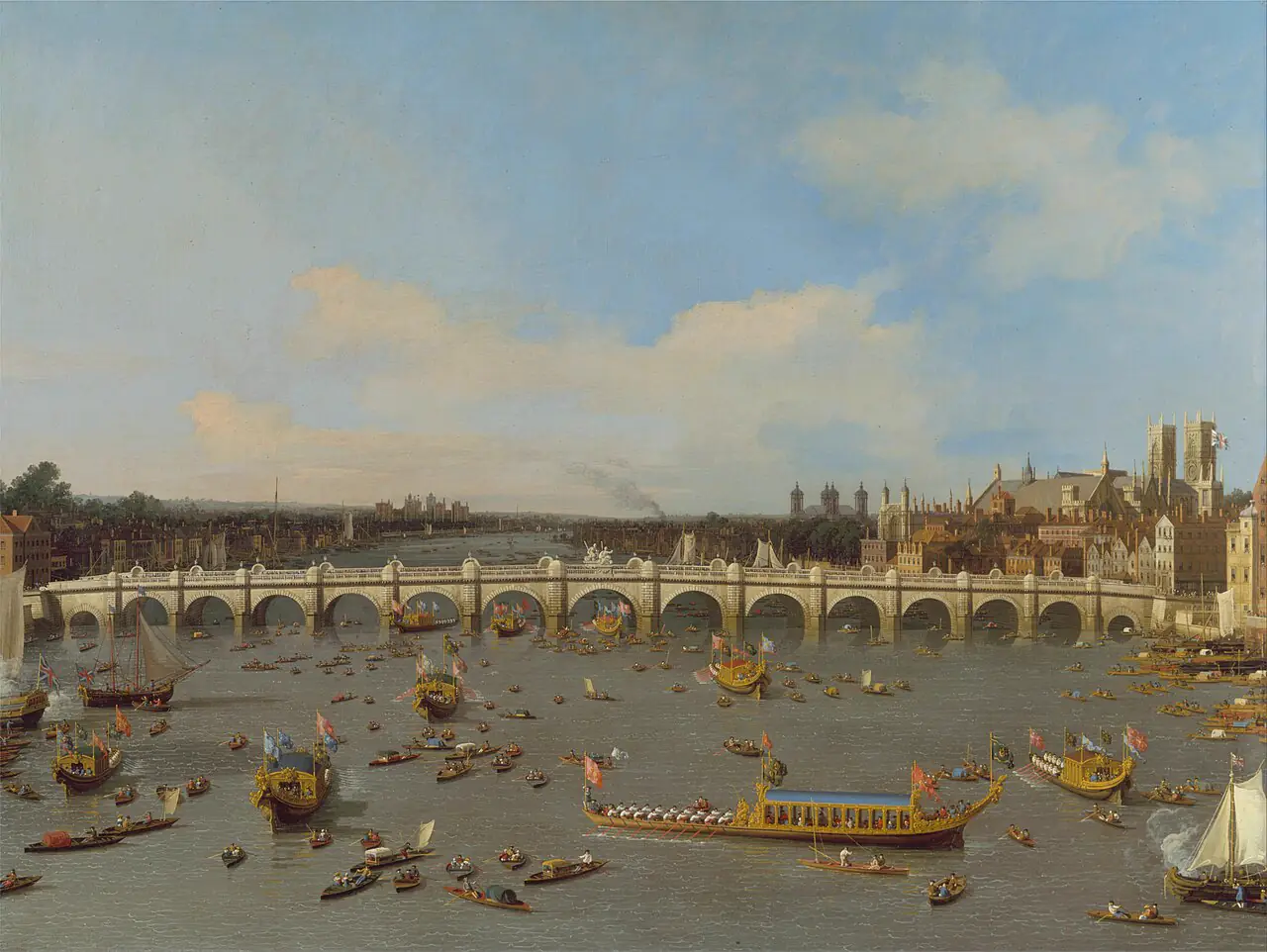
He accepted a court appointment in Hanover in 1710, then promptly obtained leave for London. Rinaldo opened in 1711 and put Tasso’s crusaders and enchantresses on the stage with Italian star singers and elaborate scenery. By 1712 Handel had settled in England. In 1714 his Hanoverian employer became George I. On 17 July 1717 the king travelled up the Thames towards Chelsea while a separate barge carried about fifty musicians playing Handel’s Water Music. The king had it played three times during the outward and return trips.
The theatre needed new operas each season. In 1724 Handel supplied both Giulio Cesare and Tamerlano; Rodelinda followed in 1725. In Giulio Cesare Cleopatra’s music is written for a soprano and includes arias of seduction, pleading and celebration. Caesar’s Va tacito e nascosto compares political caution to a hunter’s stealth, and a horn plays with him. Handel wrote for the singers he had hired and changed music when a different singer needed it.
In 1723 he leased 25 Brook Street, the London house where he lived for the rest of his life. He became a British citizen in 1727, the year he wrote coronation anthems for George II. Zadok the Priest opens with a long orchestral introduction before the choir enters. The opera company’s finances were less secure. Imported singers were expensive, subscribers fell away, and in 1733 the rival Opera of the Nobility began competing for both. Its singers came to include the castrato Farinelli.
He went on composing. Ariodante and Alcina appeared in 1735, and in the same years English works were being performed beside the Italian operas. A public revival of Esther in 1732 had shown that an English biblical drama could succeed in concert, with a chorus and soloists, and with words sung in the audience’s own language.
The oratoriosMessiah and Dublin
Saul and Israel in Egypt both reached the stage in 1739, without acted scenery or costumes. They use the chorus very differently. In Saul, individual people destroy one another; the orchestra includes trombones and a carillon. In Israel in Egypt, the chorus tells much of the story itself. Handel appeared as an organ soloist between portions of his oratorios, so that the audience heard a concerto as well as the drama.
On 10 July 1741 Charles Jennens wrote to Edward Holdsworth about a new scriptural compilation he hoped Handel would set. He expected the music to surpass Handel’s previous work, since its subject surpassed every other. “The Subject is Messiah.” Handel composed the score between August and September, then took it to Dublin. Jennens was disappointed to learn that London would not hear it first.
Handel was delighted with Dublin. Subscriptions to his six-concert series filled a room of six hundred, he told Jennens on 29 December 1741, “so that I needed not sell one single Ticket at the Door”. The orchestra was excellent, the room sounded well, and his organ playing had gone better than usual. Messiah received its first performance in Fishamble Street on 13 April 1742, for charity. Jennens took the words from the Bible and the Prayer Book Psalter. The texts dealt with prophecy, Christ’s suffering and the promise of resurrection, and he assembled them without a continuous cast of characters.
Handel drew on his experience of the stage. In He was despised the alto repeats a few words at length. In All we like sheep the voices move apart from one another in quick runs; then the tempo slows and the chorus sings of the cost of that wandering. The trumpet is held back for its solo in The trumpet shall sound.
1749–59The Foundling Hospital and late works
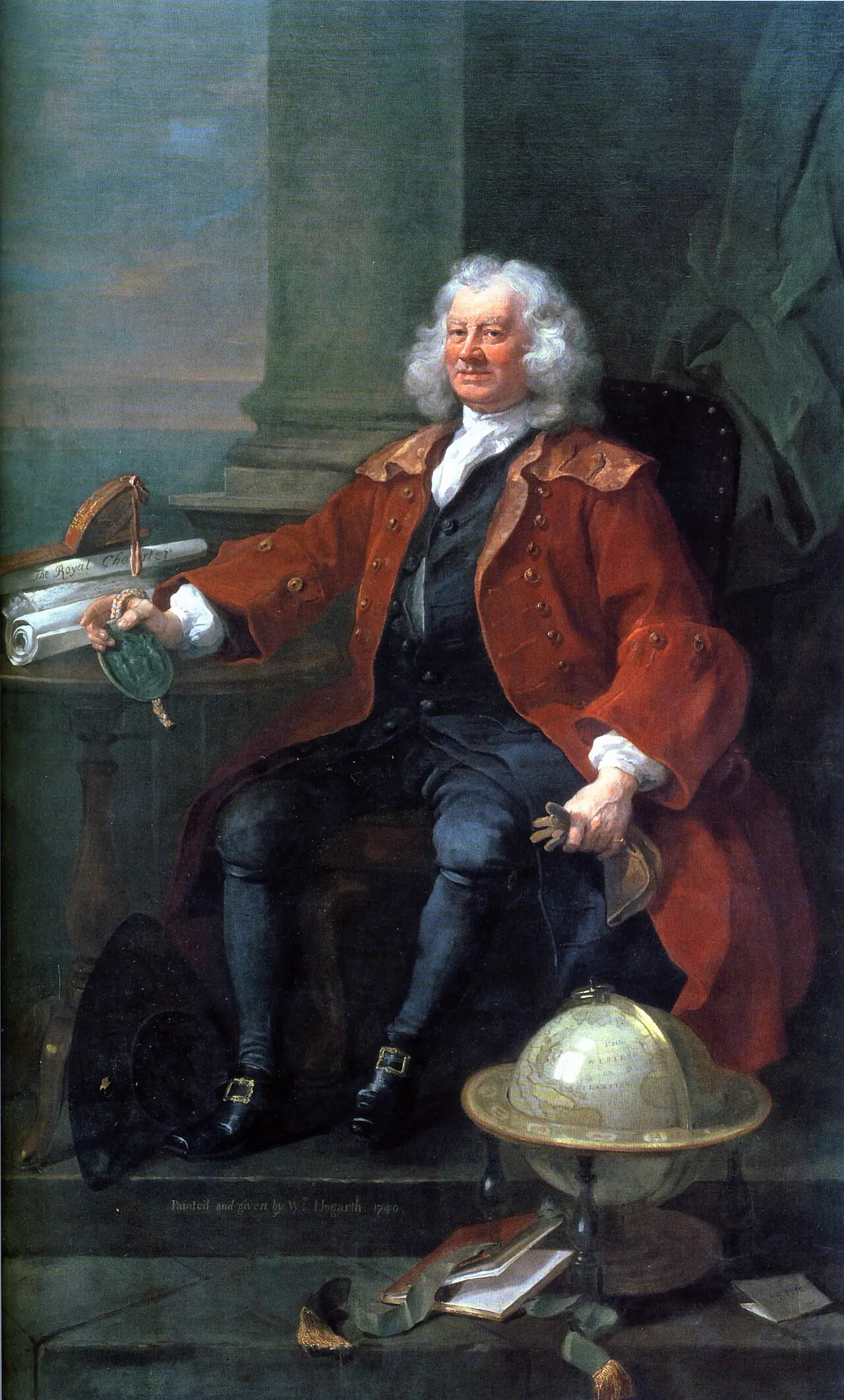
At the Foundling Hospital, Handel’s music and William Hogarth’s paintings both raised support for abandoned children. Messiah was performed there every year, and Handel went on adapting arias to suit the singers available to him. He eventually bequeathed the hospital a score and performing parts so that the benefit performances could continue. Hogarth had given the hospital his portrait of its founder, Thomas Coram.
The late music ranges from the outdoor splendour of the Music for the Royal Fireworks in 1749 to the threatened Christians of Theodora and the terrible paternal vow in Jephtha. While composing the latter, Handel stopped at the chorus How dark, O Lord, are thy decrees. On 13 February 1751 he wrote in German on the score: “Reached this point; prevented from continuing by the weakening sight of my left eye.” He resumed work and finished the oratorio, which opened at Covent Garden in 1752.
Blindness ended his regular composition, though assistants helped him keep performances going. He died at Brook Street on 14 April 1759 and was buried in Westminster Abbey. His will allowed up to £600 for his monument. Later generations assembled very large choirs for his oratorios, whose scores require the singers to run through semiquavers together.
Places
Every recorded place, joined in date order. Handel on the MapAll 24 places, with sources
Halle · 23 February 1685 – February 1702 · born
Born to a barber-surgeon; the church organist Zachow was his only teacher.
Performed in a building designed by Servandoni. A public rehearsal at Vauxhall Gardens drew more than twelve thousand people. Music for the Royal Fireworks.
Handel often paired a character with a particular instrument. In Giulio Cesare’s Va tacito, Caesar sings about the hunter who approaches unseen, with a solo horn beside him. Messiah’s He was despised is a long lament for alto, with rests between the phrases.
𝄋The return
A da capo aria returns to its opening after a contrasting middle section. By the time of the repeat the singer has already sung the words once, and ornaments can make the second statement more urgent or more exposed. Handel’s operas repeatedly set love, fear and anger in this form. In Giulio Cesare, the singer of Cleopatra has to shape each return to fit the situation the character is in at that point.
𝆑The chorus
The chorus can sing as one body or divide into parts moving independently. In All we like sheep, the parts break off into quick runs; at the slow ending they sing the words together. In Israel in Egypt the chorus carries most of the narrative. The individual entries need the agility of solo singing.
♮Waiting
Handel often delayed the arrival of the main musical material. In Zadok the Priest the orchestra plays a long introduction before the full choir enters. In an aria, a repeated bass figure can hold the harmony in place while the singer sustains a dissonant note, and the dissonance resolves when voice and bass reach the cadence together.
𝄢The orchestra
The horns and trumpets of Water Music had to be heard across the Thames. In Saul, the carillon and trombones are used in a darker kind of spectacle. His Op. 6 concerti grossi are scored for strings and continuo. Two violins and a cello play apart from the larger ensemble and then rejoin it. The movements include overtures, dances and fugues, each giving the players a different kind of writing.
Works
A selection from the composer’s works.
1707
Dixit DominusHWV 232Soloists, five-part chorus, strings and continuo
Written in Rome when the composer was twenty-two. The five choral parts have rapid runs and long-held dissonances.
1709
AgrippinaHWV 6Opera in three acts
The Venetian success that helped launch Handel’s international career. Much of its music had already been set to other texts before it was used in this comedy of Roman political ambition.
1711
RinaldoHWV 7Opera in three acts
His first London opera, with crusaders and sorcery from Tasso. Several arias came from earlier Italian music.
1717
Water MusicHWV 348–350Orchestra with horns, trumpets and woodwinds
About fifty musicians played from a barge during George I’s Thames excursion in July 1717. The king asked for the music three times on the outward and return journeys.
Cleopatra seduces Caesar and then has to fight for her own survival. In Caesar’s hunting aria Va tacito, a solo horn answers the voice.
1736
Alexander’s FeastHWV 75Soloists, chorus and orchestra
Dryden’s Timotheus plays on Alexander’s emotions through music. A closing chorus sets Saint Cecilia beside Timotheus.
1739
Twelve Concerti grossiOp. 6 · HWV 319–330Concertino of two violins and cello, string orchestra and continuo
The works combine Corelli’s small solo group with Handel’s overtures, fugues and dances.
1741; first performed 1742
MessiahHWV 56Soloists, chorus, orchestra and continuo
Jennens compiled the words from scripture. The first performance took place in Dublin on 13 April 1742. Handel’s later changes for different singers left several versions of individual numbers.
Music for the Royal FireworksHWV 351Large wind band with percussion; later version includes strings
Written for the celebrations of the Treaty of Aix-la-Chapelle. The outdoor wind-band music later acquired strings for concert performance.
1751; first performed 1752
JephthaHWV 70Soloists, chorus and orchestra
Handel’s failing sight interrupted the score at How dark, O Lord, are thy decrees. He completed it for a Covent Garden première in February 1752.
In the score
Short examples, engraved and playable.
An aria’s architectureStatement, contrast, return
A schematic da capo aria in six bars. Two bars in F major are followed by two in D minor, then the opening returns. A full aria expands these sections and adds orchestral passages; the singer can ornament the return.
The French overtureCeremonial dotted rhythm
A schematic French-overture opening in D major. In the dotted long–short rhythm each short chord leads to the next strong beat. Handel often followed this ceremonial opening with faster music in imitative parts.
Sister arts
William HogarthCaptain Thomas Coram, 1740Oil on canvas · Foundling Museum, London
Hogarth gave the Foundling Hospital this portrait of its founder, Thomas Coram, and persuaded fellow painters to contribute work. Handel brought paying audiences to the same institution with his 1749 benefit concert and, from 1750, with performances of Messiah.
CanalettoWestminster Bridge, with the Lord Mayor’s Procession on the Thames, 1747Oil on canvas · Yale Center for British Art, New Haven
The Lord Mayor’s procession fills the Thames with decorated barges and spectators in boats. Thirty years earlier, George I had travelled towards Chelsea with about fifty of Handel’s musicians in a separate barge.
John Dryden
Alexander’s Feast — closing stanza
1697
EnglishLet old Timotheus yield the prize,
Or both divide the crown:
He raised a mortal to the skies;
She drew an angel down.
Timotheus has moved Alexander through a succession of passions by singing to him. Dryden then brings in Saint Cecilia, who draws an angel down with her music. Handel set the ode in 1736, in an adaptation by Newburgh Hamilton, and gave this final contest between musicians to the chorus.
Recommended recordings
MessiahThe English Concert and Choir, Trevor PinnockArchivThe choir sings the fast runs of And he shall purify without breaking the phrase. Anne Sofie von Otter sings He was despised more inwardly than the orchestra plays under Pinnock, whose playing is crisp.
Giulio CesareJennifer Larmore, Barbara Schlick, Concerto Köln, René JacobsHarmonia MundiLarmore sings Caesar with an assertive, fearless voice. Jacobs and Concerto Köln keep the exchanges taut, and the playing has an edge to it.
TheodoraDawn Upshaw, Lorraine Hunt, David Daniels, Glyndebourne Festival production, William Christie1996Peter Sellars staged this oratorio as theatre. Upshaw sang Theodora and Hunt sang Irene, both members of the threatened Christian community. The production was filmed.
Concerti grossi, Op. 6The English Concert, Trevor PinnockArchivPinnock keeps the solo trio clearly audible against the full band. The recording shows how much dramatic exchange Handel made with strings and continuo.
Lineage
Drew fromFriedrich Wilhelm ZachowArcangelo CorelliAlessandro ScarlattiHenry Purcell
Mozart added wind instruments to Messiah for Baron van Swieten’s performances. Haydn heard England’s Handel tradition before writing his own late oratorios. Choral societies went on enlarging the forces. Later performers cut the ensembles down again, with the horn obbligato in Caesar’s aria and the quick exchanges in Messiah among their reasons.
Further reading
Donald Burrows, Handel, second edition (New York: Oxford University Press, 2012). biography
Life and works, drawing on performance history, theatrical institutions and documentary sources.
Anthony Hicks, ‘Handel [Händel, Hendel], George Frideric’, Grove Music Online (Oxford University Press, 2001). reference
Career, genres, sources and work-list; subscription required.
Compact reference for HWV numbers across the vocal and instrumental works.
Donald Burrows, Helen Coffey, John Greenacombe and Anthony Hicks, eds, George Frideric Handel: Collected Documents, vol. 1, 1609–1725 (Cambridge: Cambridge University Press, 2013). letters
Original documents with English translations and commentary; this volume covers the early career.
Romain Rolland, Handel, translated by A. Eaglefield Hull (New York: Henry Holt, 1916). biography
Freely readable historical interpretation; use alongside Burrows for subsequent scholarship.
Cite this page
Contrapunctus. “George Frideric Handel.” Accessed 20 October 2026. https://mottopanikeiku.github.io/contrapunctus/composers/handel.html.