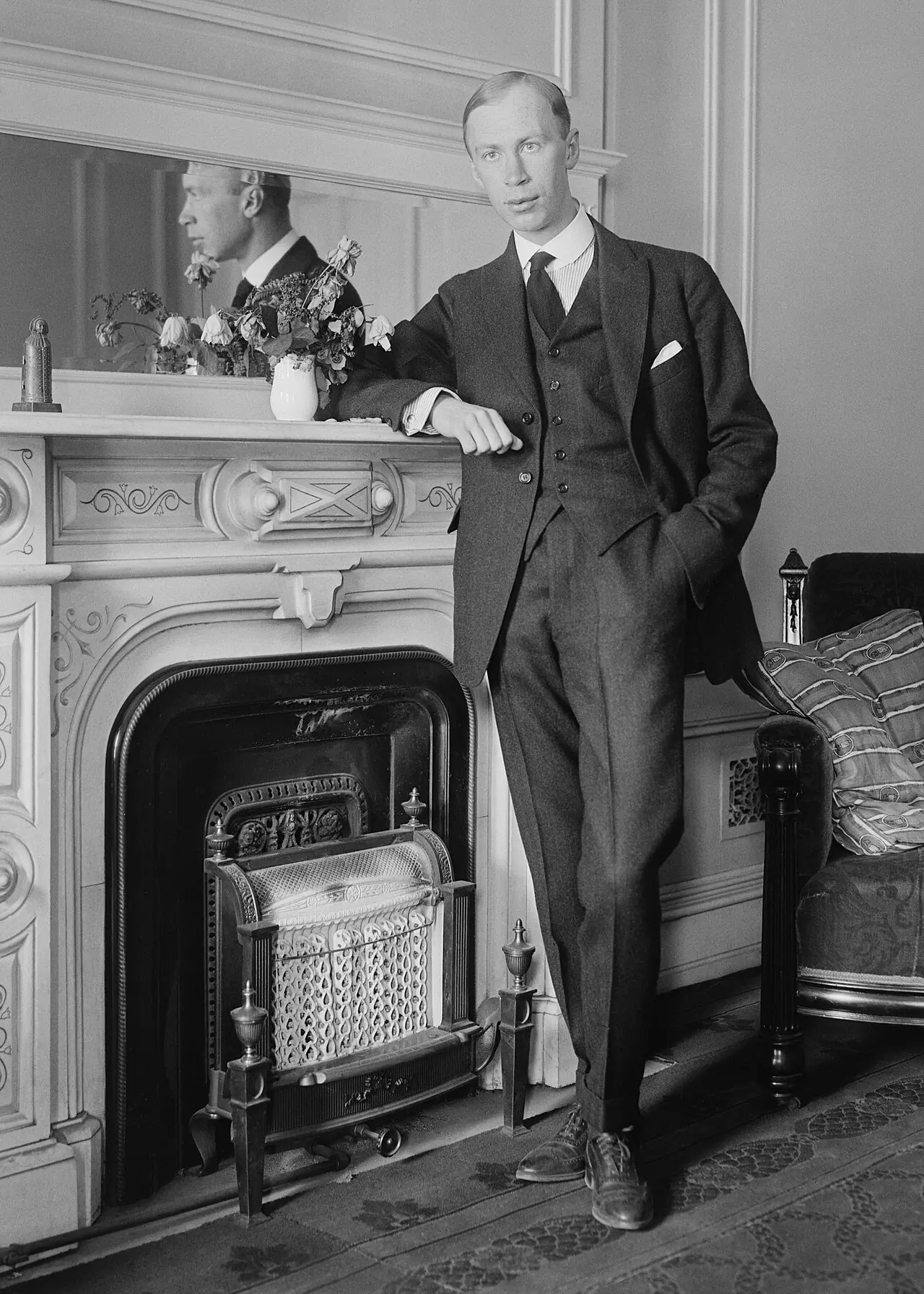
Glière at Sontsovka, 1902–03; St Petersburg Conservatory, 1904–14
Homes
Russia · United States · Bavaria · Paris; settled in Moscow in 1936
On stage
The Love for Three Oranges · Romeo and Juliet · Cinderella · War and Peace
Output
Seven symphonies, five piano concertos and nine completed piano sonatas
“It seemed to me that if Haydn had lived into our own time, he would have kept his way of writing while taking in something new.”
Life
At Sontsovka, the Ukrainian estate his father managed, Prokofiev grew up hearing his mother play Beethoven and Chopin. She wrote down his first piano pieces; the earliest, an Indian Galop, dates from 1896. After a trip to the Moscow opera in 1900, the eight-year-old set about writing an opera of his own, The Giant, for the family to perform at home. His mother eventually stopped playing when she saw that he had overtaken her. Sergei Taneyev recommended proper lessons, and Reinhold Glière spent the summers of 1902 and 1903 at Sontsovka teaching the boy, who was already filling manuscript books.
1904–14The St Petersburg Conservatory
He entered the St Petersburg Conservatory at thirteen, bringing four operas, two sonatas, a symphony and piano pieces to the entrance examination. Rimsky-Korsakov taught orchestration, Lyadov harmony and counterpoint; later Anna Esipova took charge of his piano playing. Nikolai Tcherepnin taught conducting and encouraged his taste for Haydn and Mozart. His fellow student Nikolai Myaskovsky became the friend to whom he sent scores and complaints for the rest of his life. In December 1908 Prokofiev played some of his first distinctive pieces, Suggestion diabolique among them, at St Petersburg’s Evenings of Contemporary Music. The following spring his examination pieces shocked Lyadov, who heard Scriabin in them. In the final piano competition of 1914, with Esipova ill, Prokofiev played his own First Concerto. Glazunov opposed him, but Prokofiev was awarded the Rubinstein Prize, which was a grand piano.
The Second Concerto had caused an uproar at Pavlovsk the previous year. It has an enormous first-movement cadenza, after which the orchestra re-enters loudly. The score was later lost, and Prokofiev reconstructed and revised it in 1923. In the Toccata, Op. 11, repeated notes are exchanged between the hands, with scarcely a moment to lift the fingers clear.
1914–17Diaghilev, Chout and the Classical Symphony
In London in 1914 he met Sergei Diaghilev, who commissioned a prehistoric ballet and then rejected it. Prokofiev reworked Ala and Lolli as the Scythian Suite, scored for large forces of brass and percussion. When he conducted it in Petrograd in 1916, Glazunov walked out just before the end. Diaghilev, whom Prokofiev had travelled to Italy to see in 1915, commissioned another ballet, this time on a Russian folk tale, Chout (The Buffoon). That year Prokofiev met Stravinsky for the second time and played a four-hand Petrushka with him. After extensive revision Chout, a ballet built on a succession of practical jokes, reached Paris in 1921.
In the summer of 1917 he went to stay in the country near Petrograd. “I deliberately did not take a piano to the country,” he recalled in his 1941 autobiography. He wanted to find orchestral ideas that his fingers would never suggest. The “Classical” Symphony is written in the style Haydn might have used had he lived into the twentieth century. Its four movements last about fifteen minutes. The Gavotte moves in very wide leaps and lands in unexpected keys. Prokofiev conducted the première on 21 April 1918. He also finished the twenty short Visions fugitives in 1917.
1918–29America, Chicago and Paris
With official permission to leave Russia, he travelled east in May 1918, through Siberia and Japan to San Francisco. In America he found more engagements as a pianist than productions of his operas. In New York he met the singer Lina Codina, who performed as Lina Llubera; she thought him “vaingloriously rude” and told him so. Cleofonte Campanini commissioned The Love for Three Oranges for Chicago, and Prokofiev had the score ready in October 1919, despite scarlet fever and diphtheria that spring. Campanini died that December, and the production was postponed to the end of 1921. Prokofiev conducted it in Chicago on 30 December 1921, in French. The opera concerns a melancholy prince, a witch and three oranges containing princesses, with rival theatrical factions quarrelling at the edges of the action.
Two weeks earlier he had played the Third Piano Concerto in Chicago under Frederick Stock. It opens with a solo clarinet; the strings then enter with a fast run, and the piano comes in across it. He had worked on it that summer in Brittany, where the poet Konstantin Balmont was staying nearby; Prokofiev dedicated the concerto to him and set five of his poems. In 1932 he recorded it in London with the London Symphony Orchestra under Piero Coppola. After a stay at Ettal in Bavaria, he married Lina in 1923 and settled in Paris. Their sons, Sviatoslav and Oleg, were born in 1924 and 1928; Prokofiev’s mother died in December 1924.
Serge Koussevitzky promoted the music, though Prokofiev’s gratitude had limits. “You can’t rely on Koussevitzky’s taste,” he wrote to Myaskovsky from Sèvres on 3 January 1924, “though you can’t deny him a nose for things.” The heavily scored Second Symphony disappointed Paris in 1925. That August Prokofiev told Myaskovsky that everyone had been puzzled: “so clever had I been that even I could not fathom what I was driving at.” Diaghilev’s Le Pas d’acier, staged in 1927, put Soviet factory life into a ballet. Diaghilev then commissioned The Prodigal Son and was amazed when Prokofiev finished it in a few months. After clashes with the choreographer, George Balanchine, it reached the stage in 1929, and Diaghilev died soon afterwards. The Fiery Angel was not staged; a Berlin production under Bruno Walter was cancelled in 1927. Prokofiev used music from it in his Third Symphony.
1927–38Return to the Soviet Union
A successful Soviet tour in 1927, with recitals in Moscow, Leningrad and the Ukraine, began the gradual return. In 1934 he wrote in Izvestia for a “new simplicity” in melody and form. Commissions multiplied; he moved his family to Moscow in 1936 and continued travelling abroad until 1938. One early commission was the film Lieutenant Kijé, whose officer exists through a clerk’s mistake. Prokofiev’s concert suite gives this imaginary man a birth, a romance, a wedding, a troika and a funeral. The scoring includes a tenor saxophone, and sleigh bells accompany the troika.
Romeo and Juliet, largely written in 1935, had a harder passage to the stage. Its original scenario let both lovers survive. Prokofiev eventually restored Shakespeare’s deaths. In 1936 Pravda attacked Shostakovich’s Lady Macbeth of the Mtsensk District, and productions with non-Soviet subjects began to be cancelled, Romeo and Juliet among them. After agreements with the Kirov and Bolshoi theatres were broken, the première took place in Brno in December 1938. Leonid Lavrovsky’s Kirov production followed in January 1940, with Galina Ulanova as Juliet. The knights’ dance is heavy and stamping. Juliet’s music moves from quick scales to long phrases.
In 1936 Natalia Sats asked him for a children’s piece. Peter and the Wolf gives the grandfather to the bassoon and the wolf to three horns. In 1938, on his last tour of the West, Prokofiev met Walt Disney in Hollywood and was offered $2,500 a week to write music for a film studio. At home he worked with Sergei Eisenstein on Alexander Nevsky. Sometimes Prokofiev composed to filmed scenes, and sometimes Eisenstein filmed to his music. Prokofiev also experimented with microphones. The two men agreed to leave out genuine medieval music, which Prokofiev thought “far too remote and emotionally alien to us” for a film audience. For the 1939 cantata he rebuilt the score. In The Field of the Dead a mezzo-soprano searches the battlefield.
1939–45War sonatas and War and Peace
He began the Sixth, Seventh and Eighth piano sonatas together in 1939. The Seventh took shape in Tbilisi in 1942. Sviatoslav Richter gave its first performance in January 1943. Its E major slow movement stands between two violent movements, and the finale drives towards B♭ major. The sonata won Prokofiev his first Stalin Prize. He wrote the Eighth in the summer of 1944 at Ivanovo and dedicated it to Mira Mendelson; Emil Gilels gave its première in December. It opens with an Andante dolce in which the melody moves freely at a slow tempo before faster music enters.
In 1939 Prokofiev met Mira in the Caucasian town of Kislovodsk. That July Vsevolod Meyerhold, who was to direct Prokofiev’s Soviet opera Semyon Kotko, was arrested; he was executed the following year. In 1941 Prokofiev left Lina for the writer Mira Mendelson. Evacuated after the German invasion, they worked in Nalchik, Tbilisi and Alma-Ata. Together they made a libretto from War and Peace, beginning with Prince Andrei overhearing Natasha at her window. Official demands enlarged the patriotic scenes. In 1946 the revised first half had a triumphant staging at Leningrad’s Maly Theatre under Samosud. The second half reached dress rehearsal in 1947 and was withdrawn after official criticism and Prokofiev’s refusal to cut the scenes at issue. Cinderella, completed in 1944, reached the Bolshoi in November 1945; in it the waltzes are interrupted by the arrival of midnight.
Prokofiev conducted the Fifth Symphony in Moscow on 13 January 1945, when the defeat of Germany was close; it was his last appearance as a conductor. The symphony opens with flute and bassoon in octaves. Near the end of the finale the full orchestra drops to solo strings, piano, harp and percussion before the closing chords. The manuscript was written on paper that Koussevitzky had sent from Boston to help Soviet composers. Soon after the première Prokofiev fainted, fell and suffered a concussion. His health never recovered.
1948–53The 1948 resolution on formalism
Mravinsky conducted the Sixth Symphony in October 1947. It was hailed at the première, then publicly denounced and withdrawn. The prizes Prokofiev had received did not protect him. In January 1948 he married Mira after a Soviet court invalidated his foreign marriage; on 20 February Lina was arrested on fabricated espionage charges. She was sentenced to twenty years and spent eight in prisons and camps. At the end of the year his new opera The Story of a Real Man, on a Soviet subject, was severely denounced. Illness and the loss of performances left him short of money.
Prokofiev’s work and friendship with the young Mstislav Rostropovich led to the Cello Sonata of 1949 and then the Sinfonia concertante, remade from his earlier Cello Concerto. In 1951 Richter gave the first performance of the Ninth Sonata; Prokofiev, nearly sixty, heard it by telephone, relayed from the Union of Composers. The Seventh Symphony, written for a children’s radio audience in 1952, ends quietly; Prokofiev also supplied a brisk alternative coda. Samosud conducted it that October, and Prokofiev made his last appearance in a concert hall. He died on 5 March 1953, the day Stalin died. The Fiery Angel and the complete War and Peace had not yet been staged. Lina was still in a camp. She was released in 1956, left the Soviet Union in 1974 and died in 1989.
Places
Every recorded place, joined in date order. Prokofiev on the MapAll 60 places, with sources
Sontsivka Ukraine · 1891 · born (disputed)
Birth date disputed: catalogue gives 23 April; other sources give 27 April.
Prokofiev places an ordinary chord where it is not expected. The Gavotte of the “Classical” Symphony keeps its stately dance steps while the harmony takes an unexpected turn, with D major still established. In the Third Piano Concerto’s finale, the piano and strings can play in different keys while keeping exactly together.
𝄾Motor rhythm
In Prokofiev a steady pulse often continues under everything above it. In the scherzo of the Second Piano Concerto both hands play an unbroken stream of semiquavers in octaves. The finale of the Seventh Sonata is in seven quavers to the bar, grouped 2 + 3 + 2 and repeated throughout, while the chords above become denser.
𝆑The piano
The Toccata, Op. 11, begins with repeated Ds. Notes pass back and forth between the hands, then semitone neighbours crowd in around them; the hands spring apart and close again. The Second Concerto has the same physical energy on a much larger scale. In the first-movement cadenza the pianist develops the music alone, until the orchestra can scarcely enter loudly enough.
𝅘𝅥Melody
The First Violin Concerto opens with a quiet solo violin over tremolo violas. Prokofiev lets the melody grow without hurrying it towards its close. The opening returns near the end of the concerto, now shared with the flute. The slow movement of the Eighth Sonata carries the same marking, Andante sognando. In Romeo and Juliet the lovers are given similarly sustained phrases, set against the busier music of the people around them.
𝄞Instrumental characters
In Peter and the Wolf three horns play the wolf and a flute plays the bird. Prokofiev chose a tenor saxophone for the imaginary officer in Lieutenant Kijé and used it again in Romeo and Juliet. At the opening of the Fifth Symphony a flute and a bassoon play the same tune an octave apart. For the film Alexander Nevsky he experimented with microphone placement and sound mixing; the concert cantata is a separate reorchestration.
𝄋Old dance forms in a modern idiom
Prokofiev took Haydn’s four-movement symphony as the frame for his harmonic departures. In the “Classical” Symphony a Gavotte stands in place of the expected minuet, and its melody moves in wide leaps. In Cinderella he used the older ballet sequence of waltzes, variations and a pas de deux, giving each dancer a number in turn. The clock interrupts this sequence.
Works
A selection from the composer’s works.
1911–12
Piano Concerto No. 1 in D♭ majorOp. 10Piano and orchestra
The opening theme returns several times in the course of a single movement lasting about fifteen minutes. Prokofiev dedicated the work to his conducting teacher, Nikolai Tcherepnin, and won the Conservatory piano prize with it in 1914.
Piano Concerto No. 2 in G minorOp. 16Piano and orchestra
In the first-movement cadenza the pianist takes over much of the orchestra’s work, and the scherzo requires continuous semiquavers in octaves. The score in use today is Prokofiev’s 1923 reconstruction and revision of the lost original.
1914–15
Scythian SuiteOp. 20Large orchestra, including expanded brass, percussion, piano and two harps
Four movements taken from Ala and Lolli, the ballet Diaghilev rejected: Invocation to Veles and Ala, The Evil God and the Dance of the Pagan Monsters, Night, and The Glorious Departure of Lolli and the Procession of the Sun.
1915–17
Visions fugitivesOp. 22Piano
Twenty miniatures, several of them very short. The markings run from Lentamente (slowly) to Ridicolosamente (ridiculously).
1915–17
Violin Concerto No. 1 in D majorOp. 19Violin and orchestra
A furious scherzo separates two outer movements. Completed in 1917, it waited until 1923 for Marcel Darrieux and Koussevitzky to give its Paris première.
1916–17
Symphony No. 1 in D major “Classical”Op. 25Orchestra with paired woodwinds, two horns, two trumpets, timpani and strings
Written in the manner of Haydn, in four movements lasting about fifteen minutes. Prokofiev composed much of it without a piano, working on walks.
1917–21
Piano Concerto No. 3 in C majorOp. 26Piano and orchestra
The concerto opens with a solo clarinet, and the piano and orchestra soon trade short, sharp exchanges. The middle movement is a set of five variations on a short theme in E minor. Prokofiev dedicated the concerto to the poet Konstantin Balmont.
1919
The Love for Three OrangesOp. 33Opera in a prologue and four acts, after Carlo Gozzi
The plot concerns a prince’s melancholy, a witch’s curse and princesses inside oranges, with rival theatrical factions arguing over the entertainment. Prokofiev conducted the French-language première in Chicago in December 1921.
1919–27
The Fiery AngelOp. 37Opera in five acts, after Valery Bryusov
Renata’s religious visions and erotic obsession end in a convent overtaken by hysteria. Prokofiev never saw it staged; he carried much of the music into his Third Symphony.
1933–34
Lieutenant Kijé SuiteOp. 60Orchestra, with optional baritone in the Romance and Troika
The suite has five movements, which follow the life of an officer invented by a clerical error: Kijé’s Birth, Romance, Kijé’s Wedding, Troika and Kijé’s Funeral. A cornet plays his opening call, a tenor saxophone carries the melody associated with him, and sleigh bells accompany the winter sleigh ride.
1935–36; revised 1939–40
Romeo and JulietOp. 64Full-length ballet after Shakespeare; large orchestra with tenor saxophone, cornet, piano and celesta
The first staging was in Brno in 1938; Lavrovsky’s Kirov production with Ulanova followed in 1940. The score contains both the heavy knights’ dance and the lovers’ long phrases.
1936
Peter and the WolfOp. 67Narrator and orchestra
Written for Natalia Sats’s children’s theatre. The cast includes a bird played by the flute and a duck played by the oboe. The wolf swallows the duck whole, and at the end she can still be heard inside him.
1938–39
Alexander NevskyOp. 78Cantata for mezzo-soprano, mixed chorus and orchestra
Prokofiev reorchestrated his music for Eisenstein’s film as a seven-movement cantata; the film score itself has no opus number. The Battle on the Ice is followed by The Field of the Dead, for solo mezzo-soprano.
1939–44
Piano Sonatas Nos. 6–8, the “War Sonatas”Opp. 82–84Piano
Begun together in 1939 and finished separately in 1940, 1942 and 1944. No. 6 is in A major, Nos. 7 and 8 in B♭ major. The Seventh ends with a fast finale in 7/8; the Eighth opens with a long Andante dolce.
1940–44
CinderellaOp. 87Ballet in three acts; scenario by Nikolai Volkov after Charles Perrault
The ballet includes the sisters’ dancing lesson, Cinderella’s great waltz and the scene of midnight at the ball. It was first staged at the Bolshoi in November 1945.
1941–52
War and PeaceOp. 91Opera in thirteen scenes with choral epigraph; libretto by Prokofiev and Mira Mendelson after Tolstoy
Begins with Andrei overhearing Natasha at her window and expands to cover the invasion of 1812. The patriotic scenes were enlarged at official demand, and the composer never heard the whole opera staged.
1944
Symphony No. 5 in B♭ majorOp. 100Large orchestra with piano, harp and percussion
Prokofiev conducted the première in Moscow in January 1945. Near the end of the finale, the large orchestra thins to an ensemble of solo strings, piano, harp and percussion.
In the score
Short examples, engraved and playable.
Harmony · original schematicSideways triad shift and cadential return to key
A schematic of a harmonic side-slip. C–E–G moves up a semitone to D♭–F–A♭, then returns at once. Both chords are ordinary major triads. A G–C cadence closes in the home key.
Keyboard mechanism · original schematicContinuous attacks divided between the two hands
A schematic of interlocking piano attacks. Each hand alternates a semiquaver note with a semiquaver rest; together they make sixteen evenly spaced attacks per bar. In the second bar the right hand rises while the left stays on D.
Piano Sonata No. 7, finale · rhythmic schematicSeven quavers grouped 2 + 3 + 2
A rhythmic diagram of the 2 + 3 + 2 grouping used in the finale of the Seventh Sonata, played here on a single repeated B♭. The middle group is one quaver longer than the groups on either side. In the sonata the pattern is played in bass notes and chords.
Sister arts
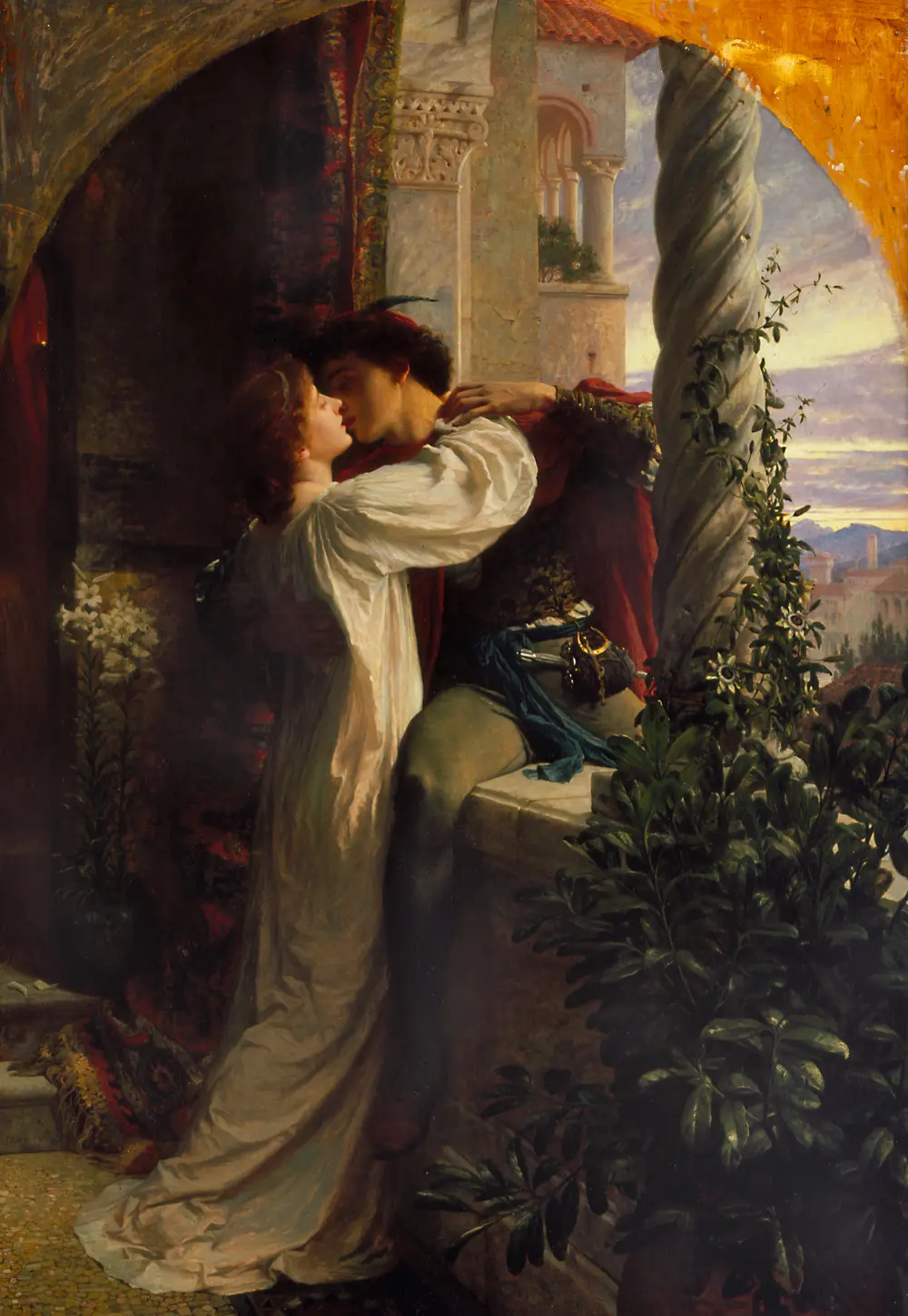
Frank DickseeRomeo and Juliet, 1884Oil on canvas · Southampton City Art Gallery
Dicksee painted the lovers parting, with Romeo about to descend from Juliet’s balcony. He had first drawn the scene for an illustrated Shakespeare. Prokofiev’s ballet returns to the two lovers alone at the start of Act III, after the fights in which Mercutio and Tybalt are killed.
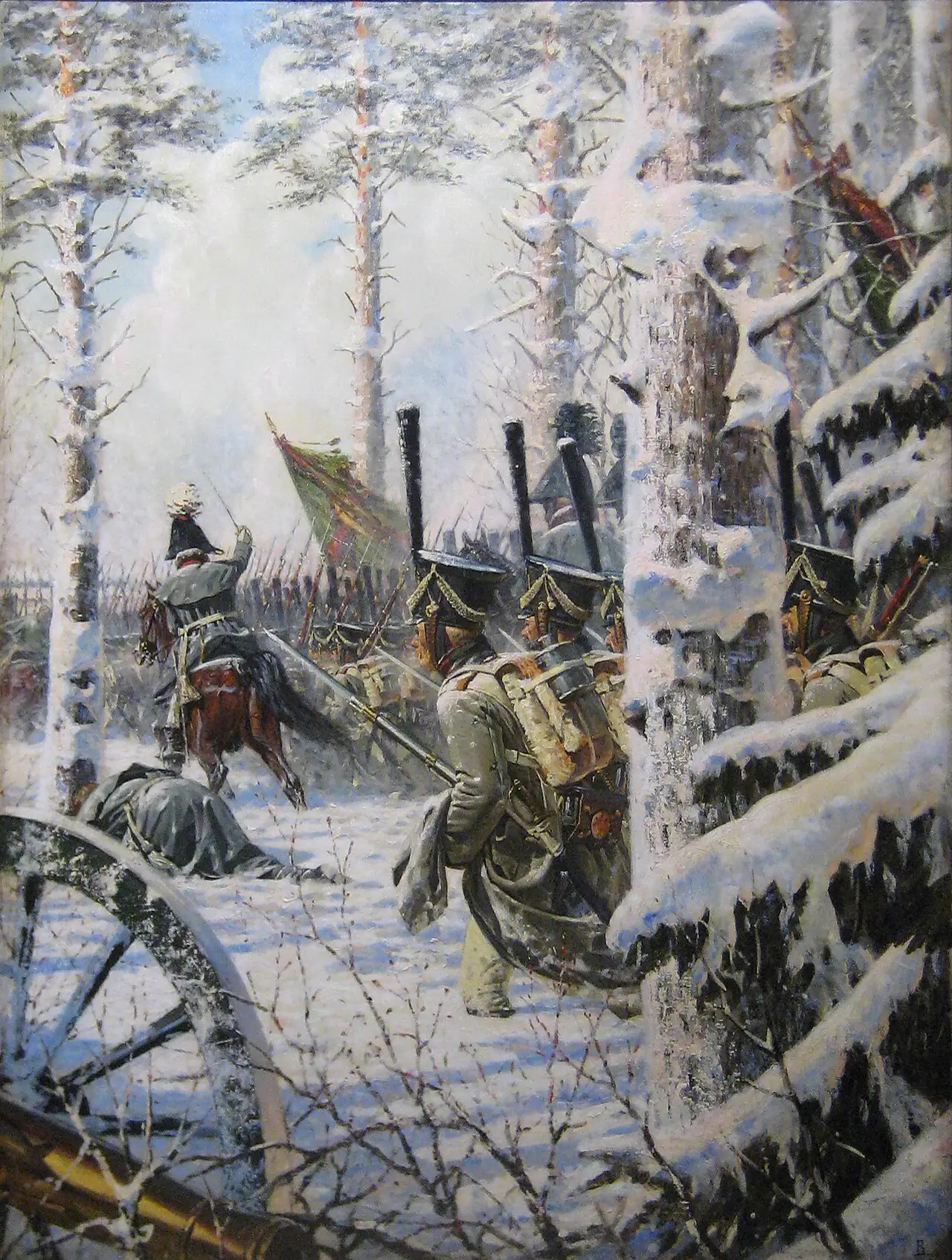
Vasily VereshchaginFix Bayonets! Hurrah! Hurrah! (The Attack), 1887–95Oil painting · Museum of the Patriotic War of 1812, State Historical Museum, Moscow
Vereshchagin’s Napoleon I in Russia series takes up the invasion of 1812, the war in Tolstoy’s novel and Prokofiev’s opera. In this painting the attack is close enough for individual bodies to fill the canvas. Prokofiev and Mira Mendelson worked on their adaptation while evacuated from Moscow after another invasion, in 1941.
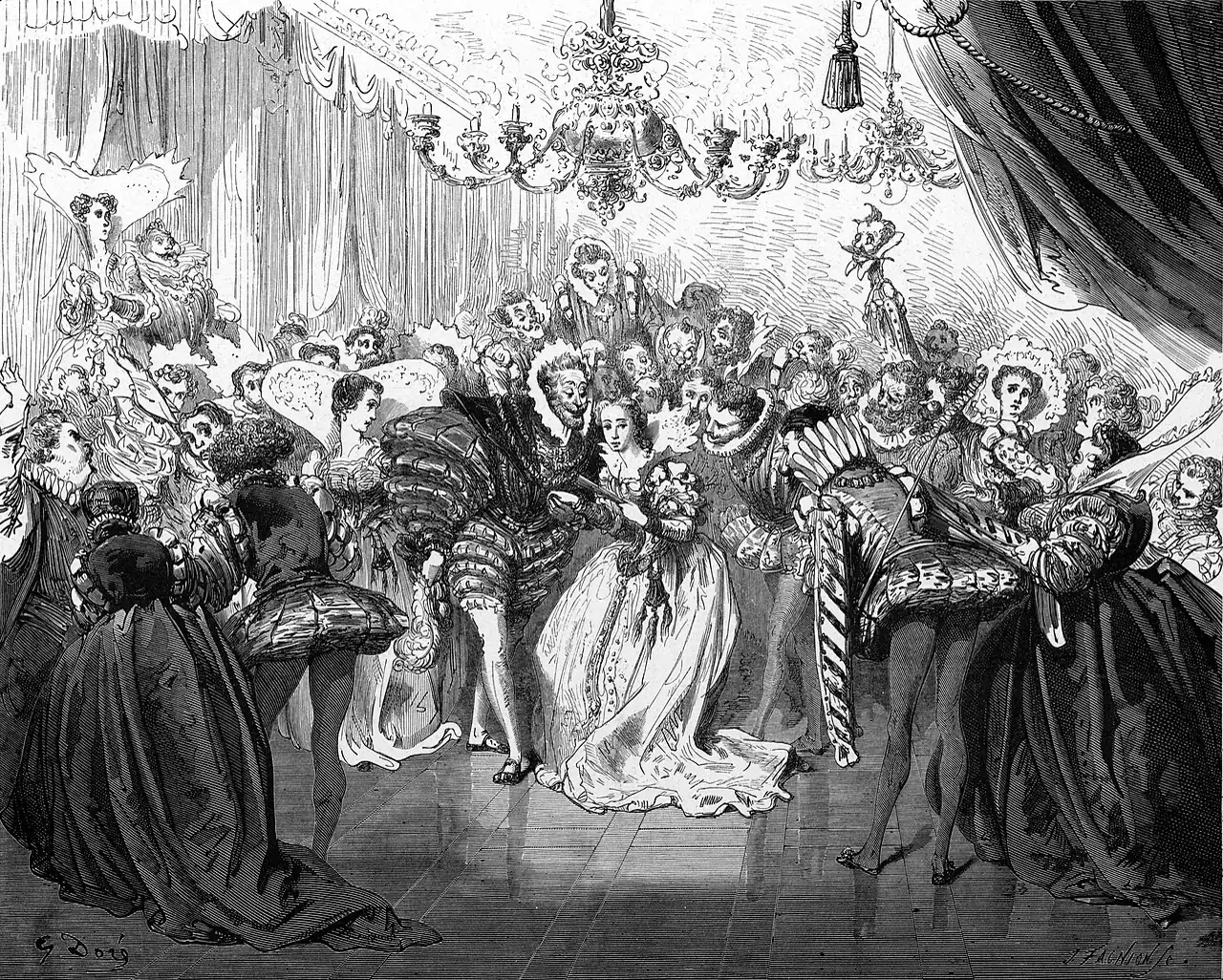
Gustave DoréCinderella, 1867 editionWood engraving after Doré, from Les Contes de Perrault · National Library of Poland, Warsaw; Polona digital collection
Doré’s engraving comes from an 1867 edition of Perrault’s tales. Nikolai Volkov drew on the same story for Prokofiev’s ballet. Prokofiev included a scene in which the sisters have a dancing lesson before they go to the ball. Cinderella’s own great waltz comes only after the fairy has intervened.
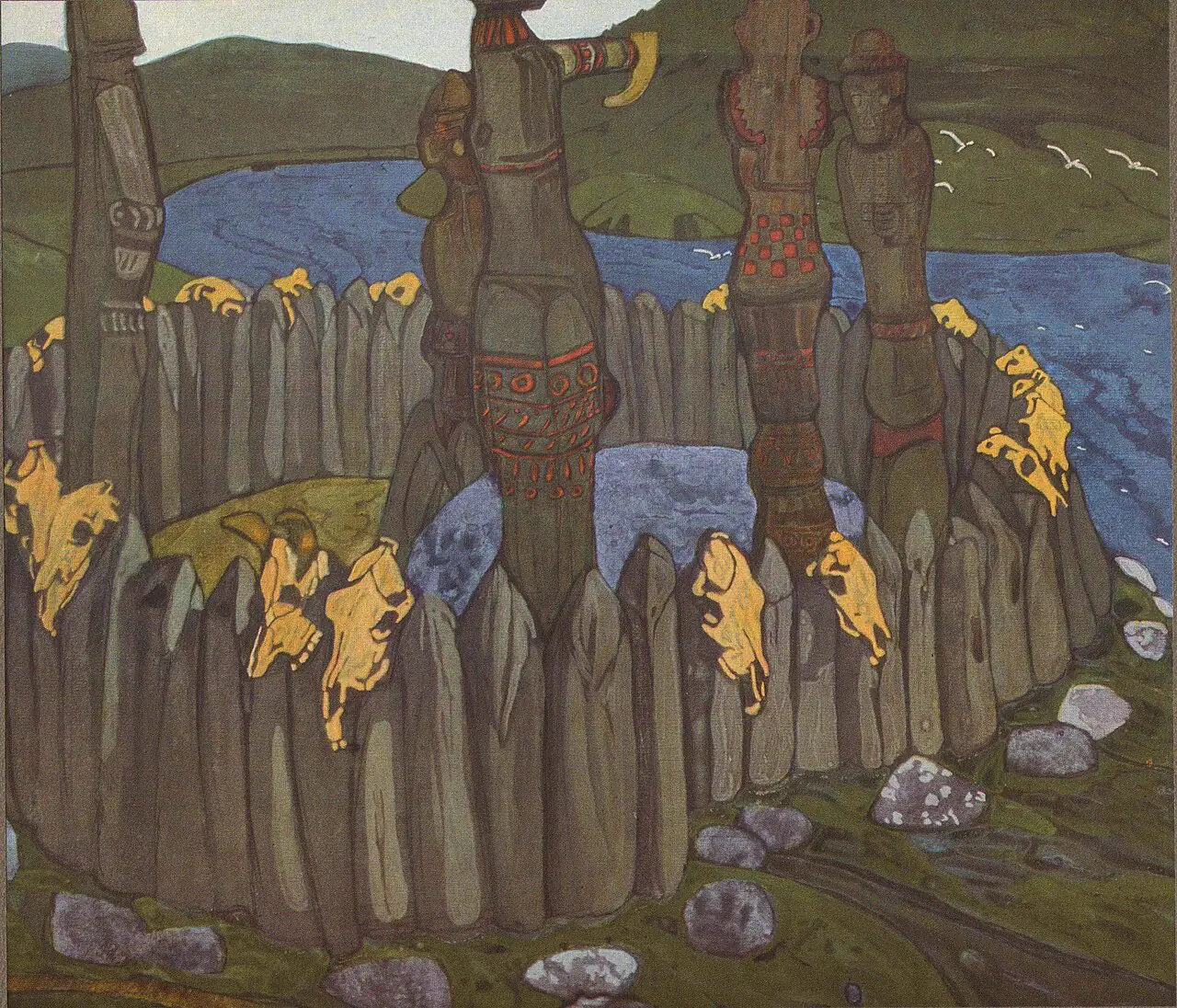
Nicholas RoerichIdols, sketch, 1901Gouache on cardboard · State Russian Museum, St Petersburg
Roerich’s imagined pagan sanctuary belonged to the patron Maria Tenisheva, who gave the sketch to the Russian Museum in 1910. Its carved idols belong to the same prehistoric world that Diaghilev requested from Prokofiev for Ala and Lolli. The impresario rejected that ballet, and Prokofiev reworked its music as the Scythian Suite. Roerich went on to devise the scenario of Stravinsky’s The Rite of Spring with the composer and to design its sets and costumes.
Leo Tolstoy
War and Peace: Natasha at the window
1865–69; Volume II, Part III, Chapter II
Russian prose— Соня! Соня! — послышался опять первый голос.— Ну, как можно спать! Да ты посмотри, что за прелесть! Ах, какая прелесть! Да проснись же, Соня,— сказала она почти со слезами в голосе.— Ведь эдакой прелестной ночи никогда, никогда не бывало.
Соня неохотно что-то отвечала.
— Нет, ты посмотри, что за луна!.. Ах, какая прелесть! Ты поди сюда. Душенька, голубушка, поди сюда. Ну, видишь? Так бы вот села на корточки, вот так, подхватила бы себя под коленки — туже, как можно туже, натужиться надо,— и полетела бы. Вот так!
Our translation“Sonya! Sonya!” the first voice sounded again. “How can you sleep! Just look how lovely it is! Oh, how lovely! Do wake up, Sonya,” she said, almost in tears. “There has never, never been such a lovely night.”
Sonya answered something reluctantly.
“No, just look at that moon! Oh, how lovely! Come here. Darling, my dear, come here. Now, do you see? I would squat down like this, tuck my hands under my knees — tighter, as tight as possible, you have to make an effort — and fly away. Like this!”
Natasha wakes Sonya because the moon is too beautiful to sleep through. Below them, the widowed Andrei overhears and begins to want a life again. Prokofiev and Mira Mendelson chose this episode, set at a bedroom window, for their opera’s first scene. The Russian text follows the Russian Virtual Library edition.
Recommended recordings
Piano Concerto No. 3Sergei Prokofiev; London Symphony Orchestra, Piero CoppolaHMV; reissued by Naxos Historical · 1932Recorded at Abbey Road in June 1932, two months after Prokofiev played the concerto at Queen’s Hall with the BBC Symphony. The composer’s own playing is quick and light, with sharply graded touches and no grandstanding.
Piano Concerto No. 3Martha Argerich; Berlin Philharmonic, Claudio AbbadoDeutsche Grammophon · 1967Argerich plays the piano part’s leaps with assurance, partnered by Abbado and the Berlin orchestra. She recorded the concerto again in 1997 with Charles Dutoit and the Montréal orchestra; that version won a Grammy.
Piano Sonatas Nos. 7 and 9Sviatoslav RichterNaxos Historical, Early Recordings Vol. 2, 8.111387 · 1958The Seventh’s finale is played with more force than in most rival recordings. Beside it is the quiet Ninth, written for Richter. Richter gave the first performances of both works.
Piano Sonata No. 8Sviatoslav RichterDeutsche Grammophon · 1961A first choice for the long opening movement of the Eighth. Richter gives the returning melody room and keeps the faster music within the same span.
Romeo and Juliet, complete balletCleveland Orchestra, Lorin MaazelDecca · 1973The Cleveland players attack hard in the feud music. Maazel records the complete ballet and keeps it moving continuously, as in a performance in the theatre.
Symphony No. 5Berlin Philharmonic, Herbert von KarajanDeutsche GrammophonThe orchestra plays with a full sound, and the tam-tam stroke at the climax of the first movement is very loud. Karajan keeps the finale moving towards its last pages, and the polished playing does not soften their attack.
Alexander Nevsky, cantataVěra Soukupová; Czech Philharmonic Orchestra and Chorus, Karel AnčerlSupraphon · 1962The recorded sound is hard. Ančerl plays the charging rhythms of the battle with sharp attack. Soukupová sings the lament firmly and without display.
War and PeaceYelena Prokina, Alexander Gergalov and cast; Kirov Chorus and Orchestra, Valery GergievPhilips · 1991Recorded at the Mariinsky Theatre in July 1991 and issued in 1993. Prokina sings Natasha as a young and vulnerable figure, and she is entirely at home in the Russian words. Gergiev’s conducting is urgent and theatrical. The Mariinsky recording is dry and gives the orchestra little room.
Tcherepnin encouraged Prokofiev’s interest in Haydn and Mozart; the long ballet scores continue Tchaikovsky’s practice of telling a whole evening’s story through dance. Mussorgsky supplied an operatic model for quick exchanges and crowded public scenes. Richter gave the first performances of the Seventh and Ninth sonatas, and Rostropovich helped rework the cello concerto as the Sinfonia concertante. Frederick Ashton choreographed Romeo and Juliet in Copenhagen in 1955, and Kenneth MacMillan staged it in London in 1965.
Further reading
David Nice, Prokofiev (Yale University Press, 2003). biography
The biographical volume covering the composer’s early and international career.