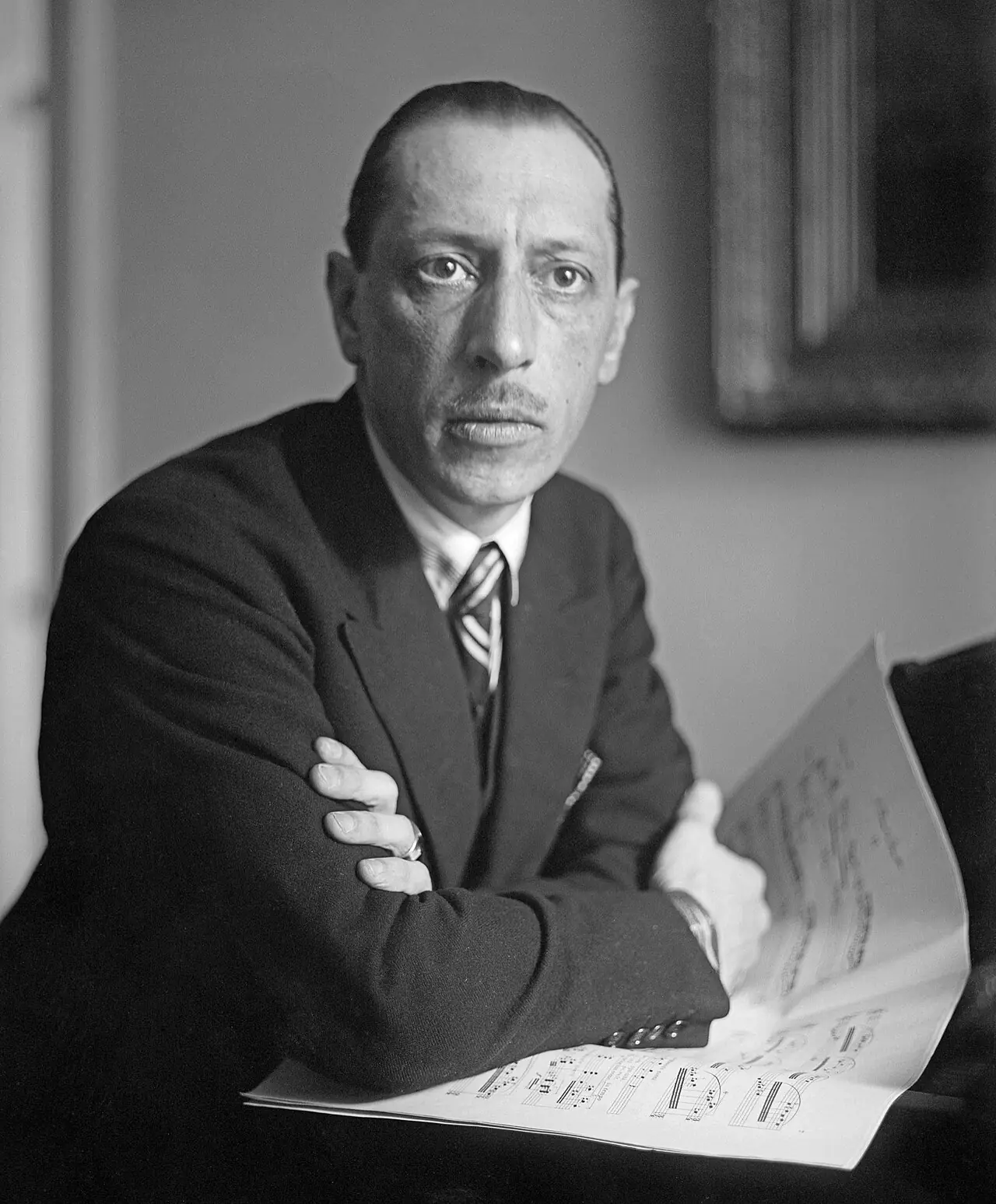
IgorStravinsky
Composer of dance music in which a single displaced accent could unsettle the dancers, and of a psalm setting that scarcely moves.
- Trained
- Private lessons with Rimsky-Korsakov, 1905–08
- Homes
- Russia · Switzerland, 1914–20 · France, 1920–39 · United States, 1939–71
- Theatre
- Diaghilev’s Ballets Russes · Ramuz’s travelling theatre · Balanchine · Auden and Kallman
- Output
- Ballets, operas, symphonies and sacred music; composing and recording into his eighties
Life
Stravinsky was born in 1882 at Oranienbaum. His father, Fyodor, sang bass at the Mariinsky Theatre in St Petersburg; Igor heard him on stage and began piano lessons at nine. He entered St Petersburg University to study law. There he befriended Vladimir Rimsky-Korsakov, whose father heard his first pieces in 1902. Rimsky-Korsakov took him on privately, giving regular lessons from 1905 until his death in 1908. The pupil orchestrated pages of Pan Voyevoda, then had to explain why his teacher had scored them differently.
He married his cousin Catherine Nossenko in 1906; by 1914 they had four children. His E♭ Symphony owed much to Glazunov and Tchaikovsky; Scherzo fantastique and Fireworks are short orchestral works. Sergei Diaghilev heard his music in 1909 and gave him some Chopin to orchestrate for Les Sylphides. A full ballet, The Firebird, followed. Stravinsky handed over the score in sections while Michel Fokine worked out the dances. In his 1936 autobiography he recalled that the rehearsals ended with dinner beside Diaghilev and Nijinsky, and good claret.
Paris, 1910–13The Firebird, Petrushka, The Rite of Spring
The Firebird opened at the Paris Opéra on 25 June 1910, with Tamara Karsavina dancing the bird, and made him famous. The princesses have folk-like tunes; the music for Kashchei’s enchanted kingdom moves through chromatic notes; the bird’s music is in the high woodwind. He had learnt the fairy-tale orchestra from Rimsky. For the next ballet he imagined a puppet tormenting the orchestra with what his autobiography calls “diabolical cascades of arpeggios”. This was Petrushka, which he first conceived as a concert piece with a troublesome piano soloist. Diaghilev saw that it could be a ballet.
Alexandre Benois helped devise the story and designed the St Petersburg fair where it takes place. In the 1911 ballet, street musicians compete for attention, the piano part is prominent throughout, and the puppet loves a ballerina who prefers somebody else. His curses are set as a clash of C major and F♯ major, two ordinary chords sounded together. Nijinsky danced Petrushka. The puppet is killed, the showman displays its stuffing, and then its ghost appears above the booth, still mocking him.
On 26 September 1911 Stravinsky wrote to Roerich about The Rite: “The picture of the old woman in a squirrel fur sticks in my mind.” He pictured her running, stopping and interrupting the dance while he composed. The opening bassoon plays a Lithuanian melody taken from a folk-song collection; later, the strings repeat a single chord while the horns play accents against it. Nijinsky gave the dancers turned-in feet and bent knees. At the Théâtre des Champs-Élysées on 29 May 1913, with Pierre Monteux conducting, the audience shouted during the performance.
In Stravinsky’s later account he stood in the wings holding Nijinsky’s clothes while the choreographer stood on a chair shouting counts to dancers who could not hear the orchestra. In April 1914 Monteux played the score in concert in Paris, and admirers carried the composer out on their shoulders. In the final “Sacrificial Dance”, short bars keep changing length beneath the chosen girl’s jumps.
Switzerland, 1914–20Swiss exile and Histoire du soldat
The war left the family stranded in Switzerland, and the Revolution cut off their Russian income. Stravinsky kept asking for Russian books. On 23 February 1916 he told his mother to send folk songs of the Caucasus “that have been phonographically transcribed”, that is, songs taken down from phonograph recordings. She could leave the other collections, he told her. Renard sets an animal fable for singers, dancers and a small band that includes a cimbalom. With the Swiss writer C. F. Ramuz he wrote Histoire du soldat for a theatre that could tour cheaply. In it a soldier sells his violin to the Devil, and seven players accompany the action.
It opened in Lausanne in 1918, and the influenza epidemic stopped the tour. Stravinsky’s band had violin and double bass, clarinet and bassoon, cornet and trombone, and a percussionist, so each family has a high and a low instrument with a wide gap between them. The march is set in a rhythm that does not line up with the tune; a tango, a waltz and a ragtime follow. Les Noces, begun in 1914, did not reach the stage until 1923. After trying several scorings, Stravinsky settled on four pianos and percussion beneath soloists and chorus. Bronislava Nijinska choreographed the wedding.
France, 1920–39Pulcinella and the neoclassical works
Diaghilev’s next proposal was a ballet made from old Italian scores. Pulcinella opened in 1920, with designs by Picasso and choreography by Léonide Massine. Stravinsky kept the melodies and bass lines and added displaced accents and notes that clash with their neighbours. That year he moved to France and wrote the Symphonies of Wind Instruments in memory of Debussy. In it the wind groups exchange short phrases and chords, and there is no string section. The piece ends with a chorale.
The Octet of 1923 and the Concerto for Piano and Wind Instruments of 1924 applied this spare scoring to concert works. Stravinsky played the concerto on tour himself. In Oedipus rex (1927), Jean Cocteau’s text was sung in Latin in Jean Daniélou’s translation, while a narrator explained the events in the audience’s own language. Apollo (1928) is scored for strings alone. George Balanchine choreographed the Paris production, beginning a partnership that continued through Jeu de cartes, Orpheus and Agon.
He returned to Orthodox communion in 1926. Four years later, commissioned for the fiftieth anniversary of the Boston Symphony Orchestra, he wrote the Symphony of Psalms, which sets Latin psalms in three connected movements. The orchestra includes two pianos and a harp and has no violins, violas or clarinets. The second movement combines two fugues, one instrumental and one sung. At the end the choir repeats its praise slowly over a circling accompaniment. He became a French citizen in 1934 and continued to earn his living from commissions and concert performances.
America, 1939–51Los Angeles and The Rake’s Progress
Within eight months, from November 1938 to June 1939, his daughter Lyudmila, Catherine and his mother died. He left for America in September to give the Harvard lectures later published as Poetics of Music. Vera de Bosset followed him; they married in 1940 and settled in Los Angeles. He finished the Symphony in C that year and became an American citizen in 1945. The Symphony in Three Movements, completed in 1945, gives the piano a hard-driving part and the harp a quieter one. He later linked its outer movements to wartime newsreels.
Hogarth’s pictures of a young man squandering his inheritance suggested an English opera. In 1947 Stravinsky began working with W. H. Auden; Chester Kallman joined Auden on the libretto. The Rake’s Progress, first conducted by the composer in Venice in 1951, has arias, ensembles and harpsichord recitative, and draws on the operas of Mozart. Auden and Kallman added the character of Nick Shadow, a servant whose wages are his master’s soul. Tom Rakewell ends in Bedlam, where Anne Trulove sings him to sleep. The singers then step out of their roles to deliver the epilogue.
The last scoresRobert Craft and the serial works
Craft brought scores by Schoenberg and Webern into the household and rehearsed their music in Los Angeles. Stravinsky began using ordered groups of notes in the Septet (1953); Canticum sacrum (1955) contains a twelve-note movement. Agon, completed in 1957 for Balanchine, is a ballet for twelve dancers, and its music mixes courtly dances with serial passages. The orchestra includes mandolin, harp and castanets. In 1958 he set the Lamentations of Jeremiah as the large choral work Threni. In 1962 he returned to the Soviet Union, his first visit to his homeland since 1914.
He went on conducting and recording, and left performances of nearly all his music. Requiem Canticles (1966) sets only fragments of the Latin mass for the dead and ends with a postlude of chords, silences and tolling bells. He moved to New York in 1969 and died there on 6 April 1971. The Canticles were performed at his funeral in Venice. His grave is on San Michele, near Diaghilev’s.
Places

All 25 places, with sources
- Saint Petersburg · 1882–1910 · lived
Grew up in Saint Petersburg; studied law and took private lessons from Rimsky-Korsakov.
- Lomonosov Saint Petersburg · 17 June 1882 · born
Born in Oranienbaum during the family’s summer stay.
- Heidelberg · 1902 · travelled
Met Rimsky-Korsakov while visiting his son Vladimir.
- Ustyluh Ukraine · 1907–1914 · lived
Returned to his Ukrainian summer home to compose.
- Lausanne · 1910–1911 · lived
Moved his family to Switzerland.
- Palais Garnier Paris · 25 June 1910 · premiere
The Ballets Russes introduced his first major ballet score. The Firebird.
- Clarens Switzerland · 1911–1914 · lived
Composed beside Lake Geneva, including much of The Rite of Spring. The Rite of Spring.
- Théâtre du Châtelet Paris · 13 June 1911 · premiere
The Ballets Russes introduced Petrushka. Petrushka.
- Berlin · December 1912 · heard
Heard Schoenberg’s Pierrot lunaire during a visit. Schoenberg: Pierrot lunaire.
- Théâtre des Champs-Élysées Paris · 29 May 1913 · premiere
Monteux conducted Nijinsky’s controversial ballet. The Rite of Spring.
- Morges Switzerland · 1915–1920 · lived
Lived at La Croix and worked on Les noces and The Soldier’s Tale. Les noces; The Soldier’s Tale.
- Lausanne · 28 September 1918 · premiere
The Soldier’s Tale premiered at the Théâtre Municipal. The Soldier’s Tale.
- Carantec · 1920 · lived
Spent the summer in Brittany after leaving Switzerland.
- Garches · 1920–1921 · lived
Stayed at Coco Chanel’s Bel Respiro.
- Biarritz · 1921–1924 · lived
Lived with his family on the Basque coast.
- Nice · 1924–1931 · lived
Made Nice his family home while touring internationally.
- Brussels · 13 December 1930 · premiere
Ernest Ansermet conducted the Symphony of Psalms. Symphony of Psalms.
- Voreppe · 1931–1934 · lived
Lived at La Véronnière near Grenoble.
- Paris · 1934–1939 · lived
Settled on the rue du Faubourg Saint-Honoré after becoming a French citizen.
- Cambridge Massachusetts · 1939–1940 · worked
Delivered the Norton lectures at Harvard.
- Los Angeles · 1940–1969 · exile
Settled with Vera in Hollywood; worked with Robert Craft from 1948.
- Teatro La Fenice Venice · 11 September 1951 · premiere
Conducted his opera with a libretto by Auden and Kallman. The Rake’s Progress.
- Moscow · 1962 · travelled
Returned to the Soviet Union for concerts after decades abroad.
- New York City · 1969 – 6 April 1971 · died
Moved to New York in 1969 and died there two years later.
- San Michele Cemetery Venice · April 1971 · buried
Buried near Diaghilev on the cemetery island.
Influences
Teachers, encounters and borrowed music, each with its account and sources in the Web of Influence.
Influences received
The sound
Accent and pulse
Stravinsky moved accents without moving the beat. The first eight bars of “Augurs of Spring” stay in 2/4, with six heavy attacks placed irregularly over the strings’ steady quavers. The horns reinforce those attacks. In the “Sacrificial Dance” he changed the bar lengths themselves. A short group is interrupted by an even shorter one, and the dancers have to count afresh.
Chords
The Petrushka chord puts C major and F♯ major together, and the two triads form semitone clashes. The “Augurs” chord in The Rite stacks E♭7 above F♭ major and is repeated with shifting accents. A whole passage can run on one chord, with the horns marking the accents.
Scales
The octatonic scale alternates semitones and whole tones. Rimsky-Korsakov used it to represent magic, and Stravinsky inherited it from him along with the fairy tales. Its eight notes can supply both triads of the Petrushka chord. In The Firebird, symmetrical scales help distinguish the enchanted creatures from the princesses, whose round dance is set to a folk tune first played by the oboe.
Multiple tunes
At the Petrushka fair, street musicians play over one another. A tune on flutes and clarinets continues while another attraction starts up, and each part on its own is easy to follow. In Histoire du soldat, the bass repeats a plain accompaniment while the violin above it groups its notes differently.
Attack
Four pianos and percussion accompany the voices in Les Noces, and each syllable can fall on a hammer stroke. The Symphony of Psalms keeps two pianos and omits violins and violas, so the choir is set against hard-edged wind chords. Apollo is scored for strings alone and distinguishes as exactly between a plucked note, a short bow-stroke and a sustained melodic line.
Old music
In Pulcinella, an eighteenth-century melody keeps its outline while the accompaniment adds an extra dissonance or an awkwardly placed accent. The Rake’s Progress draws on more of the older forms: harpsichord recitative, arias and ensembles, and an epilogue in which the characters step out of the story as they do in Don Giovanni.
Works
A selection from the composer’s works.
- 1909–10The Firebird (L’Oiseau de feu)Ballet; large orchestraFokine combined Russian fairy tales for Diaghilev’s 1910 season; Karsavina danced the bird. At the end a quiet horn tune is taken up by the whole orchestra.Recordings in the Hall
- 1910–11PetrushkaBallet in four tableaux; large orchestra with pianoA piano concert piece became a puppet’s life among crowds at a St Petersburg fair. Stravinsky reduced and redistributed the original orchestration in his 1947 revision.Recordings in the Hall
- 1911–13The Rite of Spring (Le Sacre du printemps)Ballet in two parts; large orchestraThe solo bassoon at the opening plays a Lithuanian folk song; the metre of the last dance changes from bar to bar. Roerich helped devise the pagan ceremonies of the scenario and designed the 1913 production.Recordings in the Hall
- 1914–23Les Noces (The Wedding)Four vocal soloists, mixed chorus, four pianos and percussion; dancersNine years separated the first sketches from Nijinska’s Paris production. The final scoring, for four pianos and percussion, supplied the sharp attacks Stravinsky wanted beneath the wedding songs.
- 1918Histoire du soldat (The Soldier’s Tale)Narrator, actors, dancers; violin, double bass, clarinet, bassoon, cornet, trombone and percussionIn Ramuz’s touring theatre piece a soldier trades his violin to the Devil. The influenza epidemic stopped the proposed tour after the Lausanne première.
- 1919–20PulcinellaBallet; soprano, tenor, bass and chamber orchestraOld Italian tunes, supplied under Pergolesi’s name, are given new accents and accompaniments. The complete ballet includes three singers; the orchestral suite is without their words.
- 1920Symphonies of Wind InstrumentsWoodwind and brassA memorial to Debussy, ending in a wind chorale. Stravinsky returned to the score in 1947 and revised both its scoring and its notation.
- 1930Symphony of PsalmsMixed chorus; orchestra with two pianos and harp, without violins, violas or clarinetsWritten for the Boston Symphony’s fiftieth anniversary, though Ansermet gave the first performance in Brussels. The central movement combines an instrumental fugue and a choral fugue.
- 1942–45Symphony in Three MovementsOrchestra with piano and harpThe piano drives the outer movements; the harp takes a leading part in the central Andante. Stravinsky later connected the music with newsreel images of the war.
- 1948–51The Rake’s ProgressOpera in three acts and an epilogue; English libretto by W. H. Auden and Chester KallmanAuden and Kallman added a devil to Hogarth’s rake, and Stravinsky set their libretto with arias and harpsichord recitative. He conducted the première at La Fenice in 1951.
- 1953–57AgonBallet for twelve dancers; orchestraTwelve dancers, old court dances and passages written with twelve-note rows. The scoring of Balanchine’s plotless ballet includes mandolin and castanets.
- 1965–66Requiem CanticlesContralto and bass soloists, mixed chorus and orchestraLatin requiem fragments separated by an instrumental prelude, interlude and postlude. First performed at Princeton in 1966, it was played at Stravinsky’s own funeral in Venice five years later.
In the score
Short examples, engraved and playable.
Petrushka · harmonic schematicC major and F♯ major, separately and combined
The Rite of Spring · rehearsal 13One chord, six displaced accents
Histoire du soldat · technique schematicThree-note cycle in a four-quaver bar
Octatonic harmony · scale schematicEight notes containing the Petrushka chord
Sister arts
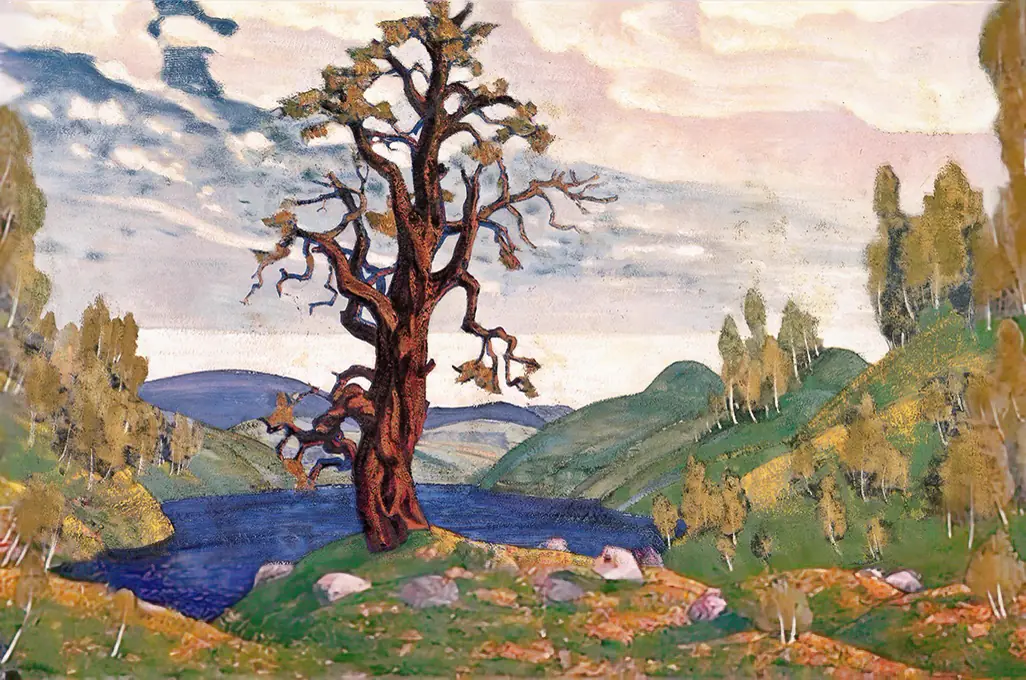
Roerich helped devise the ceremonies of The Rite and designed the landscape in which they took place. While composing in September 1911, Stravinsky wrote to him about the old woman in a squirrel fur whose stops and starts he could see as he worked. Roerich’s hills were to stand behind the dancers performing those rhythms.
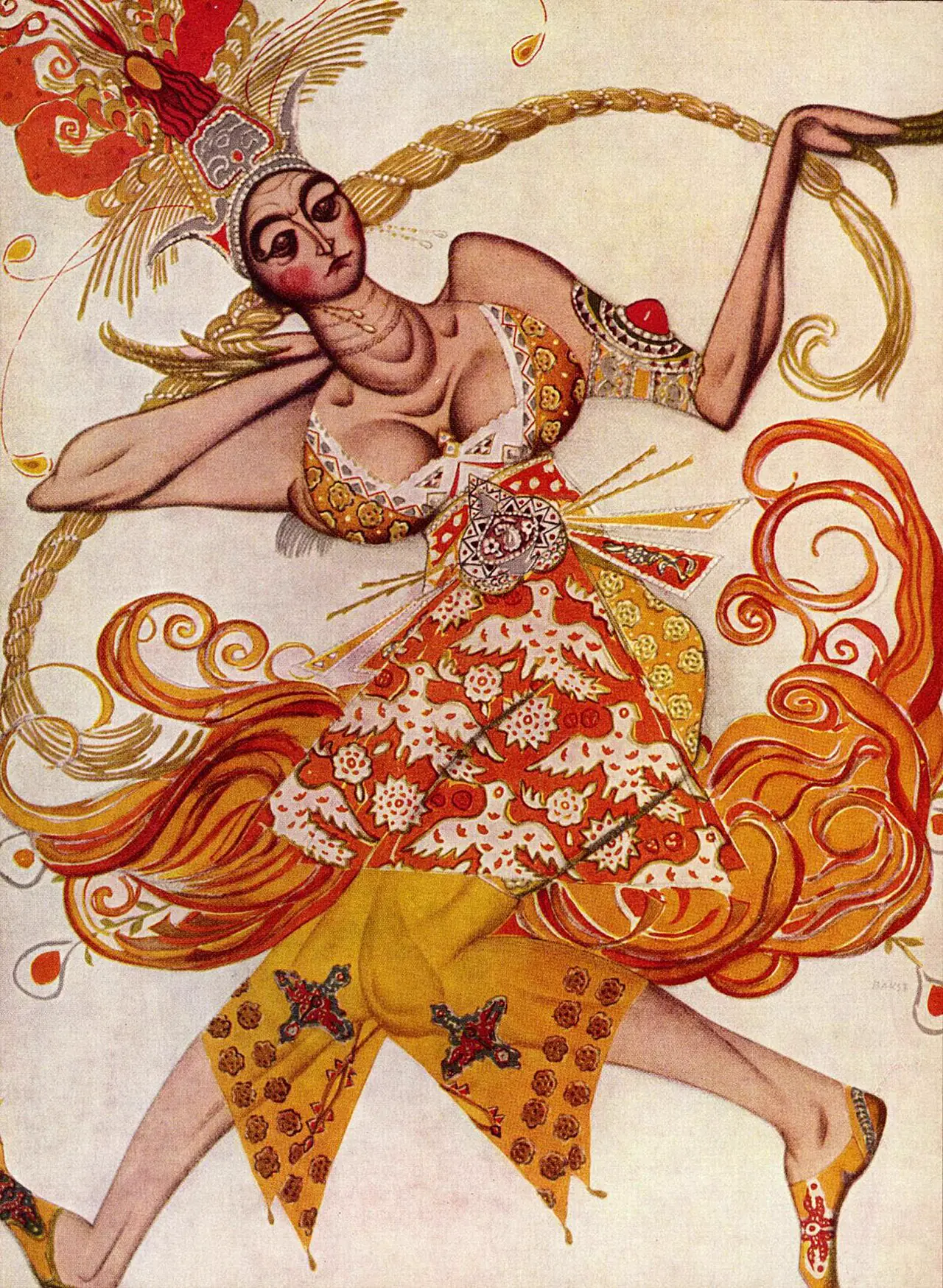
Bakst dressed the Firebird for Diaghilev’s company. Alexander Golovin supplied the scenery and the other costumes, and Fokine made the dances. Karsavina, the first Firebird, remembered that Stravinsky arrived early at rehearsals to play difficult passages for her again and again.
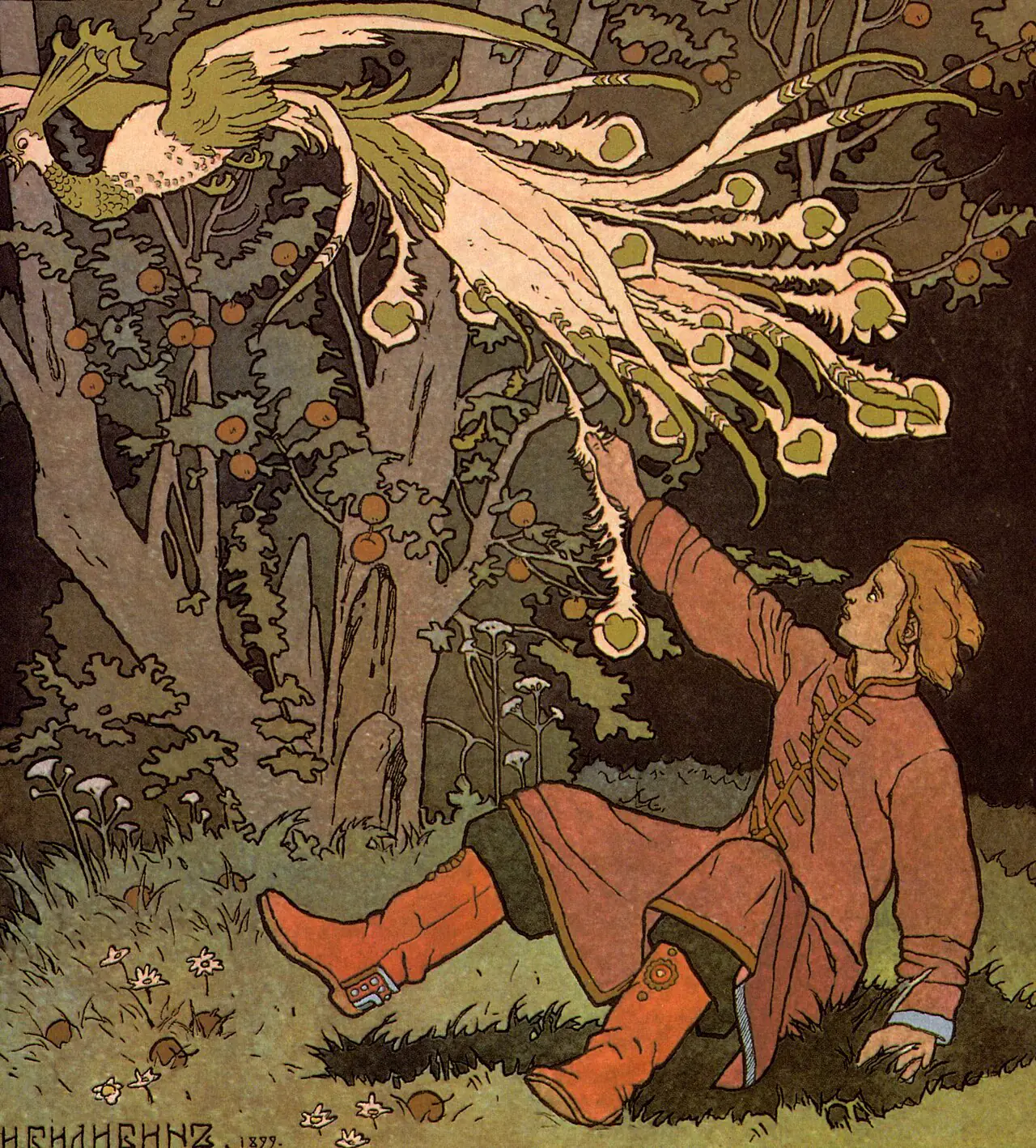
In Bilibin’s picture Ivan has caught a tail feather and the Firebird is still in the air. Fokine combined several Russian tales for the ballet. Ivan keeps one of the bird’s feathers and later uses it to summon her when Kashchei threatens to turn him to stone. Karsavina danced the Firebird, who saves him.
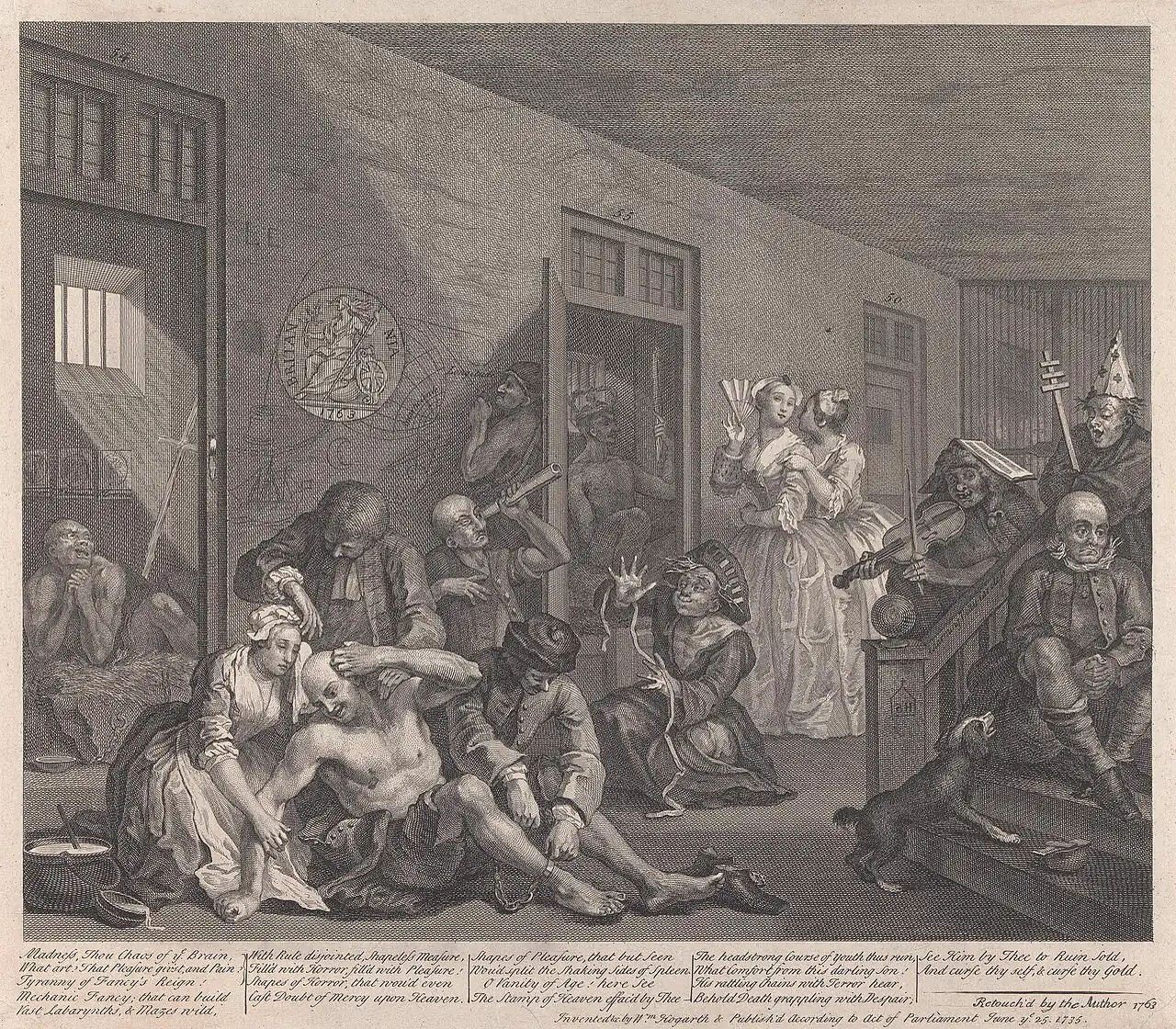
Hogarth brought his ruined rake to Bedlam. Stravinsky made the series into an opera with Auden and Kallman, who added Nick Shadow and his bargain for Tom’s soul. In the last scene Tom is in the madhouse and takes Anne for Venus while she sings him a lullaby.
Recommended recordings
- The Rite of SpringCleveland Orchestra, Pierre BoulezColumbia / Sony Classical · 1969The early Cleveland recording, with very exact playing and steady control in the violent passages. A strong first choice for hearing the wind parts inside the massed attacks.
- PetrushkaLondon Symphony Orchestra, Claudio AbbadoDeutsche Grammophon · 1980The full 1911 orchestration, with the lines clearly separated in the fair scenes. Leslie Howard’s piano is balanced inside the orchestra. The puppet’s death has less force than it could.
- Les NocesEnglish Bach Festival Chorus and Percussion Ensemble; Martha Argerich, Krystian Zimerman, Cyprien Katsaris and Homero Francesch, pianos; Leonard BernsteinDeutsche Grammophon · 1977Bernstein conducted the wedding with four pianists behind the English Bach Festival singers, in a 1977 London recording.
- Symphony of PsalmsPrague Philharmonic Choir, Czech Philharmonic, Karel AnčerlSupraphonThe Prague choir sings the Latin with more weight than smaller ensembles, and the Czech winds keep their bite. Ančerl paired the work with Oedipus rex.
- The Rake’s ProgressIan Bostridge, Deborah York, Bryn Terfel, Anne Sofie von Otter; Monteverdi Choir, London Symphony Orchestra, John Eliot GardinerDeutsche GrammophonBostridge sings Tom, and Gardiner conducts the orchestra. Terfel sings Nick Shadow and at times blusters in the part.
Lineage
Rimsky-Korsakov’s teaching shows in the scales and the woodwind writing of The Firebird. Boulez made a close study of the accents of The Rite and conducted the score with orchestras for decades. Balanchine worked with Stravinsky from Apollo to Agon. Towards the end of that partnership, Stravinsky studied Webern’s scores as he began to compose with twelve-note technique.
Further reading
- Richard Taruskin, Stravinsky and the Russian Traditions (University of California Press, 1996). study
Uses Russian documents and archival sources to examine folklore, theatre and the early ballets.
- Stephen Walsh, Stravinsky: A Creative Spring (2002 edition). biography
The first part of Walsh’s biographical account.
- Pieter C. van den Toorn, Stravinsky and The Rite of Spring (University of California Press, 1988 edition). study
A study of the ballet, to be read with its score and with other accounts of its sources.
Cite this page
Contrapunctus. “Igor Stravinsky.” Accessed 20 October 2026. https://mottopanikeiku.github.io/contrapunctus/composers/stravinsky.html.
@misc{contrapunctus-composers-stravinsky,
  author = {{Contrapunctus}},
  title = {Igor Stravinsky},
  howpublished = {\url{https://mottopanikeiku.github.io/contrapunctus/composers/stravinsky.html}},
  note = {Accessed 2026-10-20}
}